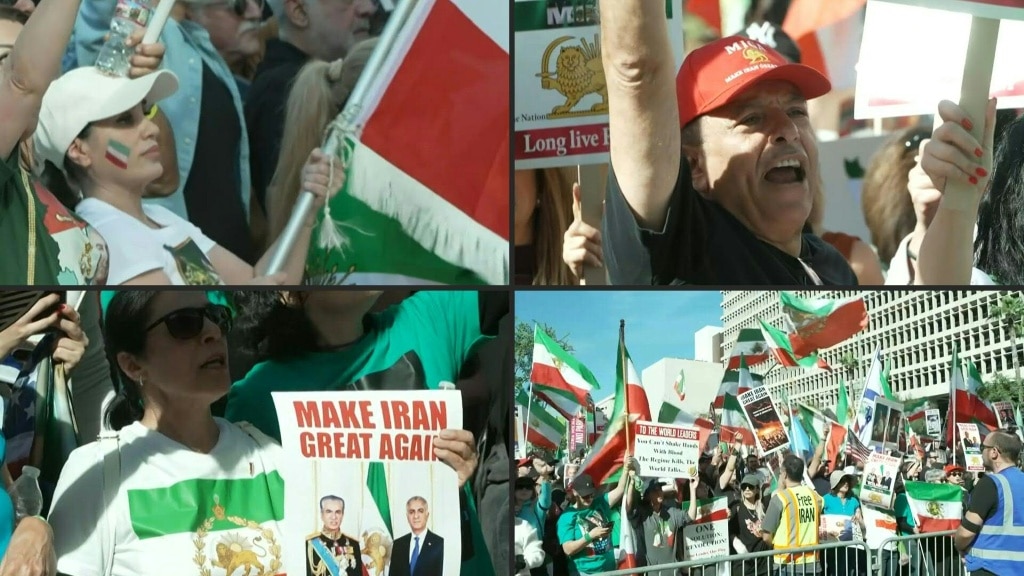
Mass demonstrations erupted across major American cities this weekend as thousands gathered to denounce the Iranian government’s violent suppression of domestic protests. The gatherings, organized by members of Iran’s extensive diaspora community, represented a powerful display of international solidarity with protesters facing escalating violence in their homeland.
Los Angeles, hosting the world’s largest Iranian expatriate population, witnessed several thousand marchers flooding its streets. Simultaneously, several hundred protesters assembled in New York City, creating a coordinated coast-to-coast expression of outrage. Participants carried emotionally charged signage condemning what they termed a ‘New Holocaust’ and ‘genocide in the making’ by Iranian authorities.
The protests originated from December’s economic dissatisfaction demonstrations in Iran, which rapidly evolved into the most significant challenge to the Islamic Republic’s leadership in recent history. A severe government crackdown accompanied by nationwide internet restrictions has reportedly resulted in substantial casualties. Iran Human Rights, an Oslo-based monitoring organization, has documented 3,428 protest-related fatalities through verified sources within Iran’s medical system and independent witnesses. The NGO emphasizes that actual numbers likely significantly exceed this verified count.
Demonstrators expressed complex and sometimes contradictory political perspectives. While many participants voiced support for U.S. presidential intervention, others displayed skepticism toward American involvement. The diaspora community appears divided between those advocating for Western-backed regime change and those insisting on Iranian self-determination without foreign interference.
This ideological tension was visibly present at the Los Angeles gatherings, where some protesters championed Reza Pahlavi, son of Iran’s deposed Shah, while others explicitly rejected monarchical restoration. The political divisions within the exile community mirror the fragmented nature of Iran’s domestic opposition movement, complicating prospects for unified resistance against the current regime.
The demonstrations occurred amid ambiguous signals from the U.S. administration regarding potential intervention. While threatening consequences for violence against protesters, American officials have simultaneously expressed satisfaction with Iranian assurances regarding demonstrator treatment. This diplomatic ambiguity has created uncertainty among diaspora communities seeking clearer international support for protesters facing life-threatening repression.