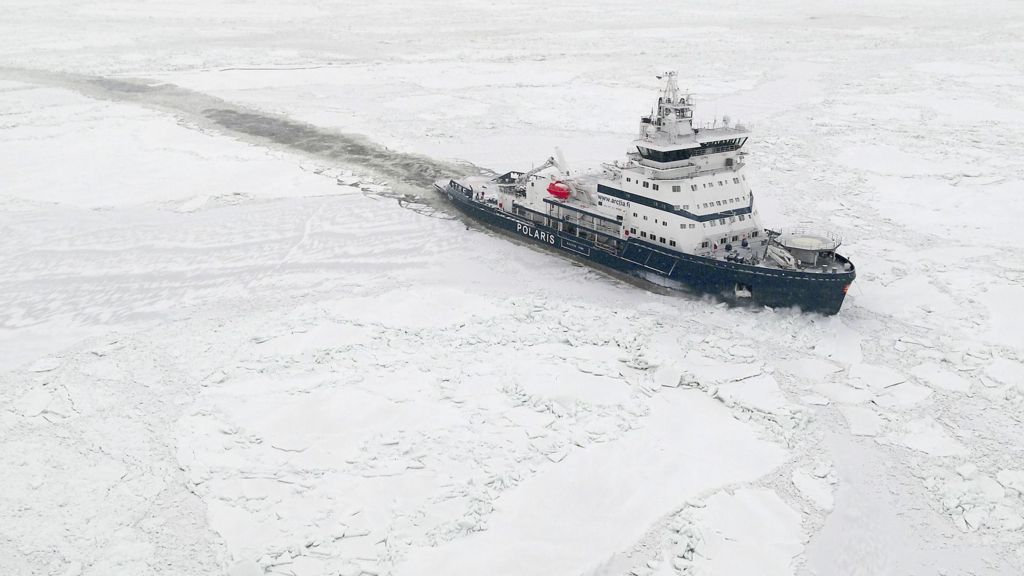
In the frosty laboratories of Aker Arctic Technology, scale models of icebreakers glide through a 70-meter simulation tank, carving precise channels through solid ice. This Helsinki-based facility represents the epicenter of a specialized global industry where Finland holds undisputed supremacy. Finnish companies have designed 80% of the world’s operational icebreakers, with 60% constructed in Finnish shipyards.
This expertise has drawn international attention, particularly from the United States. In a significant policy shift, the Trump administration waived domestic construction requirements for naval vessels to acquire four Finnish-designed icebreakers for the U.S. Coast Guard, with plans for seven additional vessels using Finnish designs and expertise. The move responds to growing Arctic competition, particularly from Russia’s fleet of approximately 40 icebreakers (including nuclear-powered vessels) compared to America’s mere three operational units.
The strategic importance of icebreaking capability has intensified as climate change opens new Arctic navigation routes. Reduced ice levels are making trans-Arctic shipping between Asia and Europe increasingly viable, while also improving access to oil and gas reserves beneath the Arctic Ocean. Peter Rybski, a retired U.S. Navy officer and Arctic expert based in Helsinki, notes: ‘There’s simply a lot more traffic in that part of the world now.’
Finland’s dominance stems from both necessity and generations of accumulated knowledge. ‘Finland is the only country where all harbors may freeze during winter,’ explains Maunu Visuri of state-owned Artica, which operates eight icebreakers. With 97% of goods arriving by sea, icebreakers are essential infrastructure. ‘We say that Finland is an island,’ Visuri adds.
Engineering excellence defines Finnish icebreakers. ‘It’s crucial that vessels have sufficient structural strength and engine power,’ says ice performance engineer Riikka Matala. CEO Mika Hovilainen emphasizes hull design: ‘You must have a hull form that breaks ice by bending it downward—not cutting, not slicing.’
The geopolitical dimension extends beyond practical navigation. Researcher Lin Mortensgaard of the Danish Institute of International Studies observes: ‘No matter how many aircraft carriers you have, you cannot sail them into the central Arctic Ocean. Icebreakers are the only naval vessel to signal Arctic capabilities.’
With contracts already awarded to Rauma Marine Constructions and production timelines as short as three years, Finland’s century of icebreaker development has positioned it as an unexpected player in global power dynamics, where technological mastery meets strategic necessity in the rapidly changing Arctic landscape.