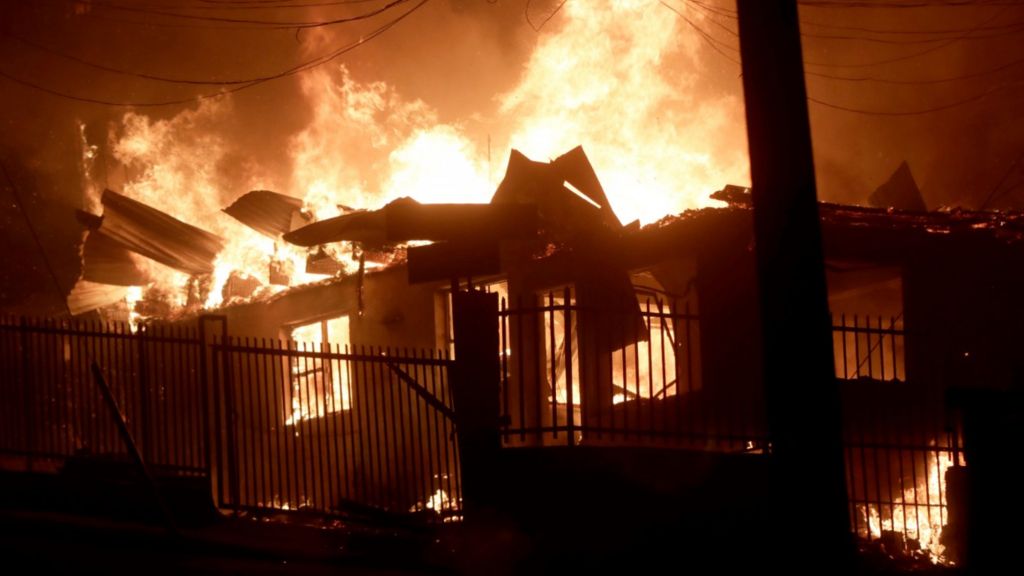
Chilean President Gabriel Boric has declared a state of catastrophe in two southern regions as devastating wildfires continue to rage across the country, resulting in significant casualties and widespread destruction. The death toll has reached at least 16 people in the Ñuble and Biobío regions, located approximately 500 kilometers south of the capital Santiago, with more than 20,000 residents forced to evacuate their homes.
The most severe fire has engulfed dry forest areas surrounding the coastal city of Concepción, where disaster management officials confirm that at least 250 residential structures have been completely destroyed. Local media outlets have circulated disturbing images showing charred vehicles abandoned on streets as flames advanced through populated areas.
Chile’s National Forestry Corporation (Conaf) reported that firefighting teams are currently battling 24 separate blazes nationwide, with the most critical situations concentrated in the Ñuble and Biobío regions. President Boric announced the emergency declaration via social media platform X, stating, “In light of the serious ongoing wildfires, I have decided to declare a state of catastrophe. All resources are available” to combat the crisis.
The infernos have already consumed approximately 20,000 hectares (50,000 acres) across the two affected regions. The cities of Penco and Lirquen, located north of Concepción with a combined population of 60,000, have seen the majority of evacuation efforts, including the relocation of patients from Penco hospital.
Meteorological conditions have significantly exacerbated the crisis, with strong winds propelling the flames amid summer temperatures that are expected to reach 38°C between Santiago and Biobío within the next 48 hours. Much of central Chile remains under heat alerts as the combination of high temperatures and dry vegetation creates ideal conditions for fire spread.
This disaster echoes Chile’s previous wildfire tragedy two years ago, when blazes in the Valparaíso region near Santiago claimed at least 120 lives. The country has experienced increasingly severe fire seasons in recent years, a trend experts attribute to prolonged drought conditions and climate change impacts.