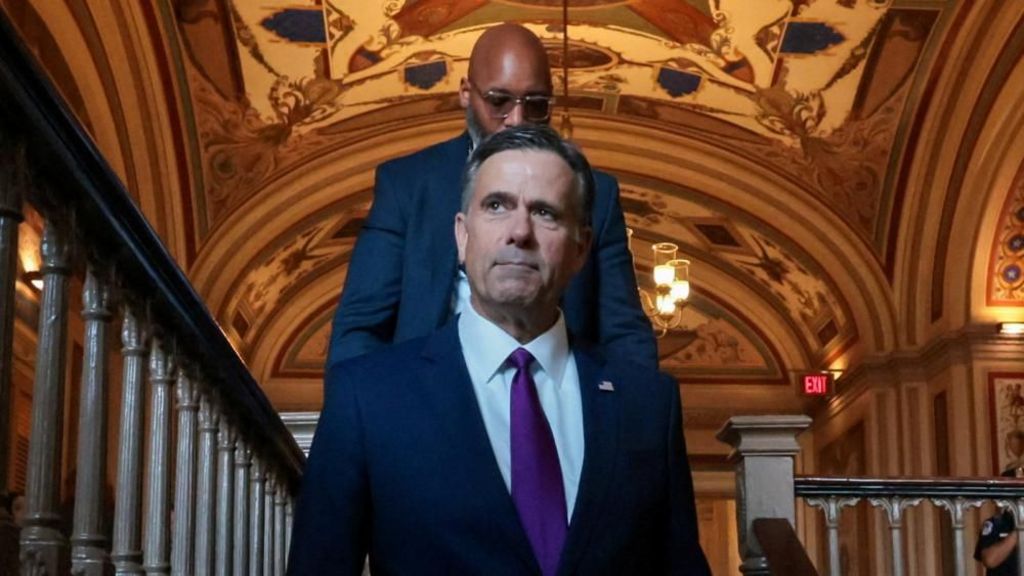
In a significant diplomatic development, CIA Director John Ratcliffe conducted a high-level meeting with Venezuela’s Interim President Delcy Rodríguez in Caracas on Thursday. The two-hour discussion, authorized by President Donald Trump, marked the first cabinet-level US official visit to Venezuela amid shifting political dynamics following the capture of former President Nicolás Maduro.
The meeting focused on establishing trust and communication channels between the two nations, with particular emphasis on economic collaboration and regional security concerns. A US official stated the dialogue reinforced that Venezuela could no longer serve as a safe haven for America’s adversaries. The encounter occurred concurrently with Rodríguez delivering her inaugural state of the union address, where she announced substantial reforms to Venezuela’s oil industry policies.
Rodríguez, sworn in on January 5th after US forces detained Maduro and his wife on drug trafficking charges in New York, struck a balanced tone in her national address. While expressing willingness to engage in political dialogue with the United States, she emphasized Venezuela’s commitment to defending its sovereignty and honor. The interim president notably declared she would travel to Washington if necessary, but only “walking on her feet, not dragged there.”
The proposed hydrocarbon law reforms represent a dramatic shift from Maduro’s policies, potentially allowing foreign companies to operate without mandatory partnership with state-owned PDVSA, which previously required majority stakes. Rodríguez announced plans to establish two sovereign funds—one dedicated to social protection directing currency to hospitals, schools, and food security, and another for infrastructure development addressing water, electricity, and transportation needs.
This diplomatic engagement occurs against the backdrop of Venezuela’s severe economic crisis, characterized by hyperinflation and food shortages that have left citizens struggling for basic necessities. While Trump has encouraged US oil companies to invest approximately $100 billion in Venezuela’s vast oil reserves, industry executives remain cautious, describing the country as currently “uninvestable” without significant structural changes.
The White House has asserted direct control over Venezuelan oil sales, with Trump stating American administration would determine which firms operate in the region, explicitly noting “You’re not dealing with Venezuela at all.” This arrangement, according to Trump, would contribute to lower energy prices in the United States while generating revenue for both nations.
Chevron remains the last major US oil company operating in Venezuela, which maintains the world’s largest proven oil reserves despite a century of complicated relationships with international energy firms.