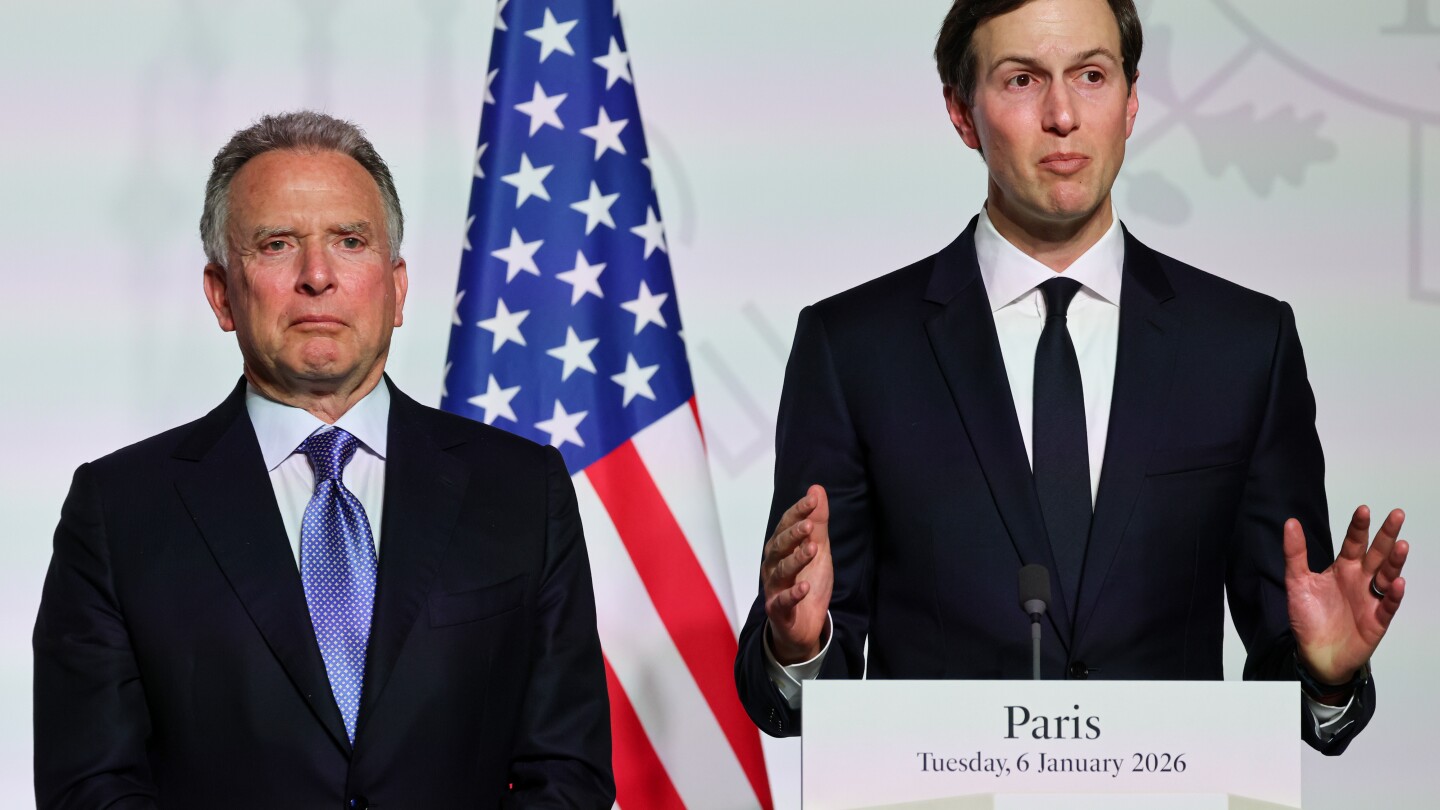
The Trump administration is developing its proposed ‘Board of Peace’ into an institution with significantly broader ambitions than initially conceived, potentially positioning it as an alternative to the United Nations framework that has governed international relations since World War II. According to invitation letters dispatched to various world leaders on Friday and subsequently shared on official social media accounts, the board would ’embark on a bold new approach to resolving global conflict’ extending well beyond its original focus on mediating the Israel-Hamas war in Gaza.
Argentine President Javier Milei and Paraguay’s leader Santiago Peña were among those receiving invitations to become ‘founding members’ of this new international organization. The correspondence highlighted that Trump’s 20-point Gaza ceasefire plan, which incorporates the Board of Peace concept, had already gained endorsement from the U.N. Security Council. ‘Now it is time to turn all of these dreams into reality,’ Trump wrote, describing the initiative as ‘the most impressive and consequential board ever assembled.’
The administration’s aspirations for this body to evolve into a substantial international institution are certain to generate controversy. Both China and Russia, as permanent Security Council members with veto power, are expected to oppose any radical transformation of the existing world order. Smaller nations may also express reservations, as the UN system has historically provided them with representation in global decision-making processes.
A senior U.S. official, speaking anonymously to discuss internal deliberations, characterized the expanded vision as ‘aspirational’ but noted that Trump and his advisers believe it achievable given widespread frustrations with the United Nations and its affiliated agencies. The administration has frequently criticized the world body for perceived inefficiencies, redundant structures, and what it describes as ‘woke’ ideology, while simultaneously reducing funding to international organizations.
The formal announcement of board membership is anticipated during the upcoming World Economic Forum in Davos, Switzerland. Meanwhile, Israel’s government has already voiced objections to aspects of the plan, stating that certain elements were ‘not coordinated with Israel and is contrary to its policy.’ The proposed executive committee includes Secretary of State Marco Rubio, envoy Steve Witkoff, business leaders such as Apollo Global Management CEO Marc Rowan, and international figures including former British Prime Minister Tony Blair and World Bank President Ajay Banga.