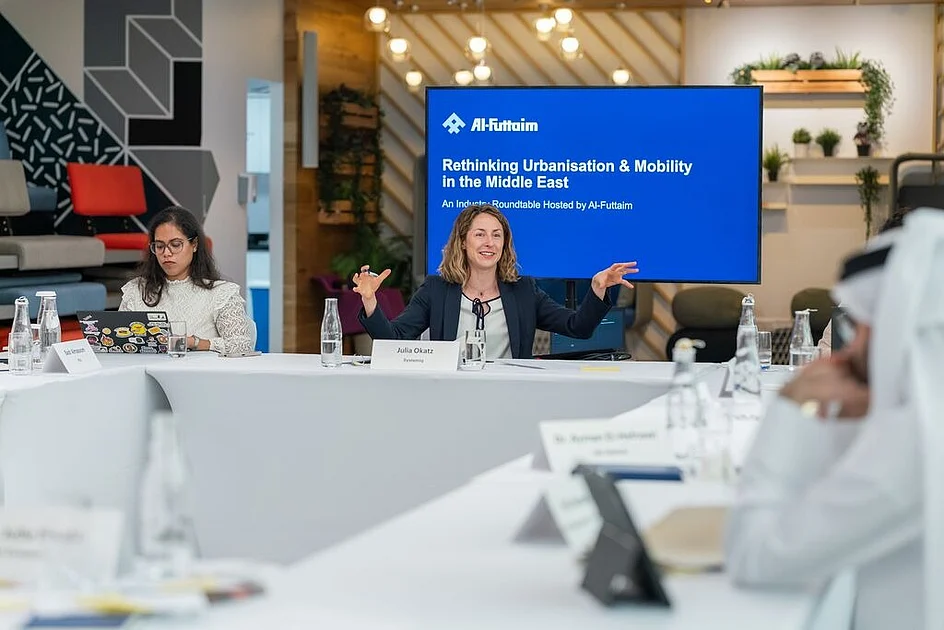
A comprehensive analysis by Al-Futtaim reveals a critical disconnect between urban development and transportation systems across rapidly growing UAE communities. The white paper ‘Rethinking Urbanisation and Mobility in the GCC’ demonstrates how accelerated urban densification is creating accessibility challenges even in otherwise sustainable neighborhoods.
According to Ellora-Julie Parekh, Chief Sustainability Officer at Al-Futtaim, current planning approaches remain fragmented. “Decision-making occurs in community-level silos with mobility considerations treated as an afterthought,” Parekh explained. This methodology has resulted in practical difficulties with ingress and egress from otherwise well-designed communities.
The research incorporated survey data from 2,000 UAE residents which revealed unanimous concern about traffic congestion as the primary urban challenge. While preferences for liveability factors varied by nationality—ranging from affordability to safety and green spaces—congestion emerged as the universal priority. Despite these concerns, only 33% of respondents currently utilize public transportation, with 30% citing lack of availability in their areas.
The study identifies significant momentum toward green mobility transitions, with 24% of car buyers intending to purchase new energy vehicles within two years. However, charging infrastructure remains the principal barrier to electric vehicle adoption, surpassing range anxiety concerns. Parekh compared the current charging situation to early broadband development, emphasizing that “ubiquitous charging requires collaboration between private sector and government.
Looking forward, the report advocates for integrated planning utilizing digital modeling and AI technologies. “Cities can now create digital twins of future spaces to test scenarios before construction,” Parekh noted, highlighting how predictive analytics could prevent costly retrofits and improve coordination between urban development and transportation systems.