DETROIT — The global automotive landscape is undergoing a seismic shift as Chinese electric vehicle manufacturers capitalize on Canada’s recent decision to slash EV import tariffs. This strategic trade agreement, which also includes concessions on Canadian agricultural products, creates a formidable gateway for China’s technologically advanced and cost-competitive vehicles into North American markets.
Industry analysts highlight that Chinese EVs represent a paradigm shift in automotive manufacturing, combining sophisticated connectivity features, lightweight construction techniques, and extended driving ranges at unprecedented price points. With vehicles priced between $10,000-$20,000—compared to America’s $50,000 average for new vehicles—Chinese manufacturers have mastered the production of desirable small and mid-sized cars that major American automakers have largely abandoned in favor of higher-margin trucks and SUVs.
The timing proves particularly advantageous for Chinese automakers as domestic market conditions weaken while global electrification accelerates. Benchmark Mineral Intelligence data reveals 17% growth in China’s plug-in hybrid and electric vehicle sector alongside Europe’s 33% surge, contrasting sharply with the mere 1% growth in U.S. electrified vehicle sales last year.
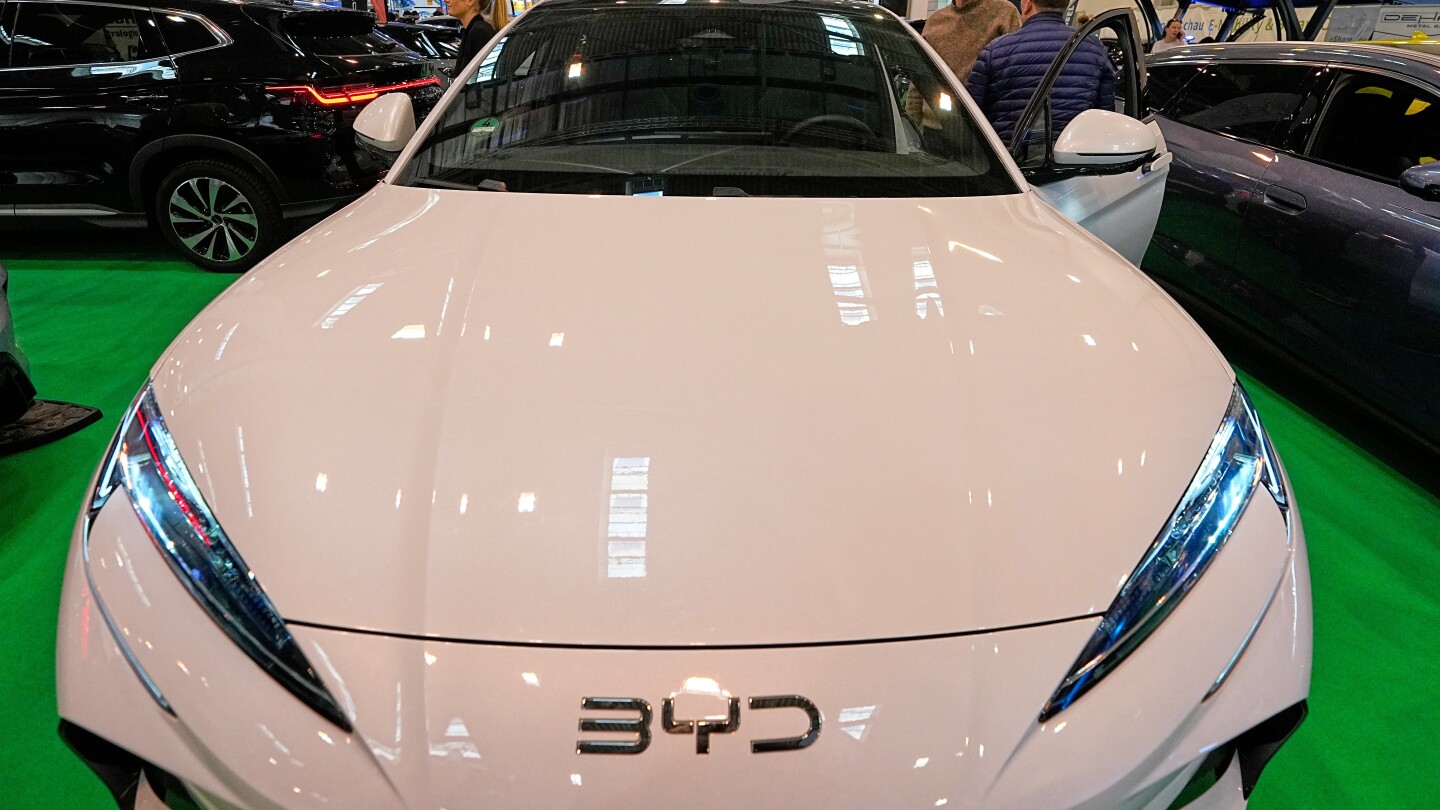
This expansion occurs as American manufacturers scale back ambitious electrification plans, creating a critical competitive vulnerability. The symbolic transfer of Tesla’s EV crown to BYD—which delivered 2.26 million vehicles against Tesla’s 1.64 million in 2025—underscores China’s manufacturing dominance.
To access Canadian markets, Chinese automakers must meet stringent safety and quality standards comparable to U.S. requirements, potentially incentivizing manufacturing investment in Canada. AlixPartners predicts Chinese brands will capture 30% of the global market by 2030, having already established significant presence in Europe, South America, and Mexico.
The advancement raises complex questions about data security and market protectionism. Transportation Secretary Sean Duffy recently asserted that China’s automotive investments aim to ‘control the industry,’ reflecting widespread concerns about data collection capabilities in connected vehicles. Despite these concerns, industry experts like AutoForecast Solutions’ Sam Fiorani conclude that ‘the advance of Chinese manufacturers is inevitable,’ noting that Western markets must establish guardrails rather than expect complete market exclusion.