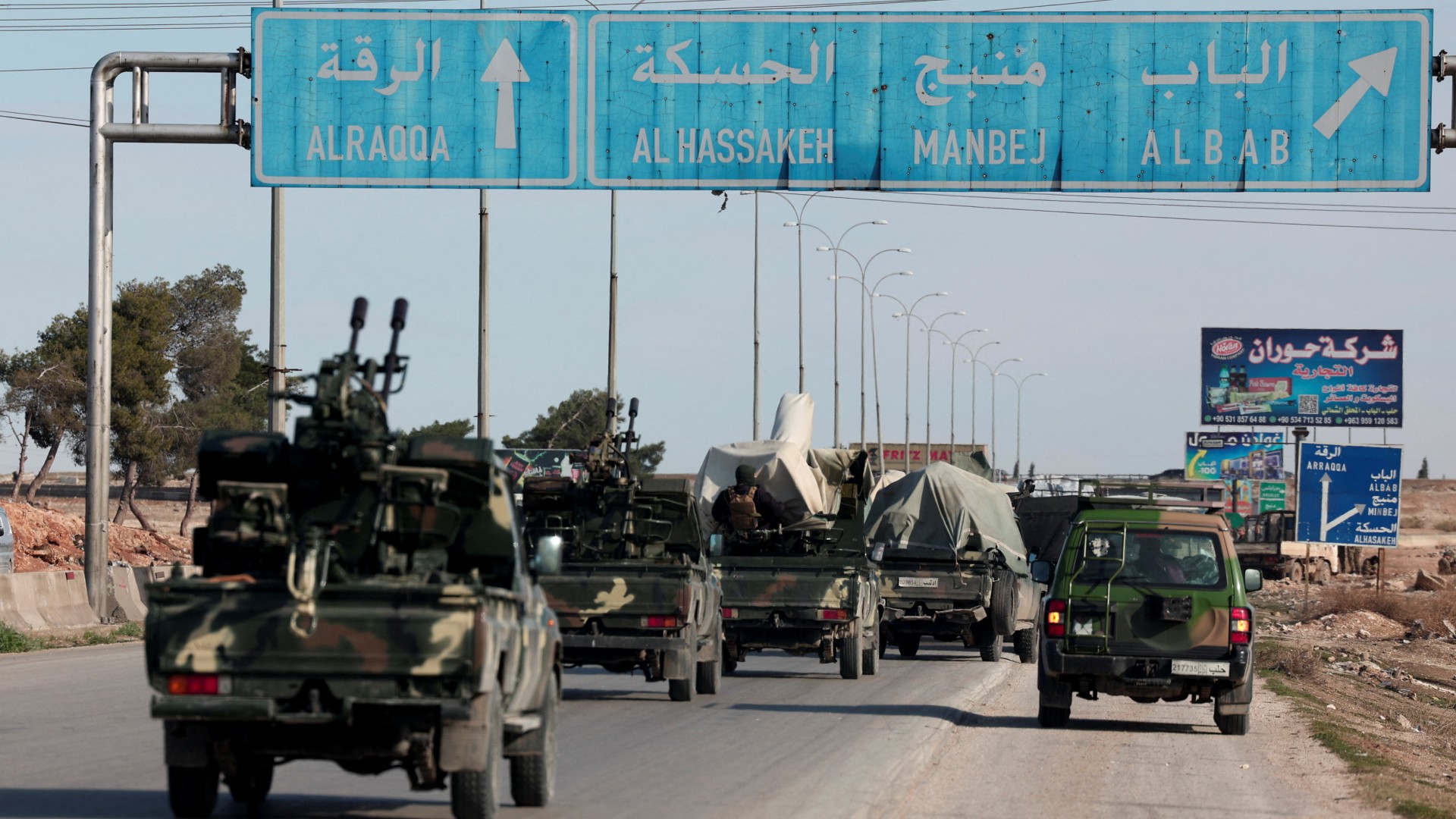
In a significant development within Syria’s complex geopolitical landscape, the United States has unsuccessfully urged the Syrian Democratic Forces (SDF) to withdraw their remaining fighters from strategic positions in eastern Aleppo’s countryside. According to regional sources familiar with the matter who spoke with Middle East Eye, the Kurdish-led militia has formally rejected Washington’s proposal to vacate their last foothold on the western bank of the Euphrates River near Dayr Hafir.
The refusal comes amid intensified shelling exchanges between Syrian government forces and SDF fighters, marking a dramatic escalation after months of relative calm between the parties. This renewed conflict follows a months-long ceasefire that collapsed earlier this month when Damascus launched operations to expel SDF-linked security units from Aleppo’s al-Ashrafiyah and Sheikh Maqsoud neighborhoods, alleging civilian casualties from sniper and mortar attacks.
Multiple regional sources revealed that the Syrian government’s offensive received implicit authorization from Washington before implementation. Despite this, U.S. authorities subsequently requested the SDF to withdraw from the western Euphrates bank—a demand the Kurdish forces have now officially declined.
The tension further complicates implementation efforts of the 10 March memorandum of understanding, an agreement designed to integrate Kurdish-led forces into Syria’s military infrastructure. Syrian President Ahmed al-Sharaa publicly accused SDF leadership of failing to honor the agreement, asserting their decision-making remains subordinate to the Kurdistan Workers’ Party (PKK) leadership based in Iraq’s Qandil Mountains.
Ilham Ahmed, the SDF’s de-facto foreign affairs official, countered these claims during a Thursday press conference, stating: “The government’s assertion that we have not implemented the 10 March agreement is incorrect, and international parties are aware of this.” Ahmed confirmed ongoing communications with both U.S. and Turkish officials while awaiting responses to several de-escalation initiatives.
Meanwhile, humanitarian concerns escalate as reports indicate the SDF blocked civilian evacuation routes established by Syrian forces on Thursday. A U.S. military delegation visited Dayr Hafir to assess the situation and reportedly planned to pressure the SDF to permit civilian departures.
The Syrian military has publicly encouraged defections, broadcasting statements that welcome Kurdish and Arab fighters wishing to rejoin government forces while specifically condemning “PKK terrorist militias” for allegedly targeting civilians and undermining Syria’s social fabric. Defense Ministry reports claim several SDF fighters have already surrendered weapons on the Dayr Hafir front.
With the Syrian army reportedly preparing broader operations to clear SDF positions, and diplomatic channels showing strain, the situation represents a critical deterioration in northeast Syria’s fragile stability.