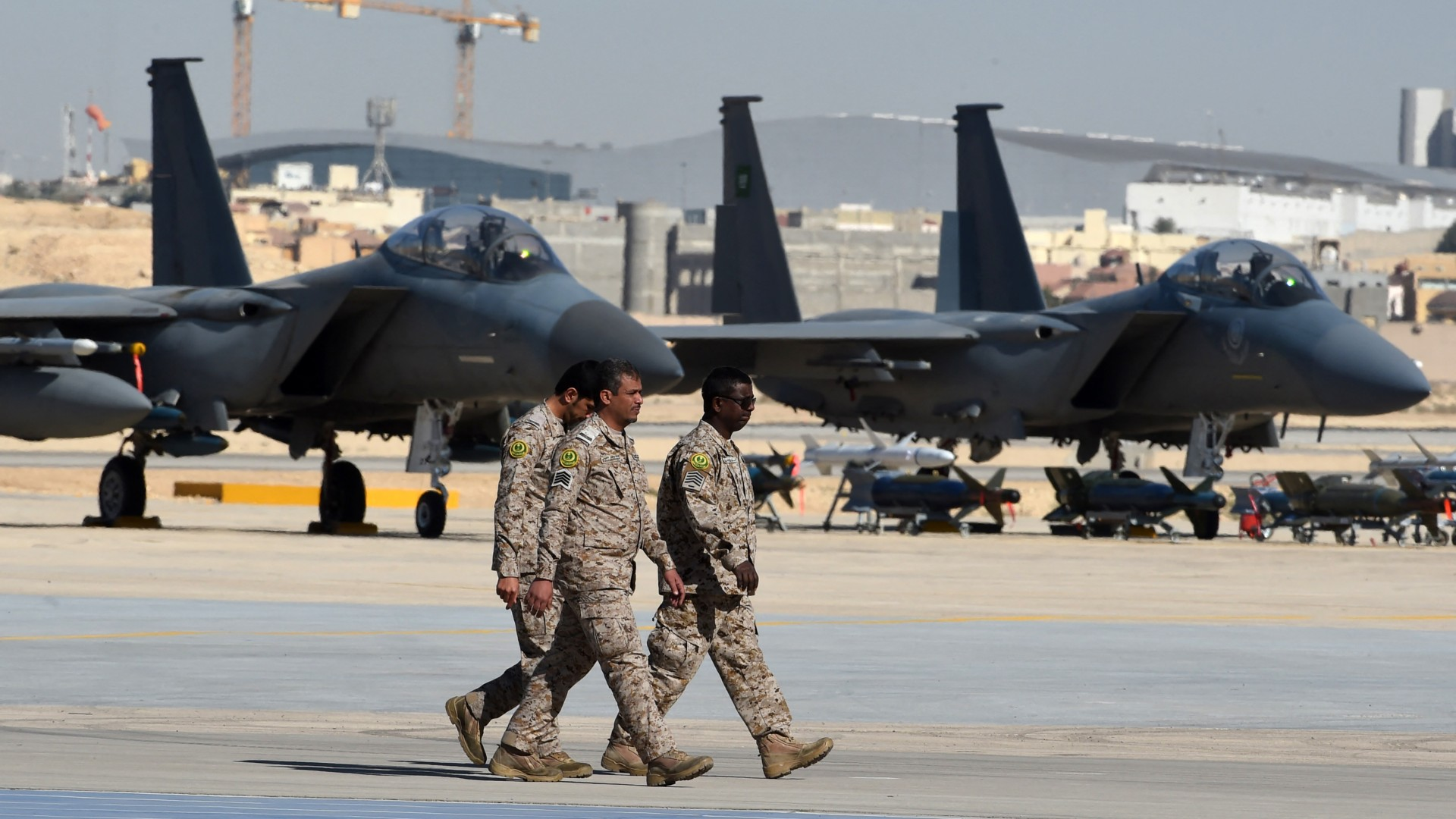
Saudi Arabia is spearheading the formation of a new tripartite military alliance with Somalia and Egypt, marking a significant strategic realignment in the Horn of Africa and Red Sea region. This development, reported by Bloomberg, represents Riyadh’s deliberate effort to diminish the United Arab Emirates’ expanding influence across these strategic waterways.
The impending agreement, set to be finalized during Somali President Hassan Sheikh Mohamud’s upcoming visit to Riyadh, aims to enhance regional security coordination and military cooperation. This initiative emerges amid escalating tensions between the Gulf powerhouses, particularly following Saudi Arabia’s directive for Emirati forces to withdraw from Yemen—a move intended to terminate UAE support for Yemeni separatist factions.
Tensions reached a critical point on December 30th when Saudi airstrikes targeted the Yemeni port city of Mukalla, destroying what was identified as an Emirati weapons shipment destined for the Southern Transitional Council (STC) separatists. This military action ignited a unprecedented public dispute between Saudi and Emirati commentators, disrupting years of carefully maintained Gulf unity rhetoric.
The Saudi government defended its operations as a “limited” response to protect national security interests, characterizing Emirati activities as “extremely dangerous.” Subsequently, Yemen’s Presidential Leadership Council demanded UAE forces depart Yemen, canceled defense agreements with Abu Dhabi, and implemented emergency port restrictions.
Simultaneously, Somalia annulled its security and port agreements with the UAE, citing violations of national sovereignty after Emirati authorities facilitated the extraction of STC leader Aidarous al-Zubaidi through Somali territory. Questions of Somali sovereignty have intensified recently as the UAE and Israel strengthened ties with Somaliland, a breakaway region not recognized internationally.
Saudi Arabia has explicitly endorsed Somalia’s territorial integrity, joining other Muslim-majority nations in condemning Israeli engagement with Somaliland. While the UAE has formally acknowledged Somali sovereignty, it has concurrently developed substantial military and economic relationships with regional administrations in Somaliland and Puntland, including significant investments in the ports of Berbera and Bosaso.
Egypt emerges as a crucial partner in this realignment, with senior Egyptian sources revealing that Cairo provided Saudi Arabia with intelligence regarding Emirati operations in Yemen—a maneuver described as a “carefully planned” strategic offering. Egyptian diplomats had previously proposed a regional defense force under the 1950 Joint Defence and Economic Cooperation Treaty, though this initiative faced opposition from Qatar and the UAE.
This security realignment extends beyond immediate regional partners, with Turkey reportedly seeking to join an existing military pact between Saudi Arabia and Pakistan. Turkish officials characterize the proposed cooperation as a defensive mechanism rather than a NATO-style alliance.
Regional experts interpret these developments as signaling a fundamental transformation in Middle Eastern geopolitics. Dr. Andreas Krieg of King’s College London observes that the UAE is constructing a regional axis that includes Israel while excluding traditional Arab partners, noting that “The Emiratis are building an axis that is trying to exclude Saudi Arabia.
The proliferation of defense agreements with Saudi Arabia indicates growing interest in establishing a cohesive Arab defense framework to counterbalance the influence of both Israel and the UAE, marking a potentially historic shift in regional power dynamics.