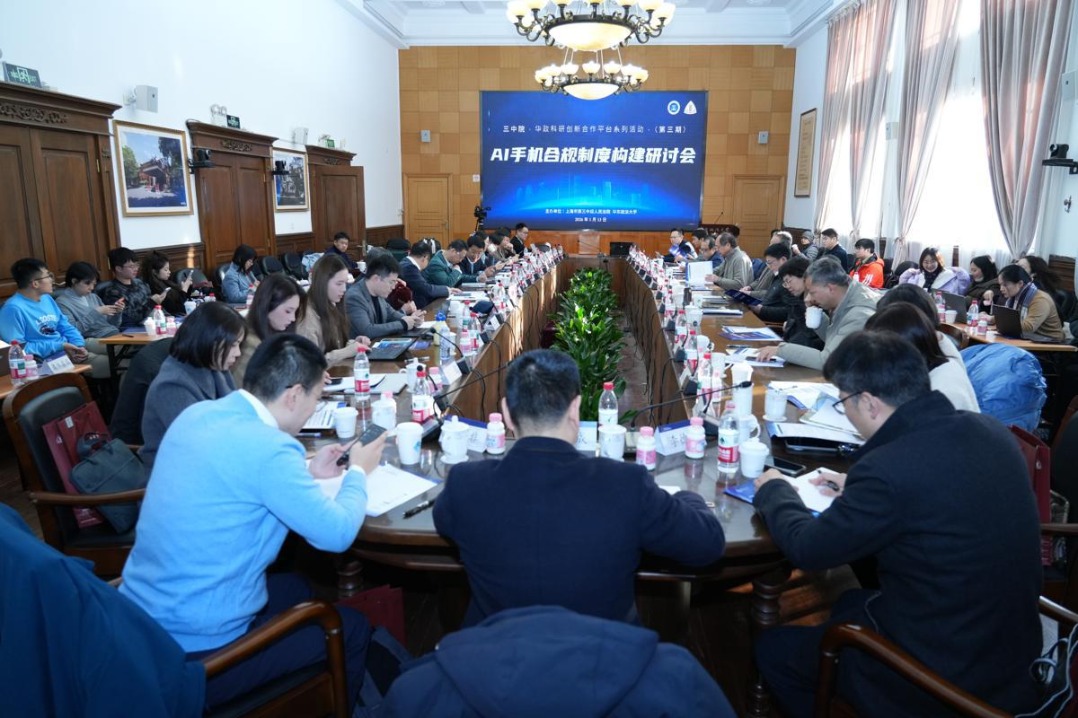
Legal scholars and technology experts are advocating for the immediate development of comprehensive regulatory frameworks specifically designed for artificial intelligence-powered smartphones. The urgent call emerged from a specialized conference convened at East China University of Political Science and Law this Tuesday, where leading authorities addressed the growing legal and ethical challenges posed by AI-enabled mobile devices.
Professor Li Mingde from the Chinese Academy of Social Sciences emphasized the critical need to balance technological innovation with market competition safeguards. “Current legal systems, compliance frameworks, and liability structures must evolve to address the unique challenges presented by AI smartphones,” he stated during the proceedings.
Han Qiang, Deputy Party Secretary of the host institution, highlighted that these concerns transcend technical considerations, representing complex intersections of technological logic, legal frameworks, and ethical standards. The multidimensional nature of these issues underscores the pressing requirement for establishing clear compliance parameters.
Professor Gao Fuping, Dean of the Internet Law Institute, presented a detailed analysis of how AI smartphones fundamentally challenge existing data protection paradigms. “The continuous sensing capabilities, cross-device data reading, and intelligent inference mechanisms inherent in AI devices are disrupting personal information protection systems built on ‘informed consent’ principles,” he explained. Traditional compliance approaches centered on purpose limitation and data minimization face significant adaptation challenges when confronted with AI’s high-frequency, multi-layered data processing methodologies.
The conference produced several key recommendations for regulatory development:
1. Establishing clear compliance boundaries to ensure AI agent permissions remain controllable and traceable
2. Implementing substantive informed consent mechanisms that genuinely guarantee users’ rights to refuse, revoke, and delete data
3. Maintaining comprehensive logs of AI agent processes to document critical operations
4. Developing collaborative governance models involving judicial, administrative regulatory, and industry self-regulatory bodies
Given the inherent limitations of administrative and judicial oversight in rapidly evolving technological landscapes, participants also explored the potential establishment of an independent supervisory entity. Professor Guo He from Renmin University of China stressed that ensuring meaningful user consent remains central to compliance, advocating against vague notifications and promoting user autonomy at critical decision points.
While recognizing the need for regulation, arbitrator Chen Jinchuan from the World Intellectual Property Organization cautioned against premature legislative finalization, suggesting that market competition should be allowed appropriate adjustment room.
In concluding remarks, Liu Junhua, Vice-President of the Shanghai Intellectual Property Court, emphasized the importance of comprehensive impact assessment and measured response. “We must calmly identify genuine problems and determine optimal timing and methods for legal intervention in this new technological revolution,” he summarized.