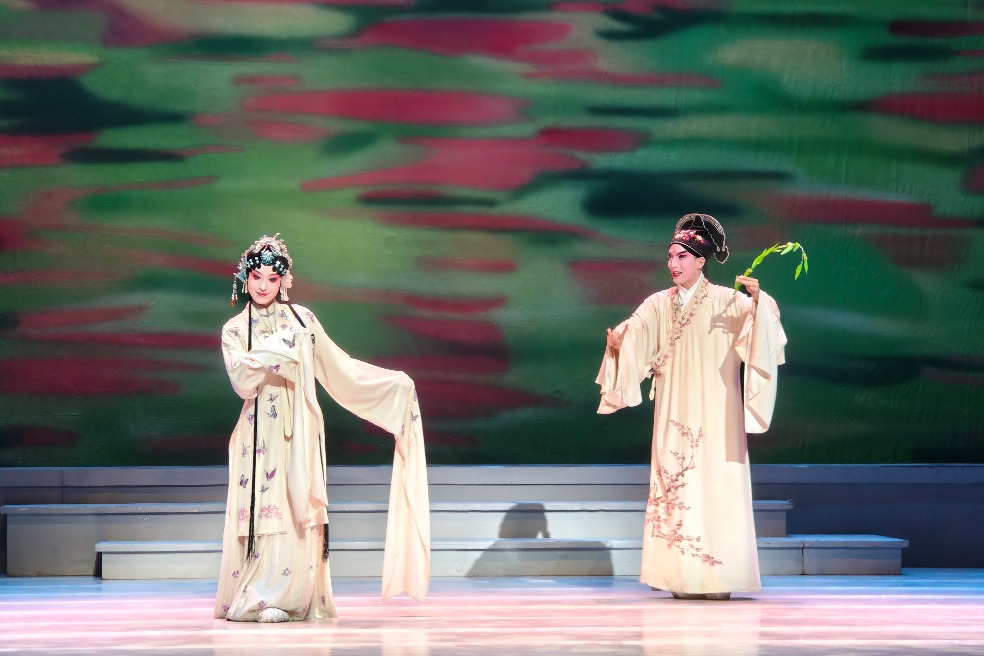
In a significant cultural exchange event, university students from mainland China presented a special campus youth edition of the classical Kunqu Opera “The Peony Pavilion” in Taipei on January 15, 2026. This performance marked the first time a production entirely performed by mainland college students was staged in Taiwan, occurring exactly twenty years after the original youth version premiered in the same city.
The production originates from an innovative cultural preservation project initiated in 2024, designed to engage young generations in safeguarding Kunqu Opera—a 600-year-old performing art form recognized by UNESCO as an Intangible Cultural Heritage. The current campus version represents an abridged adaptation of the complete nine-hour performance, which typically unfolds across three consecutive evenings.
Fifty selected students from twenty-nine different universities across mainland China participated in this ambitious undertaking. Despite minimal prior professional training in the ancient art form, these dedicated performers underwent nearly nine months of intensive instruction before debuting their production in Suzhou, Jiangsu Province—the historical birthplace of Kunqu Opera—in April 2025.
The production maintains the exquisite costumes and sophisticated stage design of the original youth version created by renowned Taiwan-based novelist Pai Hsien-yung. Now 88 years old, Pai has dedicated years to promoting Kunqu Opera among younger audiences. In a pre-performance statement, he emphasized that the primary objective remains helping college students appreciate Kunqu’s aesthetic beauty and develop closer connections to traditional Chinese culture.
Professor Zhao Tianwei, chief planner of the production and art professor at Southeast University, described the campus version as representing a contemporary model for transmitting China’s fine traditional culture through young practitioners. He expressed hope that Taiwanese youth audiences would gain deeper appreciation and understanding of Kunqu by witnessing their mainland peers performing this classical art form on stage.
Since its initial 2004 premiere, the youth version of “The Peony Pavilion” has been presented at over a dozen universities, consistently maintaining young audiences as its primary focus. The current cross-strait cultural presentation continues this tradition while fostering meaningful artistic dialogue between mainland Chinese and Taiwanese communities.