The United Arab Emirates is emerging as a global hub for transformative artificial intelligence applications, with groundbreaking initiatives in healthcare and bionic technology demonstrating the technology’s life-changing potential. At the forefront of this revolution is an AI-enabled genetic screening program for newborns, implemented in 2025, that identifies rare conditions during an infant’s first weeks of life—long before symptoms manifest. This proactive approach has already yielded remarkable success stories, with three cases identified in the program’s inaugural month alone, fundamentally altering medical outcomes from potential lifelong illness to healthy futures.
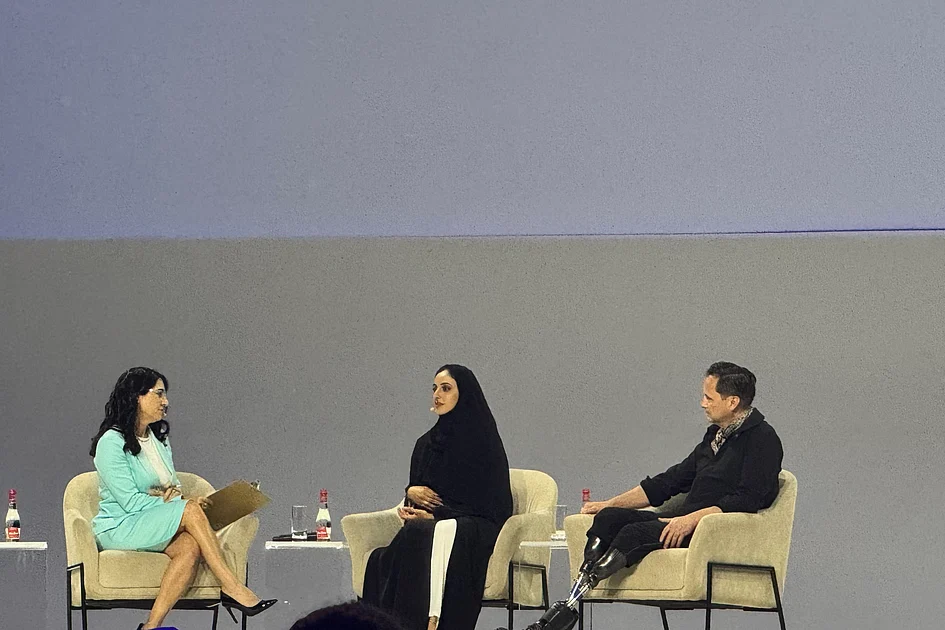
Ebtesam Almazrouei, CEO of AIE3 and chairperson of the UN’s AI for Good Impact Initiative, highlighted these achievements during the Dubai International Project Management Forum, emphasizing how AI, big data analytics, and machine learning represent innovation at its finest for healthcare services and medical research.
The technological showcase extended to wearable robotics, with MIT Media Lab Professor Hugh Herr presenting revolutionary brain-connected bionic limbs. These advanced prosthetics enable users to think, control, and feel sensory feedback from robotic limbs through electromechanical-biological fusion. Herr, a bilateral amputee who relies on bionics himself following a climbing accident, predicts that bionic hands will soon surpass the strength of biological counterparts.
Despite these extraordinary advancements, forum participants unanimously stressed the imperative of robust safeguards. Mohamed Al Kuwaiti, head of the UAE Government Cyber Security Council, outlined the nation’s approach to AI governance as an enabler of trust rather than a barrier. Emphasizing that “the first line of defence is still the people,” he detailed comprehensive cybersecurity strategies addressing evolved threats in cybercrime, cyberterrorism, and cyber warfare, with particular focus on protecting critical healthcare and energy infrastructure.
The forum, which gathered hundreds of international experts, also addressed regional talent development needs. Hanny Alshazly of the Project Management Institute noted the anticipated requirement for approximately 600,000 project management professionals in the MENA region by 2035, highlighting ongoing efforts to elevate standards and support community development in partnership with leadership.