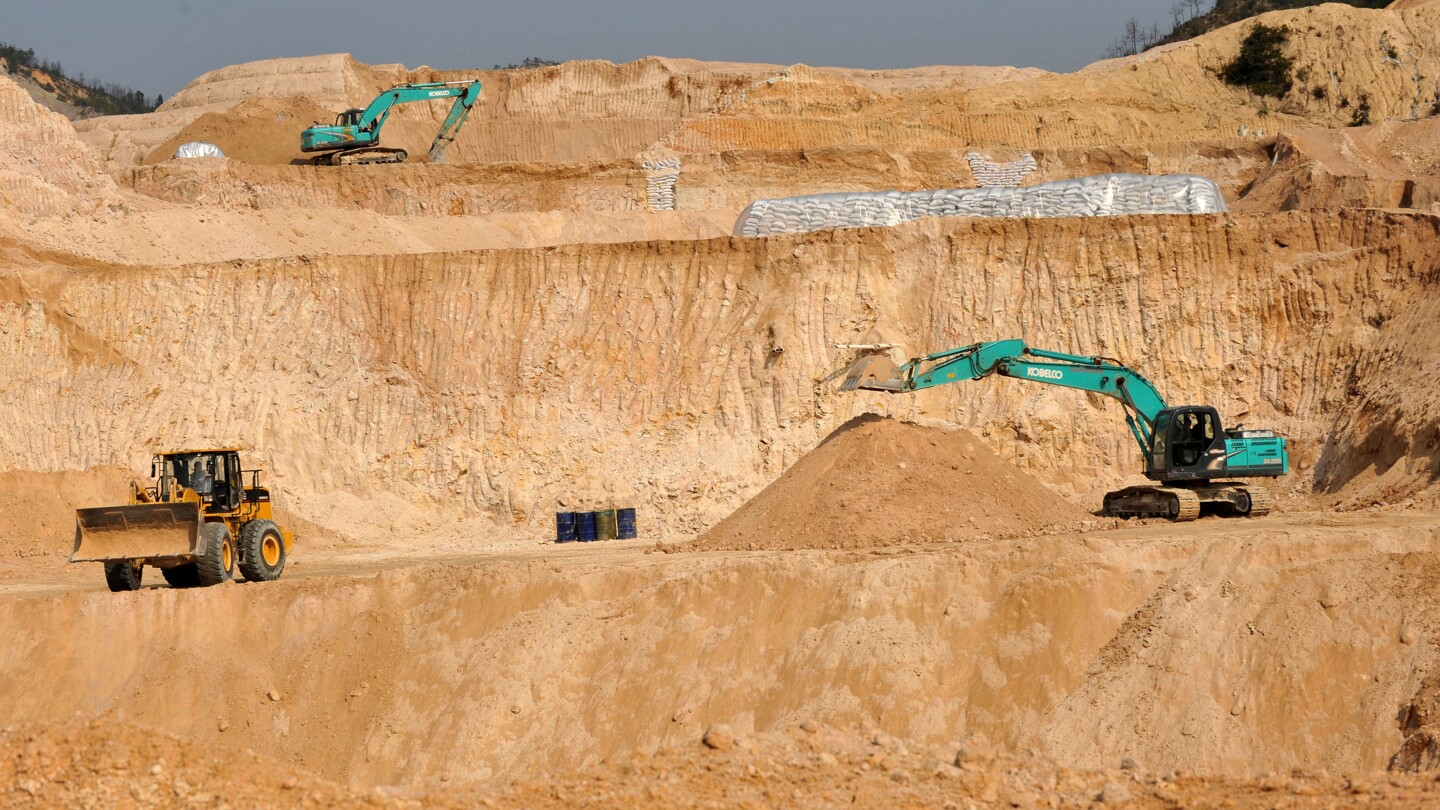
A bipartisan coalition of U.S. lawmakers has introduced groundbreaking legislation to establish a $2.5 billion federal agency dedicated to securing America’s critical minerals supply chain. This initiative emerges as the Trump administration simultaneously executes aggressive measures to dismantle China’s near-total market dominance in these essential materials vital for national defense systems, electric vehicles, and consumer electronics.
The proposed Critical Minerals Security Act, co-sponsored by Senator Jeanne Shaheen (D-N.H.) and Senator Todd Young (R-Ind.), would create an independent entity tasked with building strategic reserves, stabilizing market prices, and incentivizing domestic production through market-based mechanisms. This legislative approach contrasts with the administration’s current tactics of direct government investment in mineral companies—a strategy that has already mobilized nearly $5 billion in Pentagon commitments over the past year.
Beijing’s demonstrated willingness to weaponize its control over critical minerals—which account for over 90% of global processing—during recent trade tensions has created unprecedented bipartisan consensus on the urgency of securing alternative supplies. The Pentagon’s recent interventions include a $150 million equity position in Atlantic Alumina Co. to preserve America’s last alumina refinery and a $400 million investment in MP Materials, operator of the country’s sole rare earths mine in Mountain Pass, California.
While some analysts note the irony of a Republican administration embracing state-capitalist approaches, industry leaders have welcomed the intervention. NioCorp Communications Director Jim Sims characterized the administration’s strategy as ‘three-dimensional chess on critical minerals like no previous president has done.’
The comprehensive approach includes international cooperation, evidenced by an $8.5 billion mining agreement with Australia and heightened engagement with G7 nations addressing supply chain vulnerabilities. This multi-front effort represents the most significant attempt in decades to reduce American dependence on Chinese critical minerals and ensure strategic autonomy in defense and technology sectors.