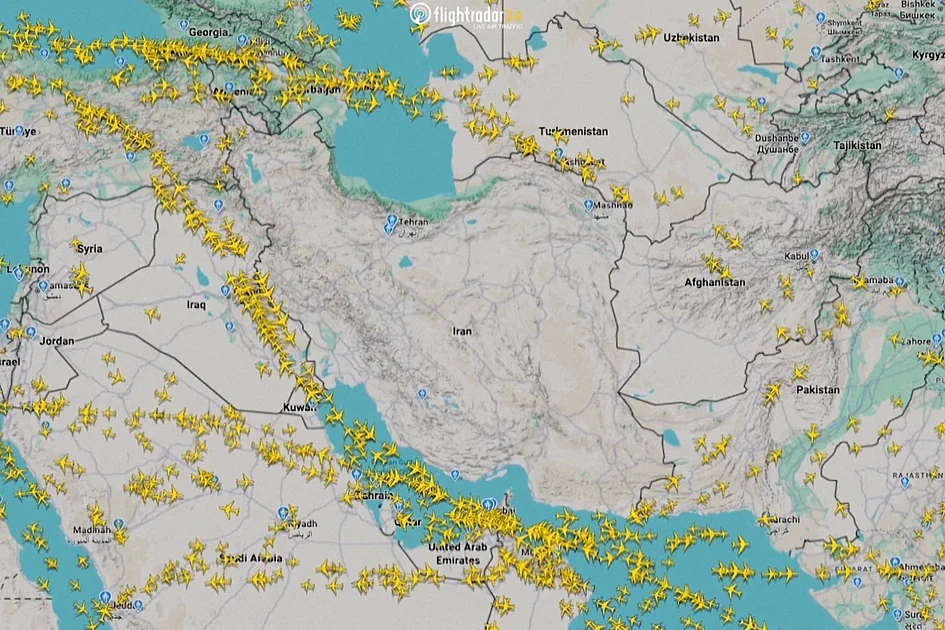
Iran implemented an unexpected five-hour closure of its national airspace overnight Wednesday, creating significant aviation disruptions amid escalating geopolitical tensions with the United States. The unprecedented move, affecting numerous international flight paths, came as both nations engaged in diplomatic maneuvering regarding Iran’s internal protest situation.
The airspace restriction, lasting from approximately 10:00 PM to 3:00 AM local time on January 14, required special permits for any aircraft seeking to traverse Iranian territory. This development occurred against the backdrop of stern warnings from the Trump administration, which had previously threatened ‘very strong action’ should Iran proceed with executing protesters.
Aviation tracking service Flightradar24 documented the immediate impact, showing aircraft circumventing Iranian airspace entirely during the closure period. Major carriers including India’s IndiGo and Air India reported substantial schedule disruptions, with many flights requiring alternative routing that resulted in extended flight times and potential cancellations. Russia’s Aeroflot notably returned a Tehran-bound flight to Moscow mid-journey.
The airspace closure represents a precautionary measure by Iranian authorities following the United States’ partial withdrawal of personnel from Middle Eastern bases. This military repositioning came after Iranian officials warned neighboring countries that American bases would be targeted if Washington initiated strikes against Iran.
Civil aviation experts note that such airspace restrictions, communicated through official Notice to Air Missions (NOTAM) systems, force airlines to implement extensive safety protocols. These include avoiding high-risk airspace entirely and adhering strictly to international civil aviation advisories, even when resulting in substantial operational inconveniences and increased fuel consumption.
As of Thursday morning, Flightradar24 data indicates normal traffic patterns have resumed over Iranian airspace, though the aviation community remains alert to potential further developments in the politically volatile region.