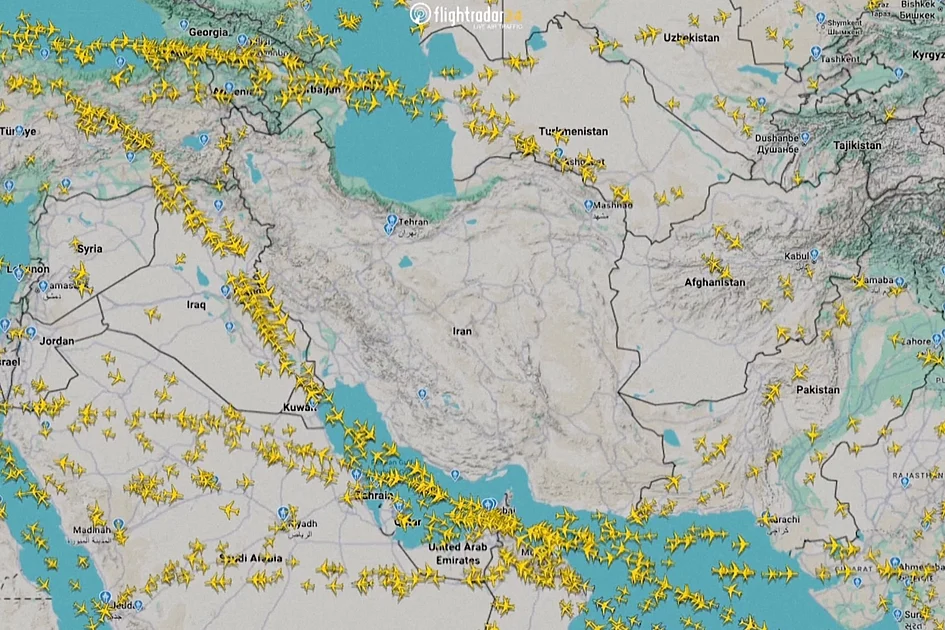
Iran has restored civilian air traffic following an abrupt five-hour closure of its national airspace that triggered widespread flight disruptions and regional security concerns. The temporary shutdown, implemented at 5:15 PM ET (2215 GMT) on Wednesday, compelled multiple international carriers to cancel, reroute, or delay flights while raising alarms about potential military escalation between Tehran and Washington.
According to the US Federal Aviation Administration’s published notice, Iran had restricted its airspace exclusively to internationally authorized flights to and from Iranian territory. The restriction was lifted shortly before 10:00 PM ET (0300 GMT), with tracking service Flightradar24 confirming the resumption of operations by Iranian carriers Mahan Air, Yazd Airways, and AVA Airlines.
The closure occurred against the backdrop of heightened geopolitical tensions, with US President Donald Trump evaluating responses to Iran’s ongoing anti-government protests—the most significant in years. A senior US official confirmed partial personnel withdrawals from Middle Eastern bases following Tehran’s warning to neighboring states about potential retaliatory strikes against American installations if attacked.
Commercial aviation faced immediate operational challenges. India’s largest airline, IndiGo, reported impacts on international routes, while Air India implemented alternative routing that risked delays and cancellations. Russia’s Aeroflot saw a Tehran-bound flight return to Moscow mid-route. European carriers including Lufthansa and Italy’s ITA Airways instituted precautionary measures, bypassing Iranian and Iraqi airspace indefinitely and restricting Tel Aviv and Amman operations to daylight hours.
Aviation security monitor Safe Airspace, operated by flight risk organization OPSGROUP, highlighted the growing threat from missile and drone deployments across conflict zones. The organization noted that most carriers had already reduced or suspended services through Iranian airspace due to risks of misidentification or accidental engagement. This warning carries particular resonance following the 2020 tragedy when Iran’s military mistakenly shot down Ukraine International Airlines Flight PS752, killing all 176 aboard.
Germany issued fresh directives cautioning national airlines against entering Iranian airspace, reflecting broader international apprehension about regional stability. The developments underscore the persistent vulnerability of civilian aviation to geopolitical conflicts, with airlines forced to navigate both physical and diplomatic airspace amid escalating tensions.