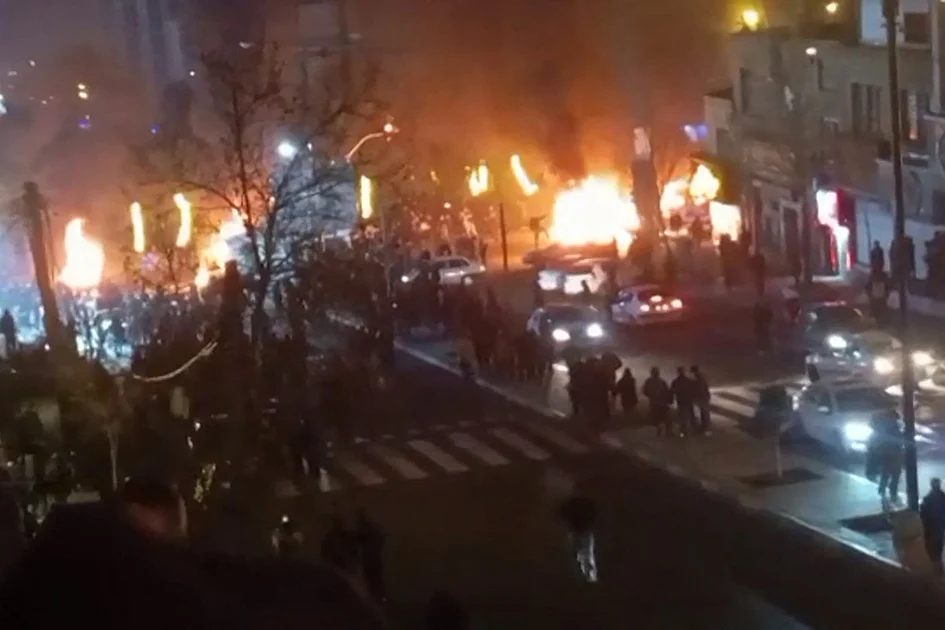
A significant wave of civil unrest has swept across Iran since late December 2025, presenting one of the most substantial challenges to the country’s clerical establishment since the 1979 revolution. The protests originated in Tehran’s Grand Bazaar among merchants demonstrating against the rial’s drastic devaluation, which lost nearly half its value against the dollar throughout 2025, coupled with official inflation rates reaching 42.5% by December.
The demonstrations have rapidly evolved from economic complaints to direct challenges against Iran’s governing system. Protesters have been documented burning images of Supreme Leader Ayatollah Ali Khamenei while chanting anti-government slogans, despite facing security forces equipped with tear gas, batons, and live ammunition. Iranian authorities have acknowledged economic difficulties while attributing the unrest to foreign interference from the United States and Israel.
Government spokesperson Fatemeh Mohajerani stated on January 13 that authorities consider both security forces and protesters as ‘children’ of the state, claiming efforts to address legitimate grievances while condemning what they describe as terrorist elements hijacking the movement. Official reports now acknowledge approximately 2,000 fatalities, including security personnel, marking the first government recognition of the substantial human cost during the two-week crackdown.
International response has been swift, with U.S. President Donald Trump warning Iran against suppressing protests and promising American support for demonstrators. The administration has announced 25% tariffs on nations trading with Iran and is exploring methods to restore internet access restricted by Tehran. White House Press Secretary Karoline Leavitt maintained that only President Trump knows what specific actions might follow, stating ‘the world can keep waiting and guessing.’
Multiple countries have issued travel advisories for their citizens in Iran. India’s Ministry of External Affairs has recommended avoiding travel to Iran entirely, while Pakistan’s ambassador has urged nationals to keep immigration documents readily accessible. The U.S. State Department has advised immediate departure for American citizens, highlighting risks including kidnapping, arbitrary arrest, and wrongful detention.
Regarding regional implications, UAE officials have expressed confidence that tensions will not significantly affect their nation. Sultan bin Sulayem, Chairman of DP World and Ports, Customs and Free Zone Corporation, characterized the UAE as a secure business environment, noting that previous regional crises had minimal impact. UAE Minister of Foreign Trade Thani Al Zeyoudi commented on the uncertainty surrounding U.S. tariff implementation and potential effects on food imports, given the UAE’s position as Iran’s second-largest trading partner after China.