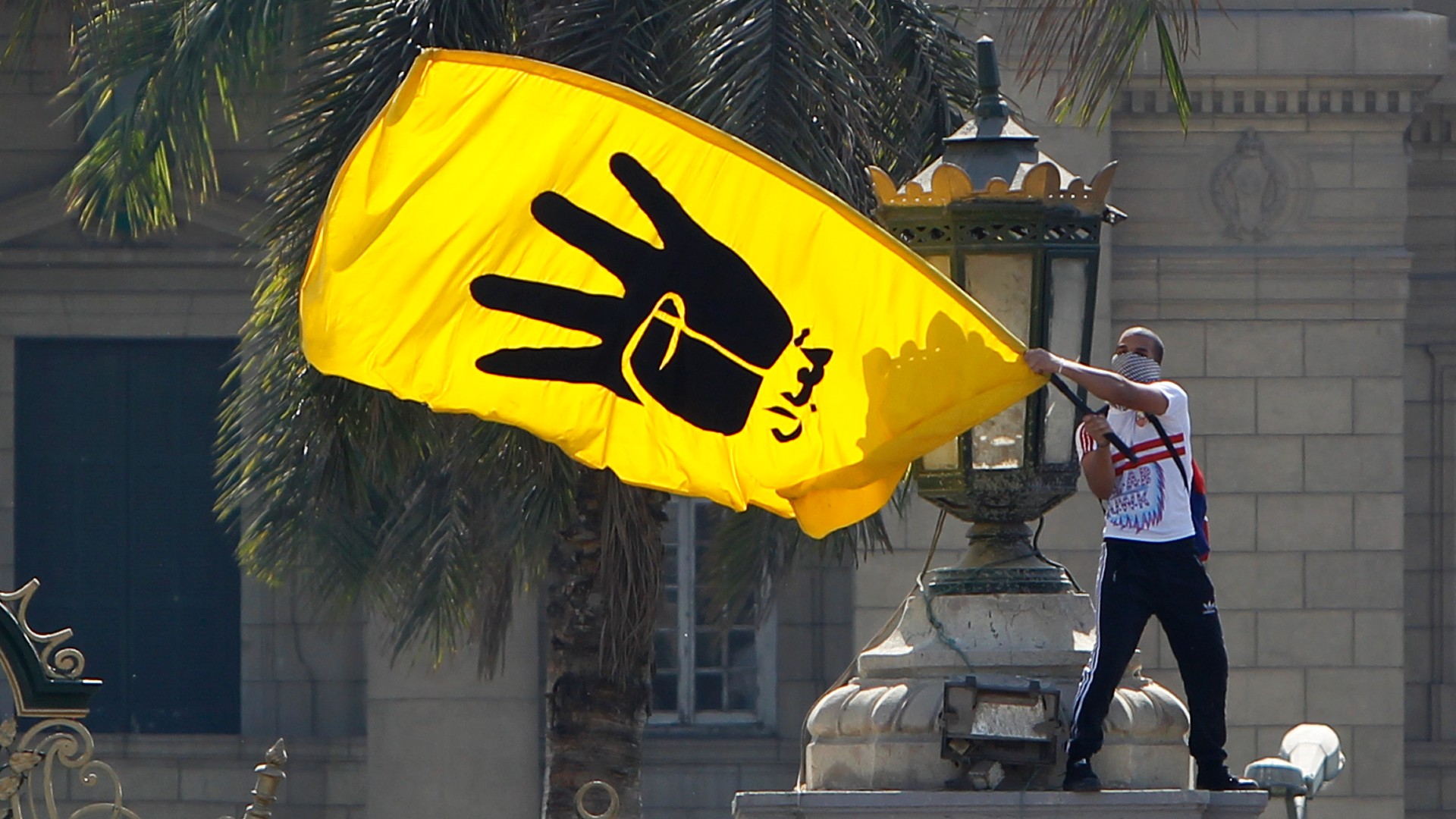
The Egyptian Muslim Brotherhood has initiated a formal legal challenge against the United States’ recent decision to classify its organization and affiliated branches in Jordan and Lebanon as terrorist entities. In an official statement released Tuesday, the Brotherhood condemned the designation as “fundamentally detached from reality and unsupported by credible evidence,” characterizing the move as politically motivated and detrimental to Muslim communities worldwide.
The US Treasury and State Departments jointly announced sweeping sanctions against the Brotherhood’s regional branches, with the Lebanese wing receiving the severe classification of “Foreign Terrorist Organization” – a designation that criminalizes any material support to the group. Simultaneously, the Treasury Department listed the Jordanian and Egyptian branches as “Specially Designated Global Terrorists,” alleging connections to Hamas.
These designations carry substantial consequences, including travel bans for current and former members, economic sanctions targeting revenue streams, and criminal penalties for providing material assistance. The Brotherhood maintains that the US action “politicizes counterterrorism tools, conflates peaceful Islamic civic engagement with extremism, and reinforces marginalizing narratives against Muslims.”
The organization emphasized its historical commitment to non-violence, stating it has “never threatened the security of the United States” while vowing to exhaust all legal avenues to overturn the decision. The group has additionally called upon human rights organizations and civil society groups to challenge what it describes as discriminatory policy.
This development follows years of deliberation within US government circles, reportedly initiated after President Donald Trump’s 2019 meeting with Egyptian President Abdel Fattah el-Sisi. At that time, numerous government agencies including the Defense Department and diplomatic officials raised substantive legal and policy objections to such designations.
Founded in 1928 as an anti-colonial movement, the Muslim Brotherhood has evolved into one of the world’s most significant Islamic organizations, operating primarily as a socio-political movement despite facing decades of persecution by Arab nationalist regimes. The group experienced remarkable political ascendancy following the 2011 Arab Spring, culminating in Mohamed Morsi’s democratic election as Egypt’s president in 2012 – an administration that was subsequently overthrown in a military coup.
The Brotherhood’s designation reflects broader geopolitical tensions in the Middle East, where regional powers including Saudi Arabia, the United Arab Emirates, and Bahrain have already banned the organization. These developments have contributed to regional rifts involving Turkey, Qatar, and Gulf states, with many autocratic governments viewing the Brotherhood as an existential threat to their rule.