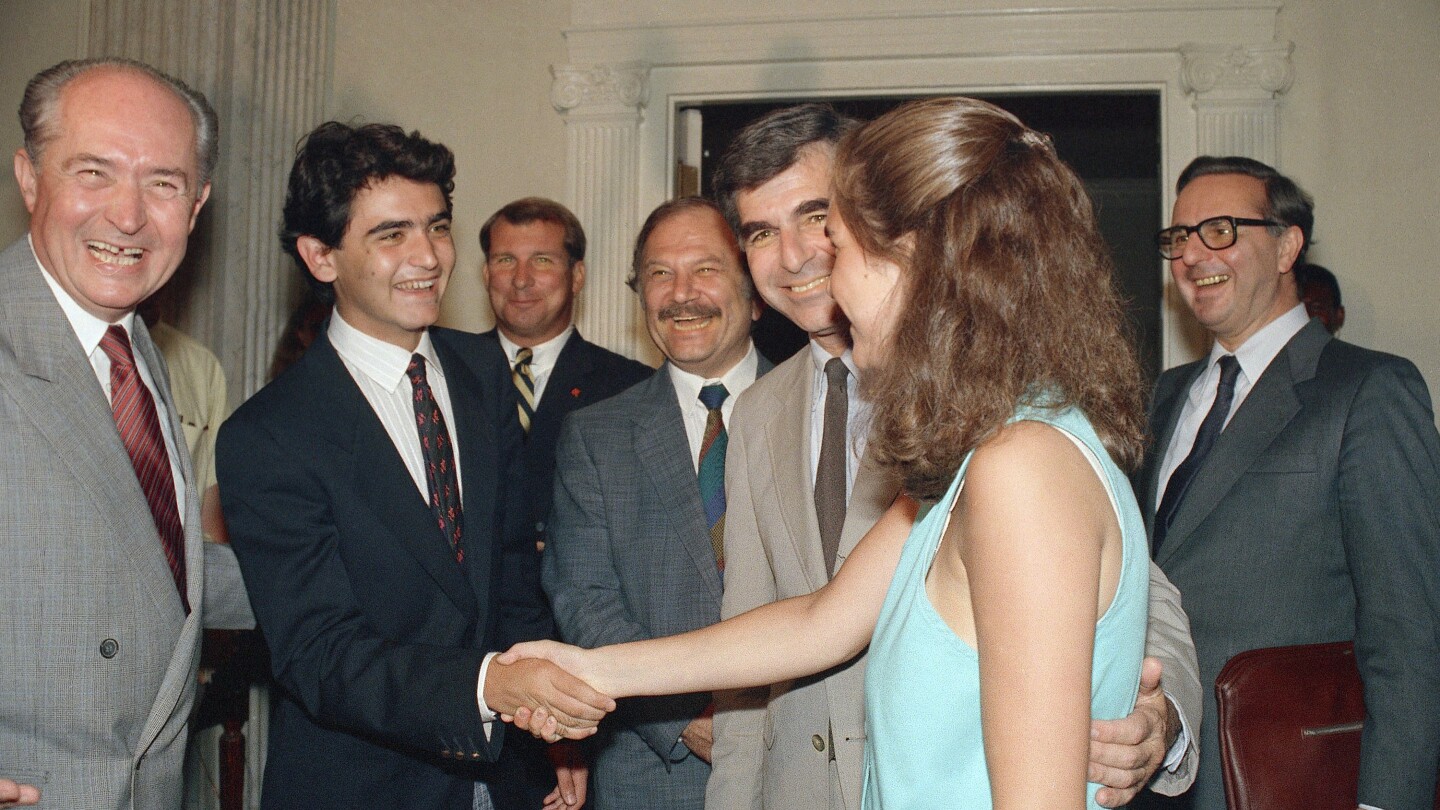
NICOSIA, Cyprus — The nation of Cyprus is in mourning following the passing of former President George Vassiliou at age 94. The transformative leader, who served from 1988 to 1993, died Wednesday after battling a respiratory infection that had required hospitalization since January 6.
President Nikos Christodoulides led tributes to his predecessor, describing Vassiliou as embodying Cyprus’s economic prosperity, social advancement, and modernization efforts. In an official statement, Christodoulides noted that Cyprus had lost ‘a universal citizen who broadened our homeland’s international imprint.’
Vassiliou’s presidency marked a period of significant economic transformation. Leveraging his background as a successful entrepreneur—he founded the Middle East Market Research Bureau with offices across 30 countries—Vassiliou implemented sweeping reforms that doubled the nation’s per capita GDP during his tenure. His administration introduced groundbreaking policies including sales tax implementation alongside income tax reductions, civil service streamlining, establishment of Cyprus’s first university, and dismantling state media monopolies.
Perhaps his most enduring legacy was initiating Cyprus’s application for European Union membership, a strategic move that culminated in the island’s accession thirteen years later in 2004.
In the contentious arena of reunification, Vassiliou reinvigorated stalled negotiations with Turkish Cypriot leader Rauf Denktash shortly after assuming office. Despite his efforts, the talks reached an impasse that persists to this day, maintaining the division that began with Turkey’s 1974 invasion and the subsequent 1983 declaration of independence by Turkish Cypriots recognized only by Ankara.
Born in 1931 to physician parents who were communist activists, Vassiliou’s early life reflected the region’s turbulent politics. His family relocated to Hungary and later Uzbekistan following communist defeats in Greece’s civil war. Initially pursuing medical studies in Geneva and Vienna, he ultimately earned a doctorate in economics from the University of Economics in Budapest.
Vassiliou’s unconventional presidency broke with traditional political protocols. He maintained unprecedented public accessibility, frequently visiting government offices and educational institutions—a practice critics dismissed as ‘marketing’ but which he defended as essential presidential engagement.
Following his presidential term, Vassiliou remained politically active, serving as Cyprus’s chief EU negotiator, founding his own political party, winning legislative election in 1996, and authoring several works on European and Cypriot political affairs. His international recognition included honors from France, Italy, Austria, Portugal, and Egypt, along with membership in prestigious organizations including the Shimon Peres Institute of Peace.
Vassiliou is survived by his wife Androulla, a lawyer and former European Commissioner, their two daughters, and a son.