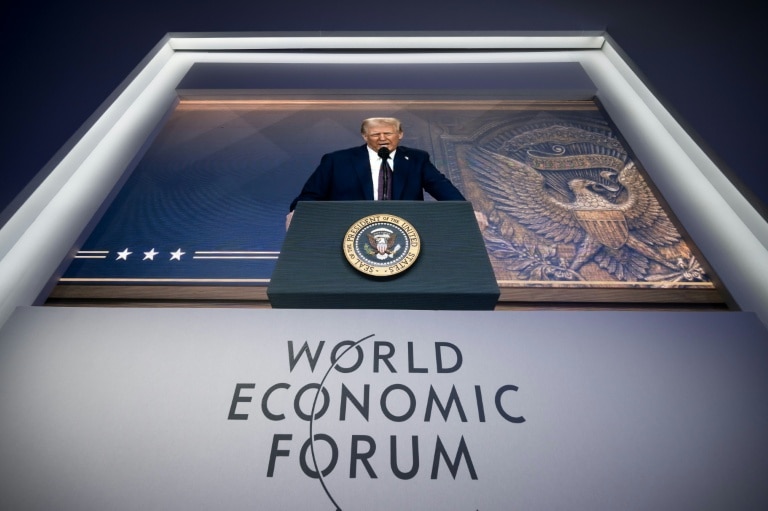
The alpine resort of Davos prepares for a seismic political confrontation as former President Donald Trump returns to the World Economic Forum with an unprecedented U.S. delegation. Scheduled to deliver a keynote address on Wednesday, Trump’s appearance marks his first in-person participation since his initial term, setting the stage for a dramatic clash between his ‘America First’ agenda and the forum’s traditional advocacy for open markets and multilateral cooperation.
Forum President Borge Brende confirmed the historic nature of Trump’s delegation while acknowledging the meeting occurs against ‘the most complex geopolitical backdrop since 1945.’ The delegation includes Secretary of State Marco Rubio, Treasury Secretary Scott Bessent, and Middle East/Ukraine envoy Steve Witkoff, indicating planned discussions on multiple global flashpoints including Ukraine, Gaza, Venezuela, and Iran.
Trump’s agenda includes detailed housing policy announcements aimed at American voters, delivered before international elites as midterm elections approach. This comes amid widespread domestic concern over living costs, positioning the Davos appearance as both diplomatic mission and political theater.
The return follows Trump’s virtual address last year, where he threatened punishing tariffs for nations refusing to relocate manufacturing to the U.S. His administration has since withdrawn from 66 international organizations, including nearly half of its UN-affiliated bodies, fundamentally restructuring America’s global engagement.
Economic analysts recognize 2025 as potentially marking the end of neoliberal globalization. Bain & Company economist Karen Harris notes: ‘This represents a paradigm shift where the U.S. prioritizes national security and weaponizes economic policy—a approach historically associated with Chinese economic philosophy.’
European and Asian leaders including EU Commission Chief Ursula von der Leyen, Ukrainian President Zelensky, and Chinese Vice Premier He Lifeng will attend, with six G7 leaders represented. Their presence underscores the global effort to navigate what Standard Chartered’s Philippe Dauba-Pantanacce describes as ‘a broad rejection of multilateral institutions.’
While former WTO Director Pascal Lamy acknowledges Trump’s trade policies have created significant noise with limited economic impact thus far, the geopolitical consequences continue unfolding. Evidence emerges in the EU’s accelerated Mercosur trade agreement with South America and China’s strategic export diversification away from American markets.
The gathering of 850 corporate leaders including Nvidia’s Jensen Huang and Microsoft’s Satya Nadella will witness firsthand the crystallization of a new global order—one potentially progressing without traditional American leadership.