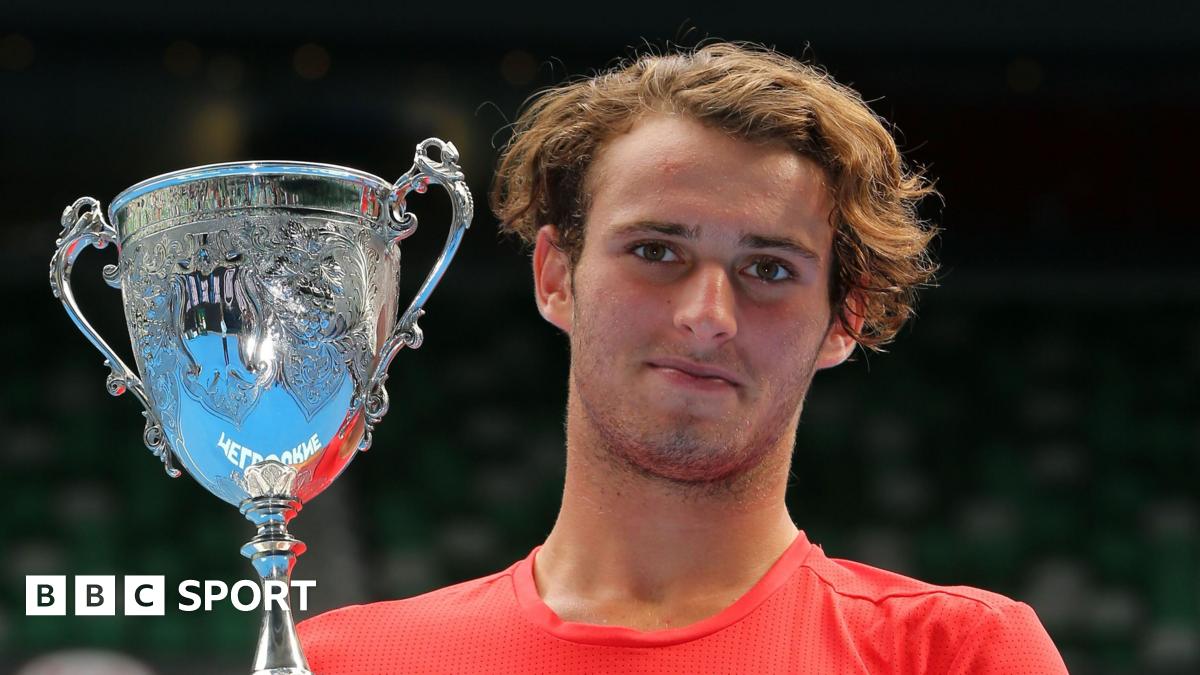
A decade after his spectacular fall from grace, former Australian Open junior champion Oliver Anderson reflects on the match-fixing scandal that derailed his tennis career and the unexpected journey that brought him back to the sport.
In January 2016, Anderson captured the Australian Open boys’ singles title before home crowds, defeating competitors who would become ATP Tour stalwarts. Yet just nine months later, the promising teenager found himself embroiled in a match-fixing scheme at an ATP Challenger event in Traralgon, Australia.
Anderson’s descent into corruption followed injury setbacks that disrupted his momentum after Melbourne. Facing financial pressures during recovery from surgery, he accepted an approach from match-fixing syndicates targeting vulnerable athletes. The arrangement called for Anderson to deliberately drop the first set against Harrison Lombe, an opponent ranked outside the top 1,500.
Surveillance footage reveals damning evidence: looping second serves and casual net returns from the 704th-ranked Anderson. Despite losing the opening set as planned, Anderson inexplicably fought back to claim victory in three sets—a outcome that triggered betting alerts when a punter attempted to wager A$10,000 on Lombe taking the first set.
“Anyone watching would have instantly thought something was up,” Anderson acknowledges in a candid interview with BBC Sport.
The scheme unraveled when undercover police intercepted Anderson courtside after his subsequent match. “I knew I’d made an absolute blunder,” he recalls of the confrontation.
Cooperation with authorities spared Anderson conviction, resulting instead in a two-year good behavior bond from Victoria state magistrates. Tennis authorities imposed a 19-month suspension deemed sufficient punishment.
During his exile, Anderson explored passions beyond tennis, channeling his love for British rock into guitar playing and entering the family’s textile business. He established his own resortwear brand while occasionally performing in Queensland bars.
Seven years after his competitive departure, a casual hit with his brother reignited Anderson’s competitive spirit. Sporadic practice sessions led to an invitation from Tennis Australia’s National Academy, where coaches offered a wildcard entry to Futures events.
Thus began an improbable global odyssey across tennis’s backwaters—from Mexico and the Dominican Republic to Mozambique, where Anderson gradually rebuilt his ranking. His perseverance culminated in a tournament victory in Angola before injury setbacks recently halted progress.
Now 27, Anderson views his return as validation regardless of competitive outcomes. “I could finish now and I’d consider it a great comeback,” he reflects. “I met great people, visited awesome places, and competed meaningfully again. If I stopped today, I’d still call it a success.”
The former prodigy maintains hope for Grand Slam qualifying appearances but acknowledges perspective gained from his tumultuous journey through tennis’s brightest lights and darkest corners.