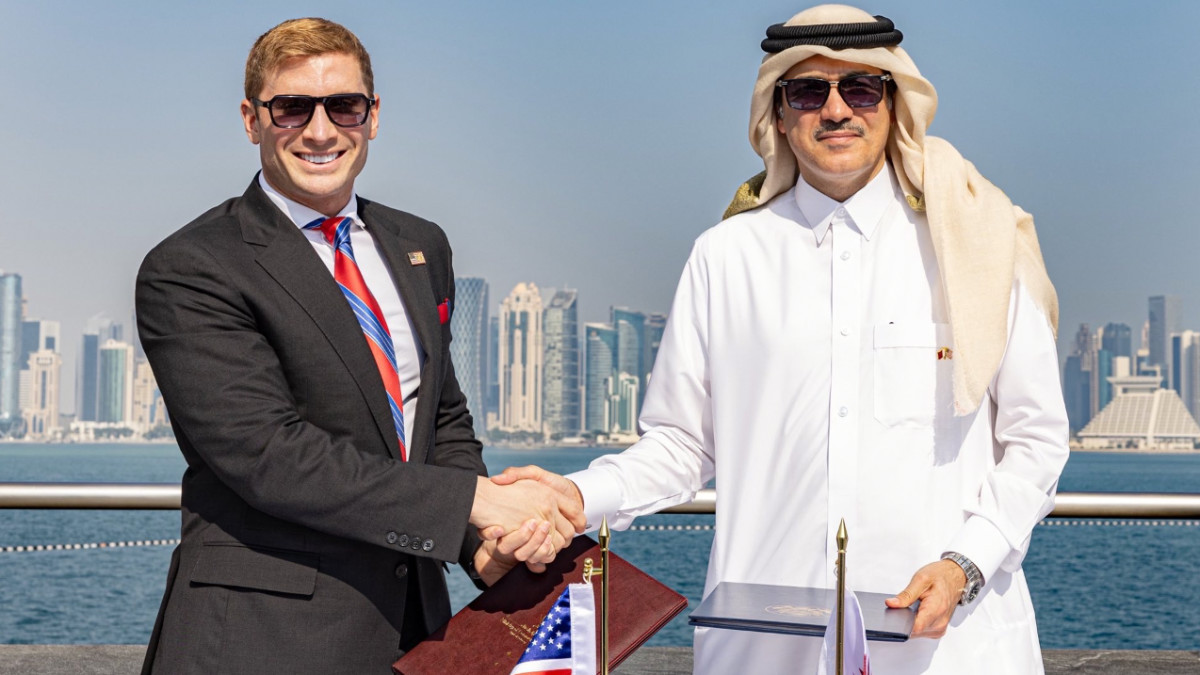
In a significant move to bolster its technological standing, Qatar has officially entered the United States’ “Pax Silica” initiative, a coalition focused on securing global artificial intelligence and semiconductor supply chains. The agreement, formalized on Monday, positions the gas-rich Gulf nation as the first regional partner in this strategic framework, which includes close US allies such as Australia, Israel, Japan, South Korea, and the United Kingdom, alongside financial hub Singapore.
The US State Department heralded the partnership as emblematic of a “new geopolitical consensus” where economic security is inextricably linked to national security. The department’s statement emphasized Qatar’s commitment to investing in secure energy, advanced technology, and critical minerals supply chains, deeming the nation an “indispensable partner.” This collaboration is expected to unlock joint ventures in digital infrastructure, advanced manufacturing, logistics, mineral refining, and energy projects.
This development highlights the US’s increasing reliance on its oil and gas-rich Gulf partners to fuel its ambition to dominate the burgeoning AI industry, a strategic pivot at a time when many Western nations face fiscal constraints. While neighbors Saudi Arabia and the United Arab Emirates (UAE) have been more aggressive early movers in AI, lobbying the previous Trump administration for advanced chips, Qatar has been methodically building its capacity. Together, these Gulf states command trillions in sovereign wealth capital ready for deployment.
Qatar’s recent initiatives signal a determined catch-up effort. In December, it established Qai, a dedicated AI development and investment company under the umbrella of its massive $524 billion Qatar Investment Authority (QIA). This followed a September investment in leading AI firm Anthropic by the QIA. Furthermore, a landmark $20 billion joint investment agreement was signed in December between Qai and US asset manager Brookfield to develop AI infrastructure within Qatar and on a global scale.
The Gulf’s competitive advantage extends beyond capital. Nations like Saudi Arabia are leveraging ultra-cheap energy—with commercial electricity prices 30-50% below the global average—to attract energy-intensive AI companies and data centers, a compelling offer amid rising energy costs frustrating US consumers.