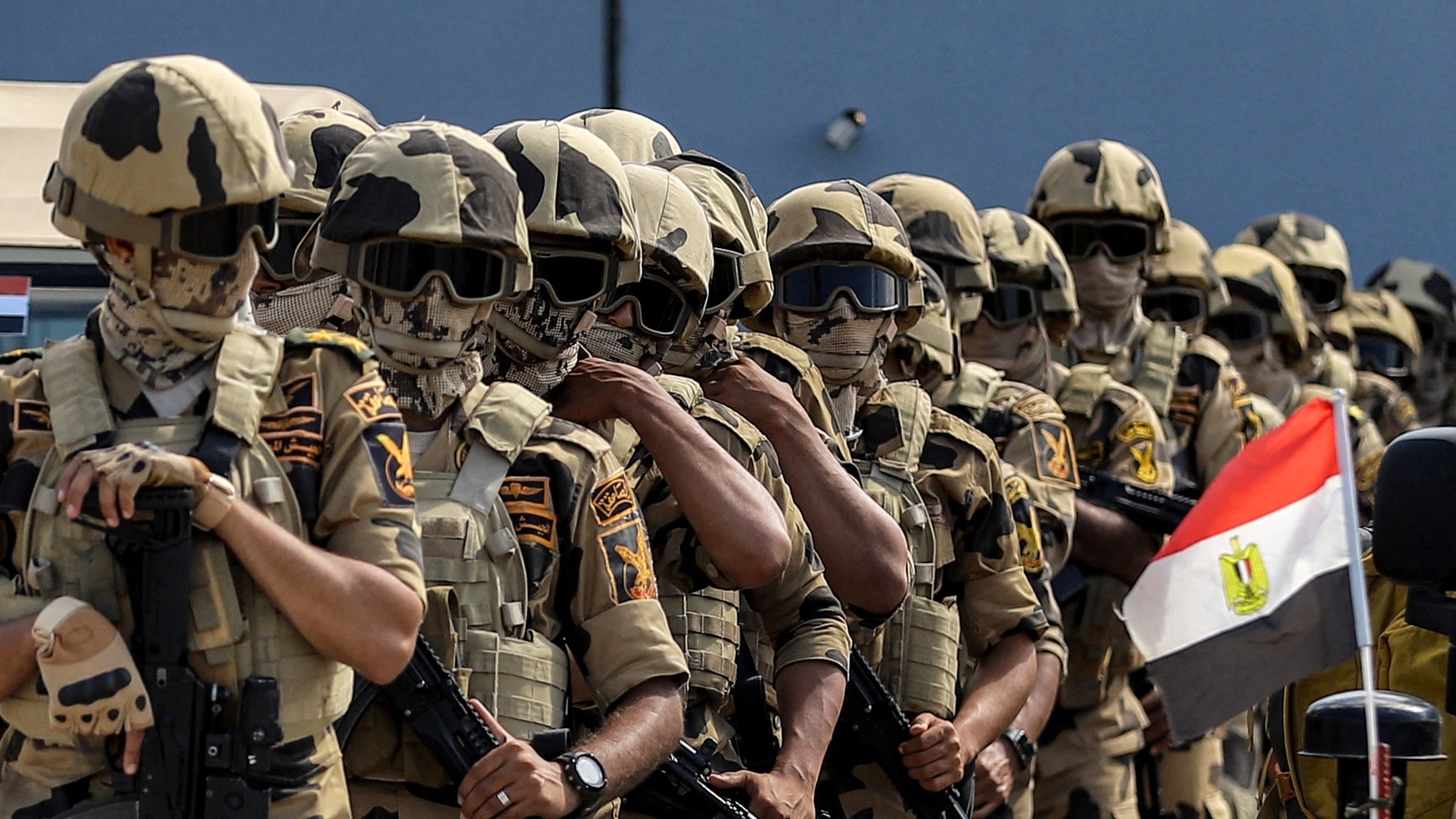
Egypt’s military leadership has refused governmental requests to deploy its substantial secret dollar reserves to alleviate the nation’s escalating debt crisis, according to senior banking and government officials. This revelation highlights deepening concerns about the military’s opaque economic dominance during a period of severe fiscal strain.
Despite holding foreign currency reserves exceeding Egypt’s total external debt of $161 billion, military authorities declined to assist with critical International Monetary Fund (IMF) repayments. In December, Egypt failed to meet a $750 million loan repayment deadline, ultimately negotiating for the amount to be deducted from upcoming IMF tranches with additional interest.
The refusal came after Prime Minister Mostafa Madbouly personally appealed to Defense Minister Abdel-Megeed Saqr in December, requesting military assistance to cover the IMF installment. The military’s Financial and Administrative Authority rejected the plea, despite the government having exhausted conventional borrowing options with domestic banks citing liquidity constraints.
Banking officials revealed that military reserves are physically held in Egypt’s two primary state-run banks—National Bank of Egypt and Banque Misr—but remain entirely inaccessible to civilian authorities. These funds, described as “real and physically held,” cannot be utilized for debt repayment or to address the country’s hard-currency crisis.
The military’s economic influence has expanded dramatically since the 2011 uprising, with its enterprises now dominating construction, agriculture, and import-export activities. Military-owned companies benefit from tax exemptions, preferential access to credit, prime land allocations, and conscript labor, operating with minimal financial transparency.
Notably, the military controls approximately 50% of Egypt’s gold industry, receiving half of all gold mine output valued at approximately $500 million annually. Additional revenue streams include toll operations on major highways generating millions daily, real estate projects, and infrastructure schemes—all flowing directly into military-controlled accounts.
The IMF has repeatedly warned that Egypt’s military-dominated economic model stifles private sector growth, deters investment, and perpetuates cycles of debt. While recent stabilization efforts have shown some progress, the international lender emphasizes that structural reforms reducing state economic involvement must accelerate significantly.