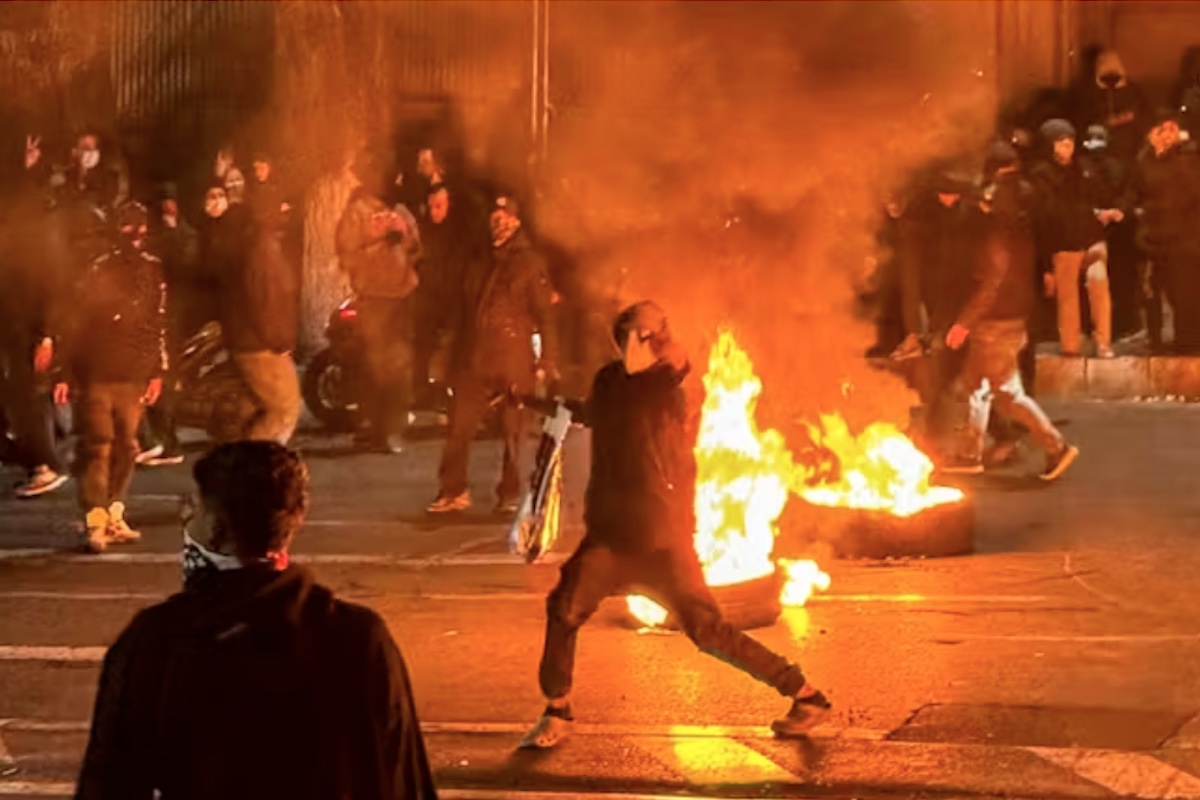
Iran has plunged into a nationwide digital darkness as its government implements a complete internet shutdown in response to unprecedented anti-regime protests that have spread across all 31 provinces. The current wave of demonstrations marks a significant escalation in Iran’s long history of civil unrest, distinguished by its explicit calls for regime change and the emergence of clear leadership from exiled opposition figures.
The catalyst for these events emerged in late December when Tehran’s bazaar merchants initiated protests against the country’s theocratic rulers following the Iranian currency’s sharp collapse. These demonstrations remained limited initially until Reza Pahlavi, the US-based son of Iran’s former shah, issued a public call for nationwide protests last Thursday and Friday. Despite initial dismissal from authorities who questioned Pahlavi’s influence, his Instagram video garnered over 90 million views and nearly 500,000 comments—unprecedented engagement for Persian-language social media content.
This mobilization represents the first time since the 1979 Iranian Revolution that a political figure has successfully issued a protest call explicitly framed around regime change that garnered massive public response. Unlike the leaderless, social media-driven protests of 2017-2018, 2019-2020, and 2022, or the reform-seeking Green Movement of 2009, the current movement combines digital tools with identifiable leadership, significantly enhancing its potential reach and impact.
In response, the regime has deployed its full arsenal of digital authoritarian strategies. On January 8, authorities imposed a complete internet blackout, simultaneously cutting telephone lines and SMS services. This drastic measure has isolated over 85 million Iranians, restricting information flow exclusively to state-run outlets like Tasnim and Fars News, both affiliated with the Islamic Revolutionary Guard Corps (IRGC).
The internet shutdown represents just one component of Iran’s sophisticated digital repression apparatus. The regime has simultaneously activated its extensive network of facial recognition cameras, largely imported from China, to identify and arrest protesters. Additionally, state media has intensified propaganda efforts, constructing narratives that frame protesters as foreign-backed terrorists rather than legitimate dissenters.
President Masoud Pezeshkian has characterized participants as ‘trained terrorists’ brought into the country by enemies, while parliamentary speaker Mohammad Bagher Ghalibaf alleges the nation faces ‘a phase of terrorist warfare.’ These narratives deliberately obscure the protests’ domestic origins and justify violent suppression.
Despite the digital blackout, limited Starlink satellite internet access has allowed a small number of videos to reach the outside world, documenting a brutal crackdown that has reportedly resulted in hundreds—possibly thousands—of fatalities and over 10,000 arrests. In a countermove, protesters have attempted to disable the regime’s ubiquitous surveillance cameras.
The current situation echoes the 2019 protests where approximately 1,500 people were killed under similar digital blackout conditions, though the explicit regime-change demands and leadership structure distinguish the current movement. As authorities work to disrupt remaining Starlink signals, protesters continue risking their lives to make their voices heard beyond Iran’s digital iron curtain.