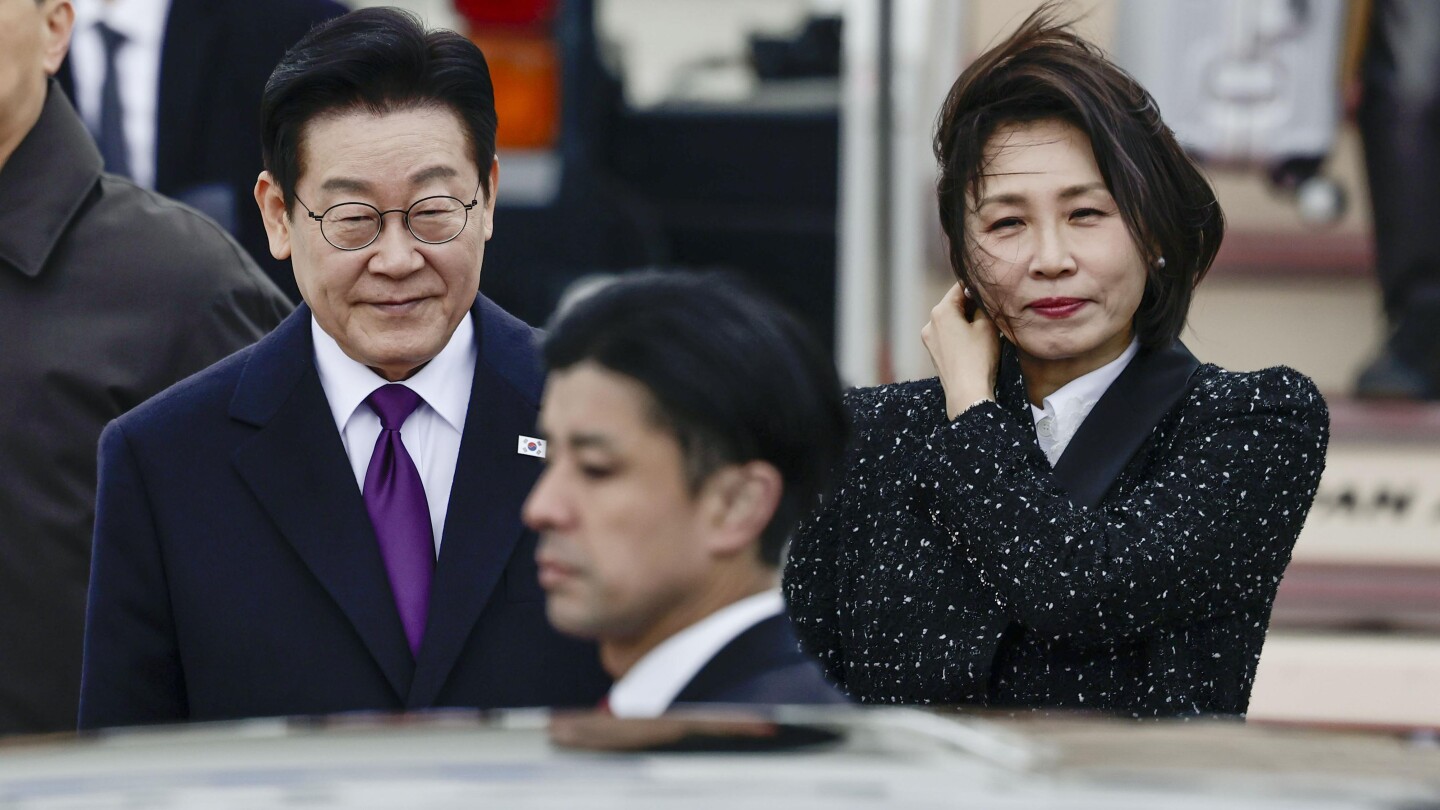
In a significant diplomatic move, South Korean President Lee Jae Myung touched down in Japan on Tuesday for a crucial summit with Japanese Prime Minister Sanae Takaichi. The high-stakes meeting, set against the backdrop of Nara’s ancient capital, represents a concerted effort to strengthen bilateral relations at a time when Tokyo faces escalating tensions with Beijing.
The carefully orchestrated summit carries substantial political implications for Prime Minister Takaichi, who currently enjoys robust approval ratings despite her party holding a majority in just one parliamentary chamber. Political analysts suggest the meeting could provide strategic advantage amid growing speculation about a potential snap election aimed at consolidating parliamentary power.
Nara, selected as the summit venue, serves as both symbolic and practical backdrop to the diplomatic engagement. The ancient city, renowned for its sacred deer population and UNESCO World Heritage sites, will host the leaders at Horyu Temple—an architectural marvel dating to the late 7th century that exemplifies the historical cultural exchange between Japan and the Korean Peninsula.
This diplomatic engagement occurs against a complex geopolitical backdrop. Modern Japan-South Korea relations remain shadowed by historical tensions stemming from Japan’s 1910-1945 colonial rule of Korea, yet both nations have recently demonstrated willingness to transcend historical grievances in favor of pragmatic cooperation.
Prime Minister Takaichi’s preparatory social media post captured the summit’s intended spirit: “I hope to further push forward Japan’s relations with South Korea in a forward-looking way as we meet in the ancient capital of Nara with more than 1,300 years of history.”
The talks will address pressing regional security concerns, including China’s growing assertiveness and North Korea’s nuclear advancements. Both leaders face the additional challenge of navigating the unpredictable diplomacy of the Trump administration while responding to U.S. pressure to increase defense expenditures.
Notably, the summit follows President Lee’s recent Beijing visit, where he engaged with Chinese leader Xi Jinping amid China’s escalating economic pressure against Japan. While acknowledging South Korea’s limited capacity to mediate between its neighbors, Lee emphasized the equal importance of relations with both Japan and China.
Trade discussions will feature prominently, with South Korea seeking Japanese support for joining the Comprehensive and Progressive Agreement for Trans-Pacific Partnership. This would necessitate lifting import restrictions on products from Fukushima and adjacent prefectures—a sensitive issue given South Korean public health concerns dating to the 2011 nuclear disaster.
Security cooperation under a U.S.-included trilateral framework remains another priority, though President Lee emphasized that “deep mutual trust” constitutes the foundational requirement for meaningful collaboration.
Despite early concerns about potential ideological clashes between the left-wing South Korean leader and Japan’s security hawk prime minister, both administrations have demonstrated surprising willingness to prioritize practical cooperation over historical differences. Media reports suggest possible humanitarian collaboration regarding the recovery of remains from a 1942 mining accident that claimed 180 lives, predominantly Korean forced laborers.