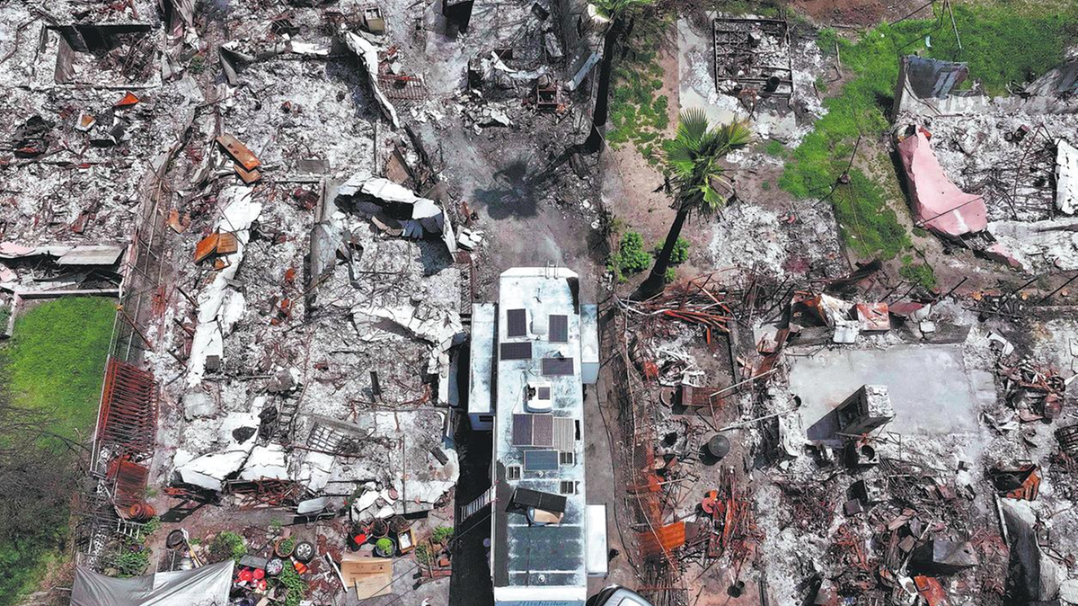
The year 2025 emerged as a pivotal juncture for global climate governance, marked by unprecedented environmental challenges and deteriorating international cooperation. Scientific data revealed alarming milestones as the 2015-2025 period became the first three-year span to breach the Paris Agreement’s critical 1.5°C threshold above preindustrial levels, according to the Copernicus Climate Change Service.
Environmental catastrophes escalated globally, beginning with devastating wildfires in California’s Los Angeles area, followed by record-breaking European heatwaves, and culminating in severe flooding across Southeast and South Asia. The Arctic experienced its warmest recorded period from October 2024 to September 2025 since records began in 1900, per NOAA’s Arctic Report Card.
The Global Tipping Points Report 2025, compiled by 160 researchers, warned that exceeding the 1.5°C limit places Earth in a danger zone of catastrophic climate tipping points. Professor Zhang Jian of Tsinghua University emphasized that climate change represents a nontraditional security threat with systemic impacts on economic stability and food security through increasingly frequent extreme weather events.
However, multilateral cooperation suffered significant setbacks as geopolitical tensions intensified. The United States under President Donald Trump formally withdrew from the Paris Agreement, accompanied by environmental regulation rollbacks and climate science funding cuts. Experts described this move as creating substantial uncertainty for global climate financing and emission reduction efforts.
Ma Jun, Director of the Institute of Public and Environmental Affairs, noted that current geopolitical fragmentation has collapsed mutual trust between nations, transforming climate governance from a collective existential threat into a complex arena involving development rights and green economic competition. Professor Sun Yixian of the University of Bath attributed Western climate backtracking to benefit allocation conflicts during green transitions, where national interest group politics increasingly override global cooperation imperatives.
The convergence of scientific urgency and political disunity created a paradoxical tenth anniversary of the Paris Agreement, testing humanity’s collective resilience against escalating climate threats.