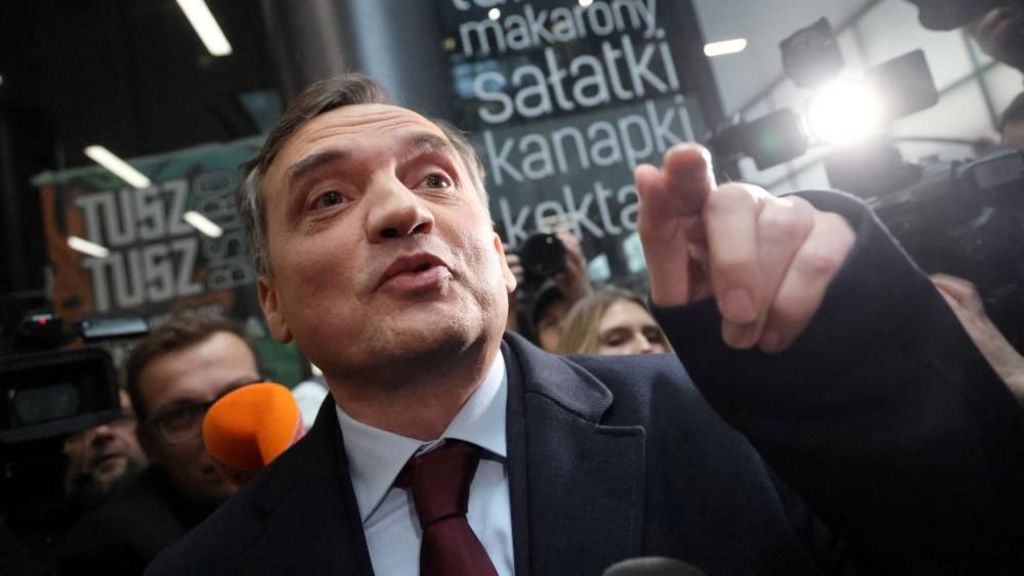
Hungary has extended political asylum to Zbigniew Ziobro, Poland’s former Justice Minister, marking a significant escalation in diplomatic tensions within the European Union. Ziobro faces 26 criminal charges in his home country, primarily centered on allegations of embezzling approximately 25 million zloty ($7 million) from the state-controlled Foundation for Justice. These funds, intended for crime victim support and criminal rehabilitation programs, were allegedly diverted to purchase Israeli-made Pegasus spyware, which was then used to surveil political opponents.
Ziobro, who served as Justice Minister from 2015 to 2023 under Poland’s right-wing Law and Justice (PiS) party, maintains his innocence, characterizing the charges as politically motivated persecution by the current government led by Prime Minister Donald Tusk. In a statement on social media platform X, Ziobro declared he accepted Hungary’s protection to ‘fight against political banditry and lawlessness,’ accusing Tusk of conducting a personal vendetta.
This case represents the second instance of Hungary offering asylum to a former PiS official, following the 2023 grant to Ziobro’s former deputy, Michal Romanowski. Both cases involve allegations of corruption and abuse of power during their tenure.
The asylum grant challenges fundamental EU principles regarding judicial cooperation and mutual trust among member states. Hungary’s decision aligns with Prime Minister Viktor Orban’s political strategy of positioning himself as a defender of national sovereignty against what he perceives as EU overreach. Orban’s government has faced similar criticism from Brussels regarding rule-of-law standards and judicial independence.
The Pegasus spyware scandal has had profound implications for Polish politics. Current Foreign Minister Radoslaw Sikorski and members of Prime Minister Tusk’s family were among those allegedly targeted by the surveillance program. Additionally, Ziobro’s controversial judicial reforms during his ministry triggered prolonged conflict with EU institutions, resulting in the freezing of EU funds for Poland and multiple rulings against the country by the European Court of Justice.
Legal experts note that if convicted in Poland, Ziobro could face up to 25 years imprisonment. His asylum status in Hungary effectively shields him from extradition, creating a complex legal and diplomatic standoff between the two EU member states.