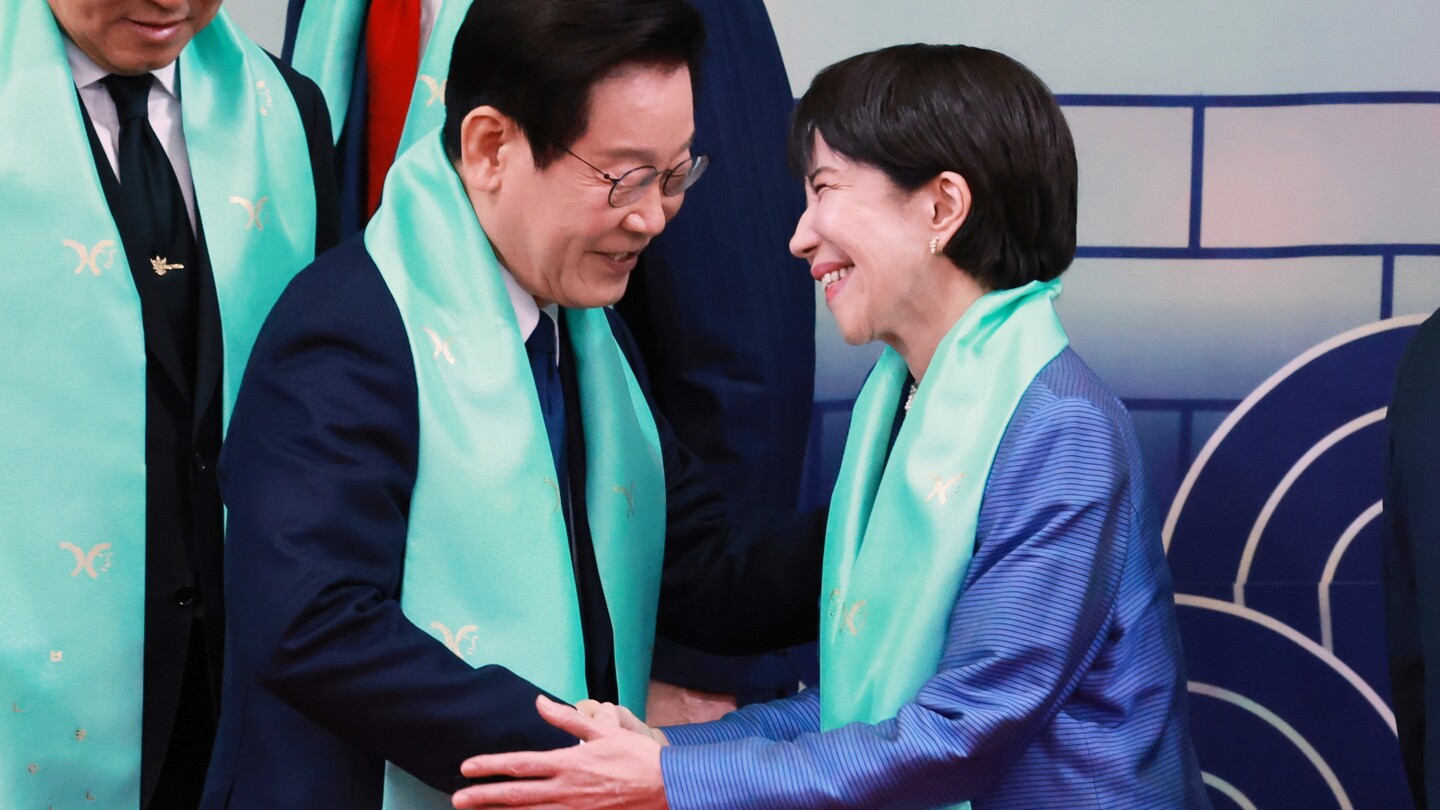
In a significant diplomatic move, Japanese Prime Minister Sanae Takaichi will welcome South Korean President Lee Jae Myung for a bilateral summit in the historic city of Nara on Tuesday. This meeting represents the third high-level engagement between the two leaders within three months, signaling a concerted effort to stabilize relations between the two Northeast Asian nations.
The summit occurs against a complex geopolitical backdrop characterized by China’s growing regional influence and ongoing tensions surrounding Taiwan. The discussions are expected to address critical issues including trade security, North Korea’s nuclear ambitions, and coordinated responses to China’s expanding military presence. Both nations face additional pressure from the United States to increase defense expenditures amid former President Trump’s unpredictable foreign policy approach.
This diplomatic encounter follows President Lee’s recent visit to China, where President Xi Jinping emphasized historical Sino-Korean alliances against Japan during World War II. Despite these overtures, Lee is anticipated to maintain a neutral stance between Beijing and Tokyo.
Japanese Foreign Minister Toshimitsu Motegi emphasized the strategic importance of strengthened Japan-South Korea relations, stating that reinforcing trilateral cooperation with the United States remains more crucial than ever in the current security environment.
The leaders’ itinerary includes a symbolic visit to Horyu Temple, featuring some of the world’s oldest wooden structures that illustrate Japan’s historical cultural exchanges with the Korean Peninsula through Buddhism. This cultural diplomacy occurs alongside practical discussions about potential humanitarian cooperation, including DNA analysis of remains from a 1942 mining accident that killed 136 Korean forced laborers.
While historical tensions stemming from Japan’s 1910-1945 colonial rule of Korea have long complicated relations, both governments appear committed to forward-looking engagement based on shared security concerns regarding China’s assertiveness. Prime Minister Takaichi, known for her hawkish security stance, has notably modified her approach to Yasukuni Shrine visits, suggesting diplomatic sensitivity to historical issues.