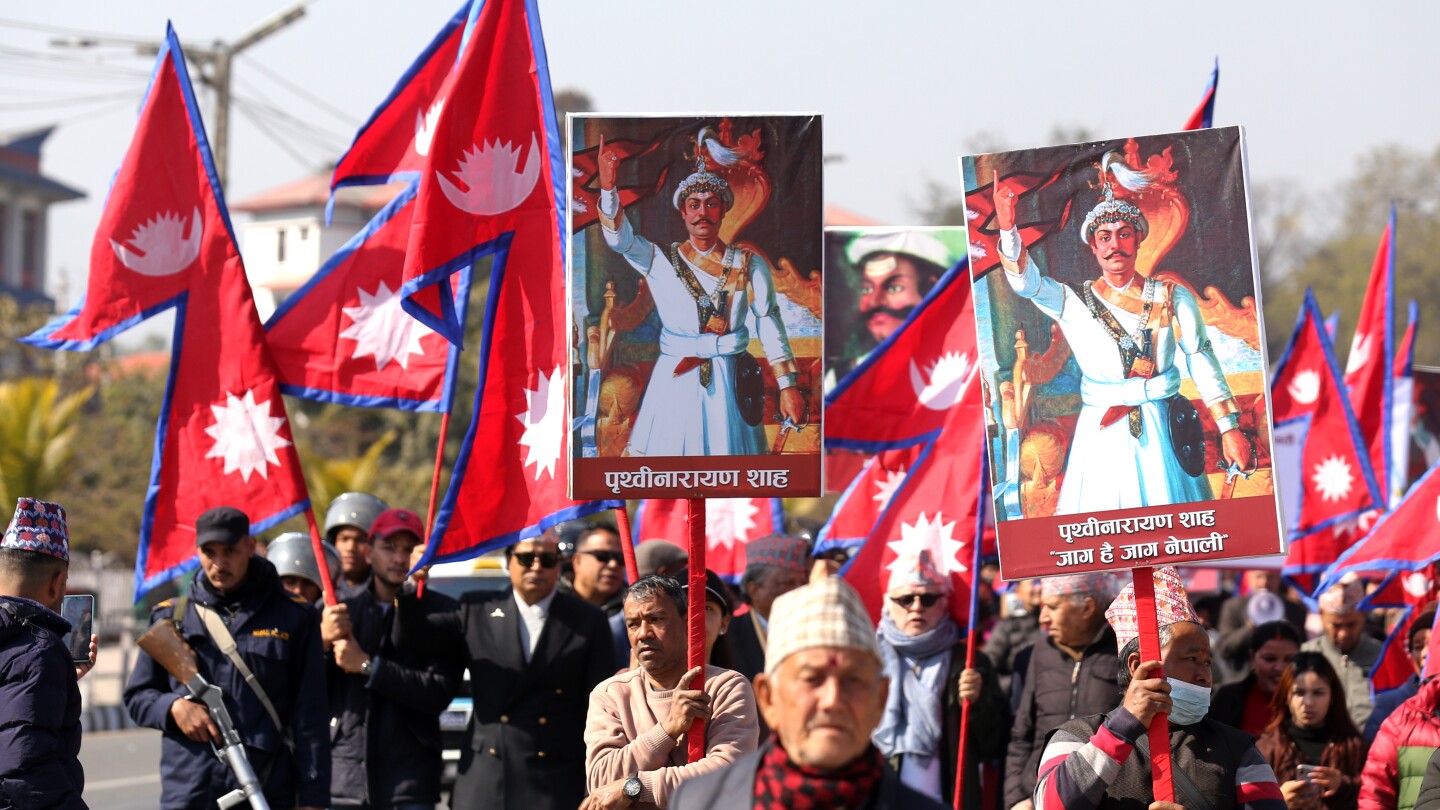
KATHMANDU, Nepal — In a significant display of political sentiment, supporters of Nepal’s abolished monarchy gathered in the capital on Sunday, vocally demanding the reinstatement of the royal institution just months before scheduled parliamentary elections. This marked the first major demonstration by monarchists since September’s youth-led protests that precipitated governmental upheaval.
Chanting “We love our king. Bring back the king,” hundreds of protesters assembled around the statue of King Prithvi Narayan Shah, the 18th-century founder of the Shah dynasty. The rally coincided with the birth anniversary of the historic monarch, an occasion that has previously witnessed violent confrontations between demonstrators and security forces. Last March, two fatalities occurred during similar pro-monarchy gatherings.
The current political landscape stems from widespread September demonstrations led by disillusioned Gen Z activists protesting systemic corruption, limited opportunities, unemployment, and poor governance. These protests, initially triggered by a short-lived social media ban, ultimately led to the establishment of an interim government under Nepal’s first female prime minister, retired Supreme Court Justice Sushila Karki.
Samrat Thapa, one of the demonstrators, articulated the movement’s conviction: “The last and only alternative for this country is king and monarchy only. Given the current context and the path taken after the Gen Z movement, monarchy must be restored to manage the situation.”
Despite the historical tensions associated with such gatherings, Sunday’s event proceeded peacefully under the close surveillance of riot police. The monarchy’s abolition in 2008 forced the last Shah king, Gyanendra, to abdicate, establishing Nepal as a republic. Nevertheless, the royal family continues to command substantial support among certain segments of the population.
The interim government faces its own challenges, including criticism over perceived delays in pursuing corruption cases. As the nation prepares for March elections, the persistent royalist movement introduces another complex dimension to Nepal’s evolving political narrative.