Central China’s Hubei Province is pioneering an innovative economic transformation by converting its ecological treasures into sustainable industrial development along the Yangtze River Economic Belt. This strategic initiative demonstrates the practical implementation of China’s ‘two mountains’ concept that recognizes lucid waters and lush mountains as invaluable economic assets.
In Shiyan city, the pristine Danjiangkou Reservoir—primary water source for the South-to-North Water Diversion Project—has evolved into the foundation of a burgeoning beverage industry. Under the premium ‘Wudang Mountain Water’ brand, the region has attracted 72 prominent beverage companies including Nongfu Spring and PepsiCo. This cluster has developed a comprehensive industrial chain encompassing drinking water, tea beverages, fruit juices and beer, collectively generating over 100 billion yuan ($14.32 billion) in output value.
Beijing Yiqing Food’s industrial park in Danjiangkou exemplifies this sustainable approach. The company utilizes fully automated production lines to create beverages that incorporate local resources while implementing advanced environmental protections. Their operations include dedicated sewage treatment facilities, conversion of waste residue into organic fertilizer, and adoption of photovoltaic energy systems, creating a circular economy that benefits both production and ecological conservation.
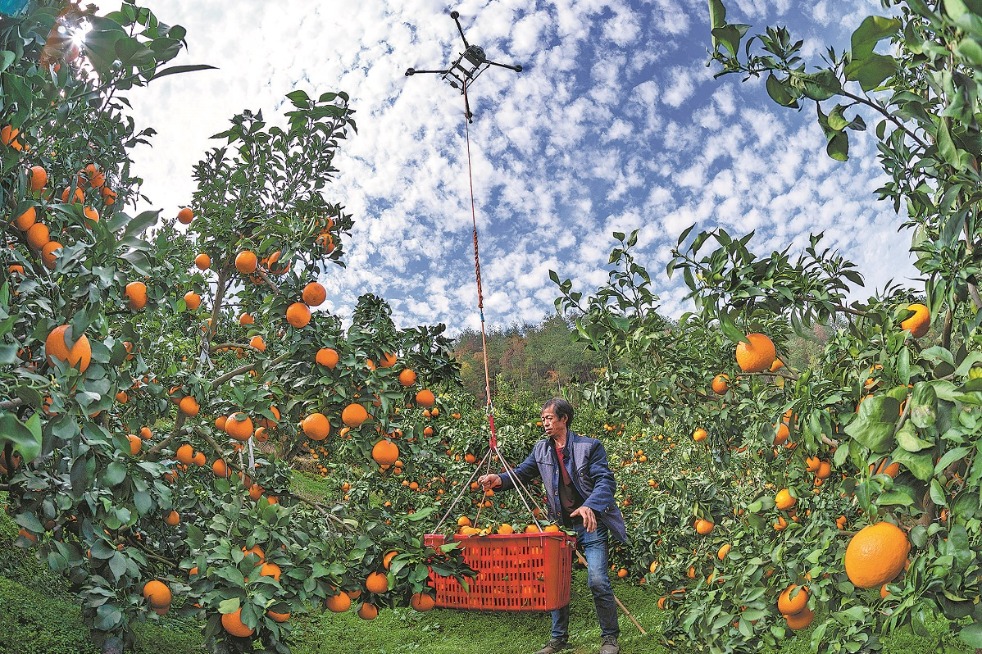
Further downstream in Zigui county, technological innovation is revolutionizing the citrus industry. Farmers like Guo Xingcheng have transformed traditional agricultural practices through drone technology. What previously required thirty minutes of manual labor now takes merely sixty seconds with drone-assisted harvesting. The county has developed an intelligent sorting system that categorizes oranges by size, moisture content and sugar levels, supported by an extensive cold chain logistics network that extends shelf life to several months.
The ‘Zigui Navel Orange’ geographical indication brand now represents an industry spanning 26,667 hectares with annual output exceeding one million tons and comprehensive value approaching 20 billion yuan. Over 70% of local residents participate in orange-related industries, sustaining livelihoods for approximately 260,000 people while creating new professional roles in drone operation and e-commerce.
In Shennongjia, renowned for its 91.1% forest coverage, authorities have developed financial innovations to monetize ecological value. The region’s annual carbon absorption capacity of 1.0968 million tons has been leveraged through carbon sink loans and ecological financing mechanisms. By August 2024, Shennongjia had issued approximately 120 million yuan in carbon sink loans, including 18.4 million yuan in carbon forest loans to two enterprises using afforestation carbon sink income as repayment collateral.
These diverse initiatives—from water-based industries to agricultural modernization and carbon finance—collectively contributed to Hubei’s ecological product value exceeding 1.2 trillion yuan in 2024. The added value of green industries now constitutes 25.6% of the province’s GDP, demonstrating the successful integration of environmental conservation and economic development.