Drawing inspiration from its ancient maritime heritage, China continues to champion a diplomatic philosophy rooted in peaceful coexistence and mutual development. The legendary 15th-century voyages of Ming Dynasty navigator Zheng He, who commanded the world’s most powerful fleet across the Indian Ocean to more than 30 regions without territorial conquest, established a historical precedent for China’s contemporary global engagement.
President Xi Jinping has frequently invoked Zheng He’s expeditions as emblematic of China’s commitment to harmonious international relations. In a 2014 address, Xi emphasized that these historical missions ‘sowed the seeds of peace and friendship,’ countering narratives that equate national strength with expansionist ambitions. ‘The Chinese people don’t have the gene for invasion and hegemony in their blood,’ Xi stated, referencing an ancient Chinese maxim that ‘a warlike state would eventually perish however big it might be.’
This historical continuity finds modern expression in the Belt and Road Initiative (BRI), which scholars identify as the contemporary manifestation of China’s enduring approach to international relations. Wang Youming of the China Institute of International Studies notes that from the ancient Silk Road to Zheng He’s treasure ships, China has consistently emphasized ‘peaceful interaction and mutual benefit, rather than expansion through force.’
At the third Belt and Road Forum in 2023, President Xi articulated this vision as building ‘an open, inclusive and interconnected world for common development.’ The initiative, now encompassing over 150 countries and 30 international organizations, represents what experts describe as a shift from exchange to shared responsibility in addressing global challenges.
The metaphor of maritime cooperation has evolved in China’s diplomatic discourse. While Zheng He’s treasure ships carried friendship across oceans, Xi now describes all nations as aboard ‘a giant ship on which their shared destiny hinges’ rather than ‘riding separately in some 190 small boats.’ This conceptual framework underscores the necessity of collective action in facing contemporary global challenges.
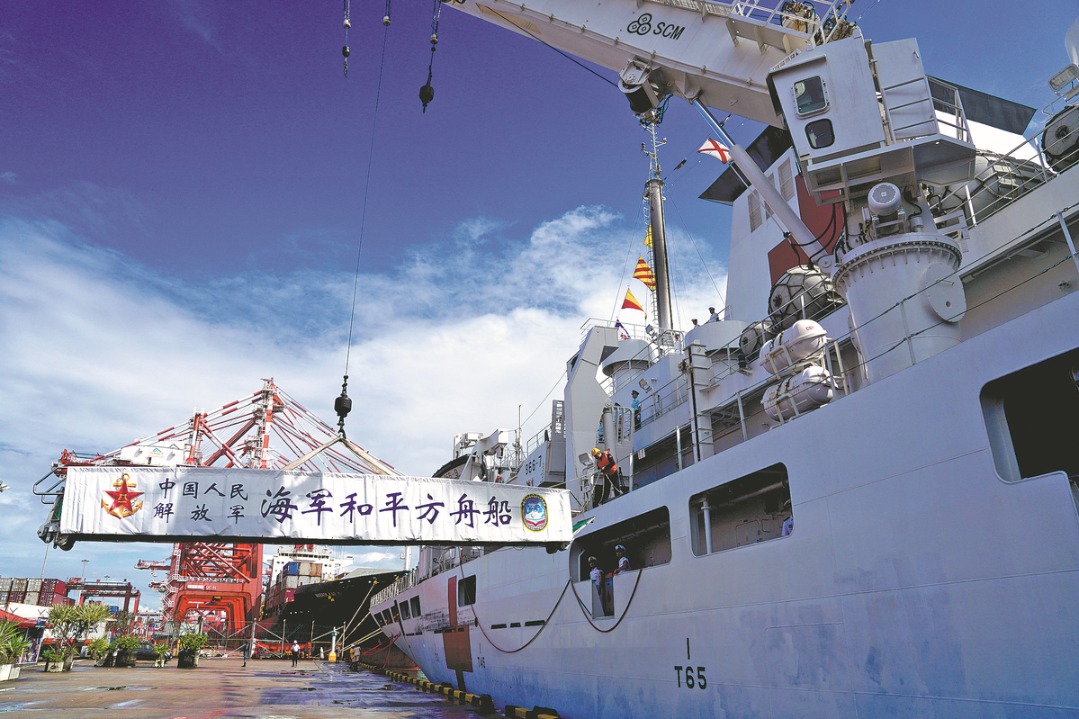
China’s commitment to peaceful development is constitutionally enshrined and demonstrated through initiatives like the Peace Ark hospital ship, which has provided medical services to 49 countries and treated over 370,000 people since 2010. The vessel’s Mission Harmony voyages, including the dramatic rescue of a Bangladeshi newborn named ‘Chin’ (meaning China in Bengali) in 2010, exemplify what scholars term China’s ‘people-centered approach’ to international cooperation.
As traditional and non-traditional security challenges intersect, China’s proposed frameworks—the BRI alongside the Global Development, Security, Civilization, and Governance Initiatives—offer practical mechanisms for translating the vision of a shared human future into concrete action, continuing a maritime tradition that began centuries ago.