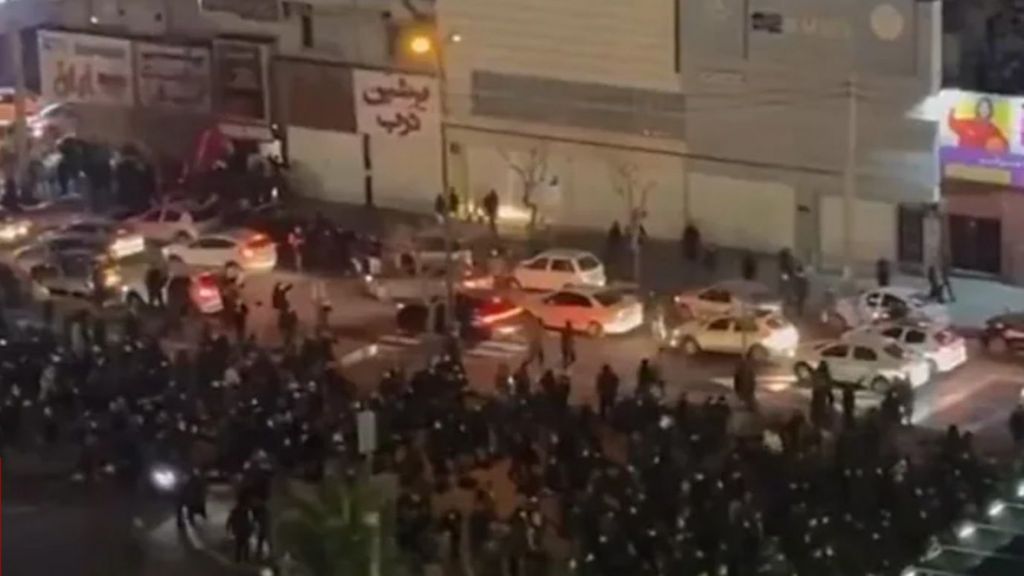
Tehran has become the epicenter of escalating civil unrest as Iran enters its twelfth consecutive day of widespread demonstrations. Verified footage from multiple sources reveals substantial crowds marching through the capital and other urban centers, marking the most significant challenge to Iran’s clerical leadership in recent years.
The protests originated on December 28th when merchants took to Tehran’s streets to voice frustration over the Iranian rial’s catastrophic devaluation. The currency has plummeted to unprecedented lows against the US dollar, with parallel inflation rates surging to approximately 40%. This economic collapse stems from international sanctions targeting Iran’s nuclear program, compounded by systemic government mismanagement and corruption.
What began as economic demonstrations has rapidly evolved into broader political dissent. University students have joined the movement, with protests now confirmed across 140 municipalities spanning all 31 Iranian provinces. In Mashhad, Iran’s second-largest city, protesters openly demanded the removal of Supreme Leader Ayatollah Ali Khamenei and advocated for the return of Reza Pahlavi, exiled son of the former Shah.
The human cost continues to mount amid conflicting casualty reports. The US-based Human Rights Activist News Agency documents at least 34 protester fatalities and seven security personnel deaths, alongside 2,270 arrests. Norway-based Iran Human Rights presents higher figures, claiming at least 45 protesters including eight children have been killed by security forces. BBC Persian has independently verified 21 fatalities, while Iranian authorities acknowledge five security personnel deaths.
Notably, security forces have permitted some peaceful rallies to continue without intervention, though Wednesday witnessed violent clashes in multiple urban centers. The persistence of demonstrations across nearly two weeks suggests deepening societal fractures and represents the most sustained challenge to Iran’s establishment in years.