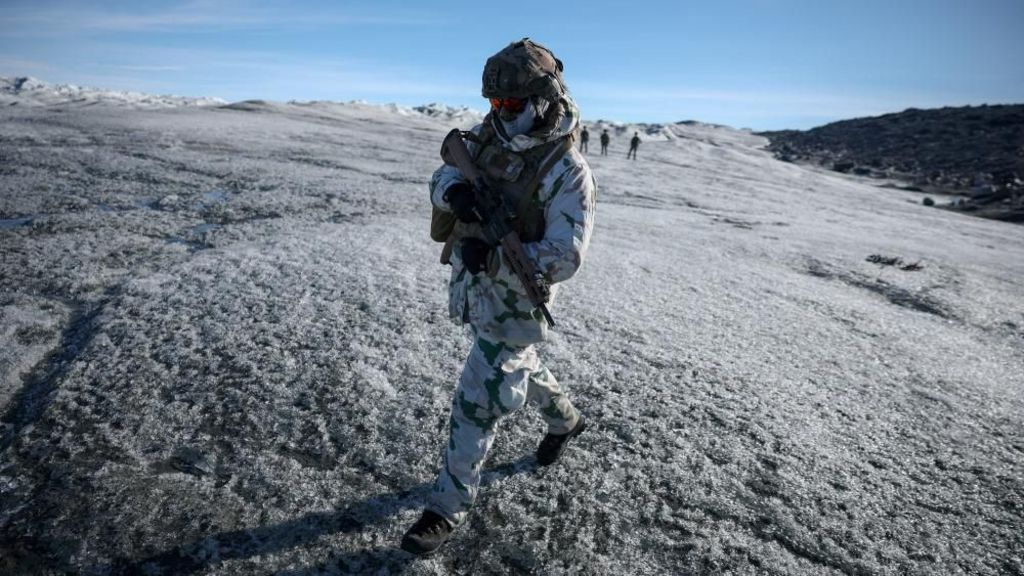
A significant geopolitical confrontation is unfolding across the Atlantic as the United States administration renews its strategic interest in Greenland, triggering a firm diplomatic response from European allies. The situation escalated when US Vice-President JD Vance declared the semi-autonomous Danish territory “critical” for global missile defense systems during a Fox News interview, criticizing European nations for their perceived failure to adequately secure the region.
Vance articulated concerns about Greenland’s pivotal role in early warning systems against potential Russian or Chinese missile attacks, stating that European partners “have not done a good job” in maintaining the territory’s defensive capabilities. His comments came alongside White House confirmation that officials are “actively” discussing potential acquisition options for Greenland, including military annexation as a viable alternative.
The Trump administration’s position marks a revival of similar attempts made during the former president’s first term in 2019, though with notably heightened rhetoric following recent military actions in Venezuela. This renewed interest has been met with unequivocal rejection from both Danish and Greenlandic authorities, who have consistently maintained that the island is not available for purchase or transfer.
In a powerful show of European solidarity, leaders from France, the UK, Germany, Italy, Poland, and Spain joined Denmark in issuing a joint statement affirming that “Greenland belongs to its people, and only Denmark and Greenland can decide on matters concerning their relations.” The European leaders emphasized their commitment to Arctic security through NATO collaboration while explicitly invoking the principles of the UN Charter regarding sovereignty and territorial integrity.
Greenland’s political representatives expressed alarm at the American position, with Danish parliament member Aaja Chemnitz characterizing the administration’s comments as “a clear threat” and “completely disrespectful” toward a NATO ally. Meanwhile, local residents like Inuit hunter Aleqatsiaq Peary conveyed indifference toward potential ownership changes, noting that transition from Danish to American control would simply represent “switching from one master to another” for the historically colonial territory.
Beyond military considerations, Greenland’s significance extends to substantial natural resources including rare earth minerals, uranium, and potential oil and gas reserves—assets becoming increasingly accessible due to climate-induced ice melt. The strategic Pituffik Space Base (formerly Thule Air Base), operational under US control since World War II, further underscores the territory’s enduring importance in global defense architecture.
With US Secretary of State Marco Rubio scheduled to hold talks with Danish officials next week, the diplomatic resolution of this emerging crisis remains uncertain, potentially testing the resilience of transatlantic alliances and established international norms regarding territorial sovereignty.