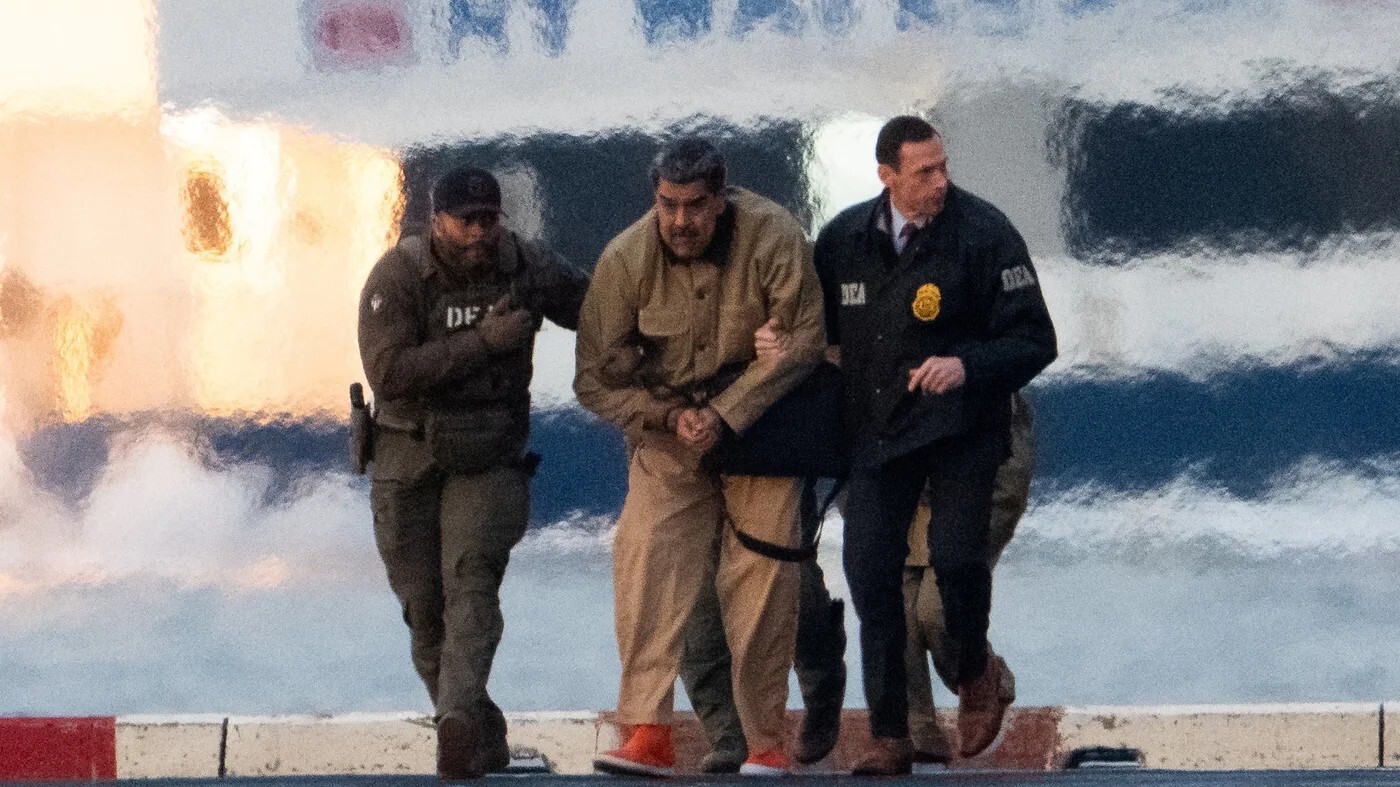
A recent military operation conducted by the United States against Venezuela has ignited a fierce legal debate among constitutional and international law scholars. United Nations experts have declared the attack a clear breach of international law, while the Trump administration defends its actions under US statutory provisions. The operation involved airstrikes and the extraordinary rendition of Venezuelan President Nicolas Maduro and his wife, Cilia Flores, to face narcotics trafficking charges in New York.
Legal authorities present contrasting interpretations of the operation’s legitimacy. J Wells Dixon, Senior Staff Attorney at the Center for Constitutional Rights, asserts the invasion lacked any credible foundation in US law, emphasizing that congressional authorization was neither sought nor obtained. ‘There’s no authority to do that,’ Dixon stated, noting that Venezuela had not launched an armed attack against the US that would justify military response under self-defense doctrines.
Eugene R Fidell, Military Law expert at Yale Law School, concurred, characterizing the operation as unconstitutional absent a congressional declaration of war. ‘Drug smuggling is not an invasion,’ Fidell remarked. ‘This was not an act of self-defense.’
Conversely, Ingrid Brunk of Vanderbilt Law School offered a divergent perspective, framing the operation through a law enforcement rather than military lens. Brunk cited historical precedent of presidential actions without congressional approval, particularly regarding targeted strikes and apprehensions. She referenced President Obama’s 2011 Libya strikes as comparable executive action.
The extraordinary abduction of Maduro and Flores raises additional legal complexities. While the US and Venezuela maintain an extradition treaty dating to 1922, officials confirm no consent was obtained from Caracas. Nevertheless, Brunk notes US courts typically disregard irregularities in defendant apprehension, citing the precedent established in Israel’s prosecution of Adolf Eichmann.
The impending trial faces potential challenges regarding head of state immunity, with experts referencing the Manuel Noriega case as possible precedent. The administration’s revival of the Monroe Doctrine as justification has drawn particular criticism from legal scholars, including Yale’s Oona Hathaway, who warns this stance effectively rejects UN Charter principles and threatens global security architecture.