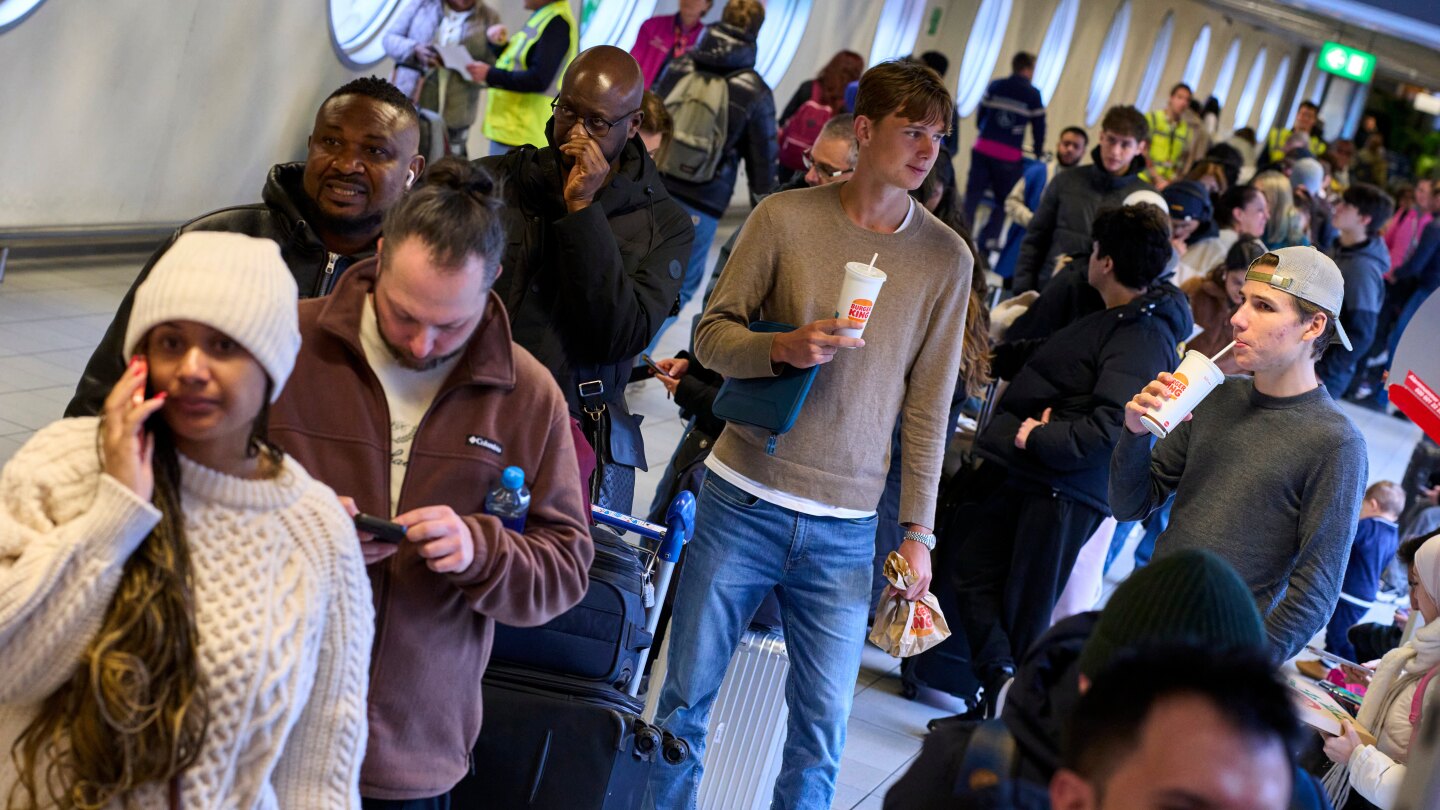
A severe winter storm system has unleashed widespread disruption across Northern Europe, creating transport chaos from Amsterdam to Berlin. At Schiphol Airport, one of Europe’s busiest aviation hubs, more than 1,000 stranded passengers were provided emergency accommodation as authorities scrambled to clear snow-clogged runways and de-ice aircraft following the cancellation of at least 800 flights.
The Netherlands’ transport infrastructure faced critical challenges during Wednesday’s morning rush hour, with rail operator NS urging passengers to postpone travel amid significantly reduced service. Road networks fared no better, with traffic jams extending over 700 kilometers (435 miles) as trucks skidded across icy highways and snow plows struggled to maintain clear passage.
Paris experienced similar disruptions as snow blanketed iconic landmarks including the Eiffel Tower and Louvre Museum. French authorities implemented emergency measures including work-from-home advisories and vehicle restrictions after Meteo France issued alerts for snow and black ice. Parisian airports canceled approximately 140 flights collectively, while SNCF railways reported widespread delays and cancellations due to track conditions.
Even typically winter-resilient Nordic nations reported significant disruptions. Gothenburg, Sweden suspended all tram services due to hazardous snow accumulation, while Helsinki, Finland experienced bus cancellations attributed to diesel vehicles failing to start in subzero temperatures and challenging road conditions.
In a positive development for Berlin residents, power restoration commenced for thousands of households left without electricity for four days following a suspected far-left attack on high-voltage lines, providing relief during the prolonged freeze.
Travelers like Sonja Wurmlingel, attempting to return to Argentina, faced repeated disappointments with canceled flights and uncertain alternative arrangements, highlighting the human impact of the transport crisis. KLM Airlines reported decreasing airport queues as proactive cancellation notices prevented additional passengers from arriving at already overwhelmed terminals.