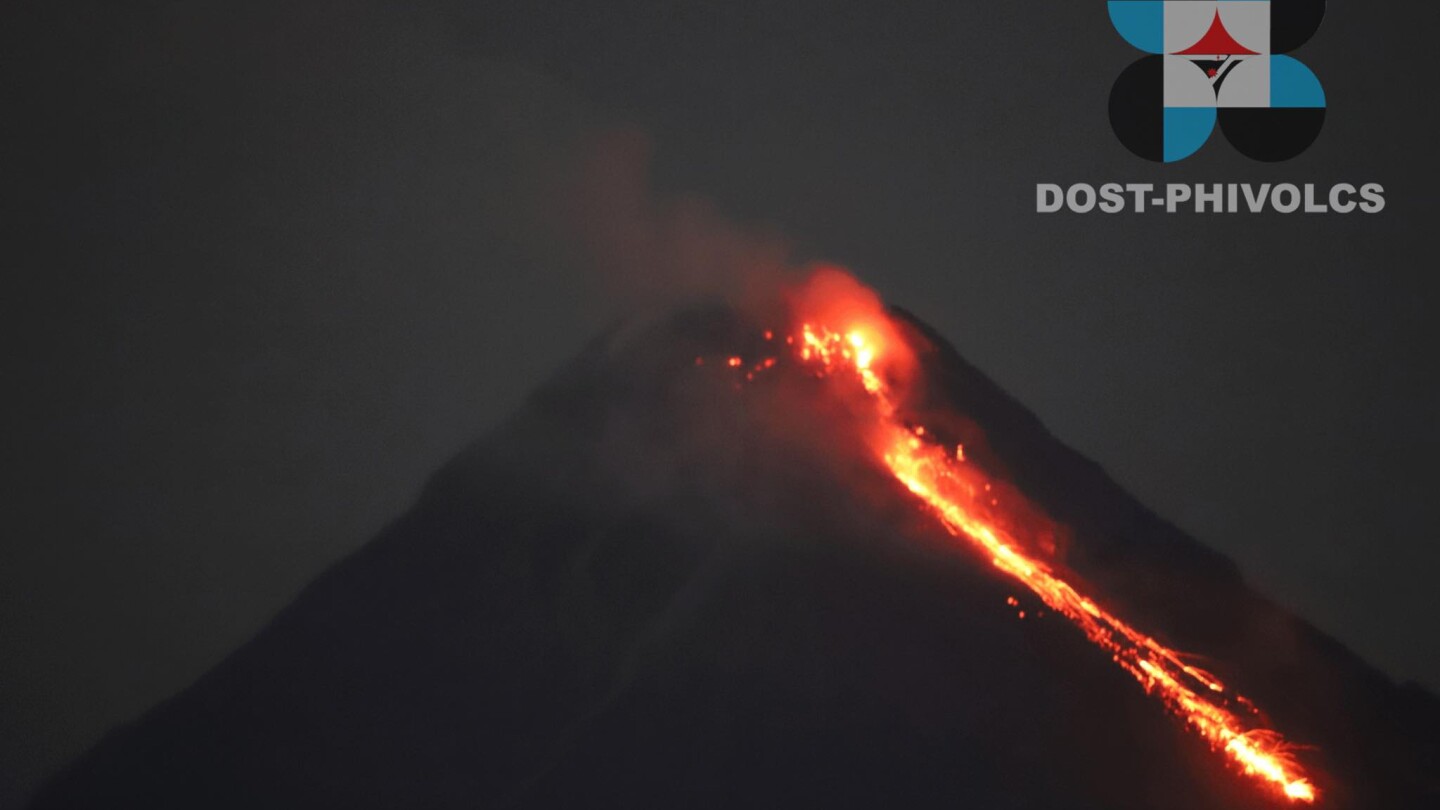
MANILA, Philippines — Philippine authorities have initiated large-scale evacuations surrounding Mayon Volcano, the nation’s most active volcano, following a series of mild eruptions and increased seismic activity. Nearly 3,000 residents residing within the designated permanent danger zone have been relocated as scientists monitor concerning developments.
The Philippine Institute of Volcanology and Seismology elevated the alert status to Level 3 on Tuesday after detecting intermittent rockfalls from the summit crater, some involving debris the size of automobiles, alongside dangerous pyroclastic flows—rapid avalanches of superheated rock fragments, ash, and volcanic gases.
According to Teresito Bacolcol, the country’s chief volcanologist, the current activity constitutes a quiet eruption characterized by lava accumulation at the peak, causing the dome to swell and fracture. While these developments signal volcanic unrest, Bacolcol noted that key indicators of an imminent major eruption—such as significant volcanic earthquakes and elevated sulfur dioxide emissions—remain absent, making predictions about escalation uncertain.
Military personnel, police, and disaster-response teams coordinated the evacuation of 2,800 villagers from 729 households within the 6-kilometer (3.7-mile) radius permanent danger zone. An additional 600 residents living beyond the official danger boundary have voluntarily relocated to government-operated emergency shelters as a precautionary measure.
The evacuation highlights ongoing challenges with enforcement in high-risk areas. Despite long-standing prohibitions marked by concrete warning signs, thousands continue to inhabit the volcano’s foothills, maintaining generational farms and businesses including sand quarrying and tourism operations. Mayon has erupted 54 times since records began in 1616.
The 2,462-meter (8,007-foot) volcano represents both a premier tourist attraction, renowned for its perfect conical shape, and a persistent threat. The buried belfry of a 16th-century Franciscan church—all that remains of Cagsawa town after the catastrophic 1814 eruption that killed approximately 1,200 people—stands as a somber monument to Mayon’s destructive potential.
This situation underscores the broader challenge facing impoverished communities across the Philippine archipelago, where economic necessity often forces populations to inhabit geologically hazardous zones, including volcanic slopes, landslide-prone mountainsides, earthquake fault lines, and typhoon-vulnerable coastlines.