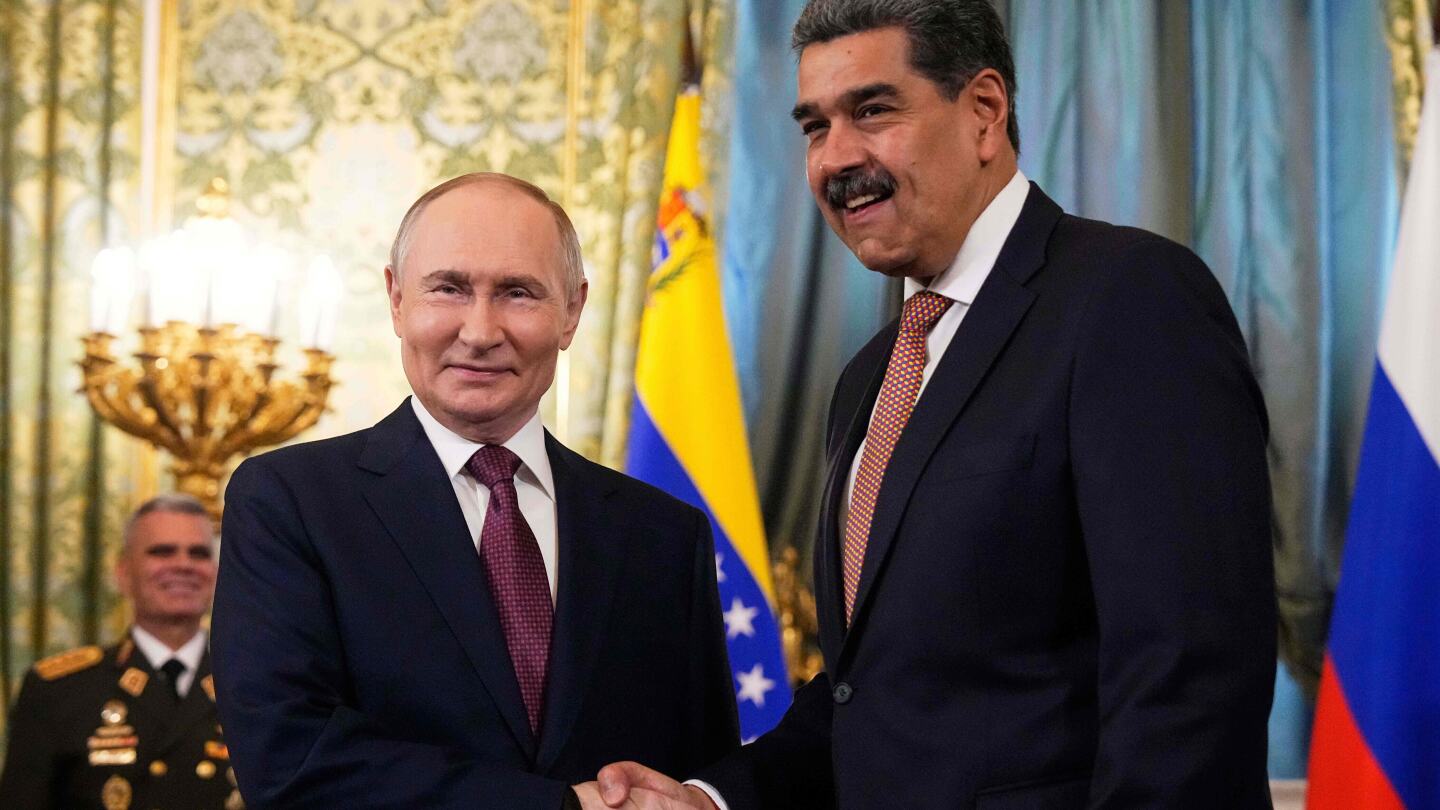
The recent U.S. military operation that captured Venezuelan leader Nicolas Maduro presents Russian President Vladimir Putin with both strategic challenges and potential propaganda advantages, according to geopolitical analysts. This development comes nearly four years after Moscow’s failed attempt to capture Kyiv during its invasion of Ukraine.
The removal of Maduro represents another significant setback for Kremlin foreign policy, following the 2024 downfall of Syria’s Bashar Assad and last year’s U.S.-Israeli attacks on Iran. Russia now faces the potential loss of a crucial strategic foothold in the Western Hemisphere, along with billions in investments within Venezuela’s oil industry.
However, President Donald Trump’s aggressive actions have simultaneously created diplomatic friction with Western allies, providing Moscow with fresh ammunition to justify its ongoing war in Ukraine. The situation further complicates as Trump’s expressed interest in acquiring Greenland from NATO ally Denmark threatens to destabilize the alliance during critical peace negotiations regarding Ukraine.
Russian leadership has maintained official silence, with Putin himself refraining from public comment. His diplomats have denounced the Venezuela operation as “blatant aggression,” while former President Dmitry Medvedev offered a mixed assessment—criticizing Washington for violating international law while acknowledging Trump’s consistent defense of U.S. national interests.
The geopolitical implications extend beyond immediate reactions. Since Russia’s 2014 annexation of Crimea, Putin has consistently framed Ukraine as within Russia’s legitimate sphere of influence. The U.S. action in Venezuela potentially validates Moscow’s longstanding argument that major powers maintain special rights in their respective regional domains.
Historical context reveals that Russia previously explored potential deals offering reduced involvement in Latin America in exchange for U.S. acceptance of Russian dominance in Europe. Fiona Hill, former National Security Council official, testified that Russian officials repeatedly hinted at such an arrangement involving Venezuela and Ukraine during Trump’s first term, though no formal agreement emerged.
Current developments suggest possible tacit understandings. Russia recently evacuated diplomats’ families from Venezuela before Maduro’s capture, while military experts note that establishing permanent Russian bases in the Western Hemisphere would face overwhelming logistical challenges despite periodic shows of force.
The U.S. operation has been widely perceived as a return to “might-makes-right” diplomacy, inadvertently strengthening Moscow’s narrative that its actions in Ukraine mirror legitimate U.S. protection of national interests. This perception makes it increasingly difficult for Western nations to condemn Russian aggression in Ukraine while supporting similar U.S. interventions elsewhere.
Hardline Russian commentators now argue that the Venezuela situation creates renewed urgency for accelerating Moscow’s offensive in Ukraine, viewing full control of Ukraine as Russia’s “pass to the Great Powers club.” Meanwhile, the U.S. continues applying pressure through recent seizures of sanctioned oil tankers linked to Venezuela, including one flagged to Russia.