BRUSSELS — The North Atlantic Treaty Organization (NATO) faces an unprecedented internal crisis as former U.S. President Donald Trump’s renewed interest in acquiring Greenland threatens to destabilize the alliance’s core principles. This development presents a peculiar challenge for an organization traditionally focused on external threats, now potentially confronting an armed confrontation involving its most powerful member.
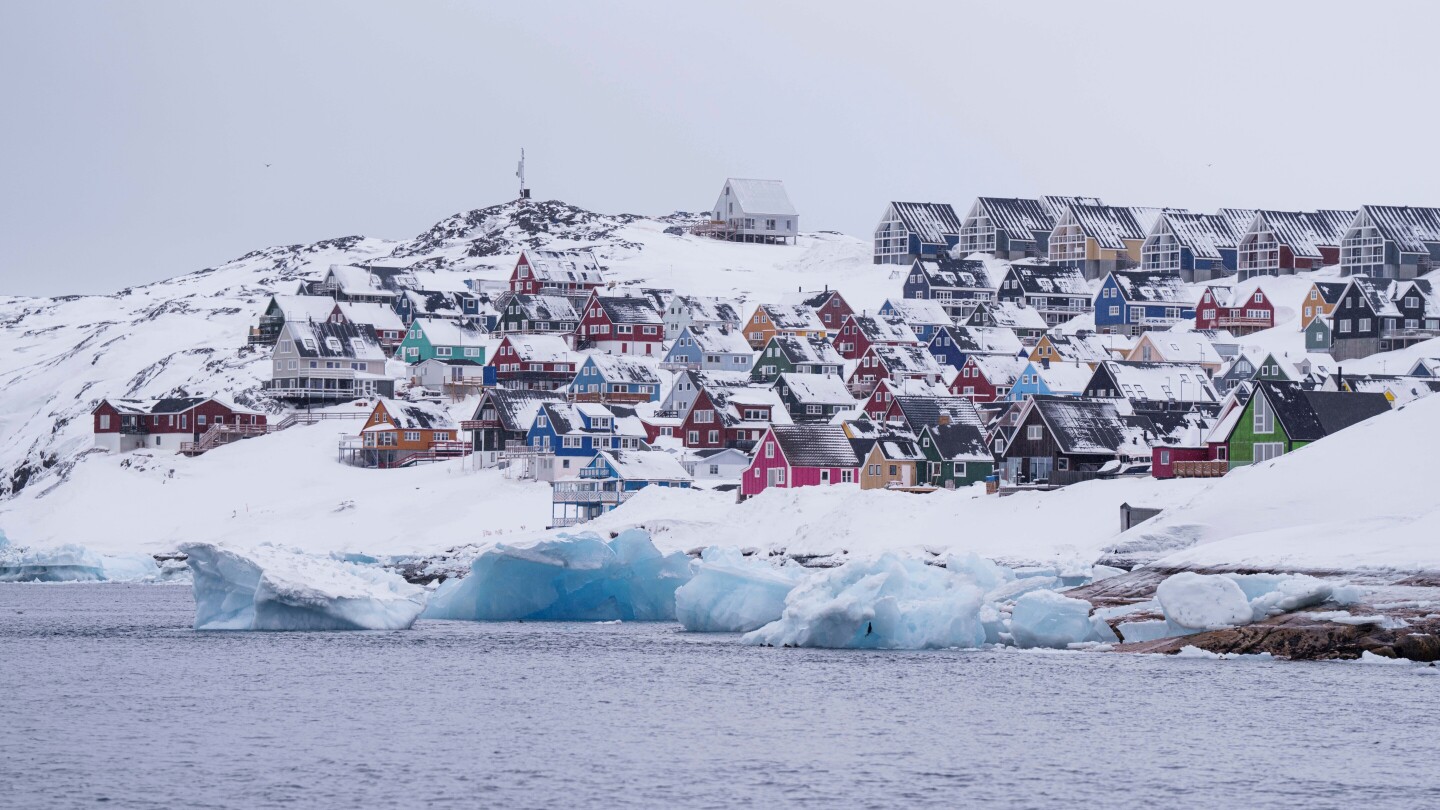
The White House has confirmed the administration is evaluating various ‘options’ regarding Greenland, including potential military action to secure control over the mineral-rich Arctic territory. This semi-autonomous region under Danish sovereignty holds significant strategic importance, particularly for North American defense operations since World War II.
NATO’s fundamental security guarantee—Article 5 of its founding treaty—which mandates collective defense against external aggression, contains no provisions for conflicts between member states. This structural vulnerability becomes critically relevant as the United States contemplates actions against territory belonging to NATO ally Denmark.
European leaders including those from Britain, France, Germany, Italy, Poland, and Spain have issued a joint statement affirming that ‘It is for Denmark and Greenland, and them only, to decide on matters concerning Denmark and Greenland.’ Canada has similarly expressed support for Danish sovereignty.
Defense analysts characterize the situation as a ‘low-probability, high-consequence event’ that challenges NATO’s political cohesion. Maria Martisiute of the European Policy Center warned that when a leading member undermines another, it damages ‘NATO’s cohesion and credibility, and it serves only our adversaries such as Russia and China.’
The timing proves particularly problematic as NATO attempts to maintain unity in supporting Ukraine against Russian aggression. This internal distraction emerges despite recent achievements, including NATO members’ agreement to increase defense spending following Trump’s demands—a development that Secretary-General Mark Rutte recently credited to Trump’s influence.
Danish Prime Minister Mette Frederiksen has warned that any U.S. attempt to seize Greenland could signify the end of NATO, drawing parallels to Trump’s earlier authorization of a raid targeting Venezuelan leader Nicolás Maduro. NATO officials remain cautiously neutral, with one anonymous representative stating the alliance ‘does not speculate on hypotheticals’ while acknowledging the Arctic’s importance for collective security.
This peculiar geopolitical scenario tests NATO’s resilience at a moment when Russian aggression requires unwavering alliance unity, potentially creating openings for adversaries to exploit internal divisions.