Religious leaders across Venezuela and its diaspora communities are calling for prayerful reflection and reconciliation following the dramatic capture of former leader Nicolás Maduro by U.S. forces. The development has triggered complex reactions among Venezuelan communities worldwide, particularly within the United States where approximately 8 million citizens have fled since 2014.
In South Florida, home to the nation’s largest Venezuelan expatriate community, spontaneous celebrations erupted with flag-waving demonstrations following Saturday’s military operation. However, beneath the surface celebrations lies profound uncertainty about the country’s future trajectory.
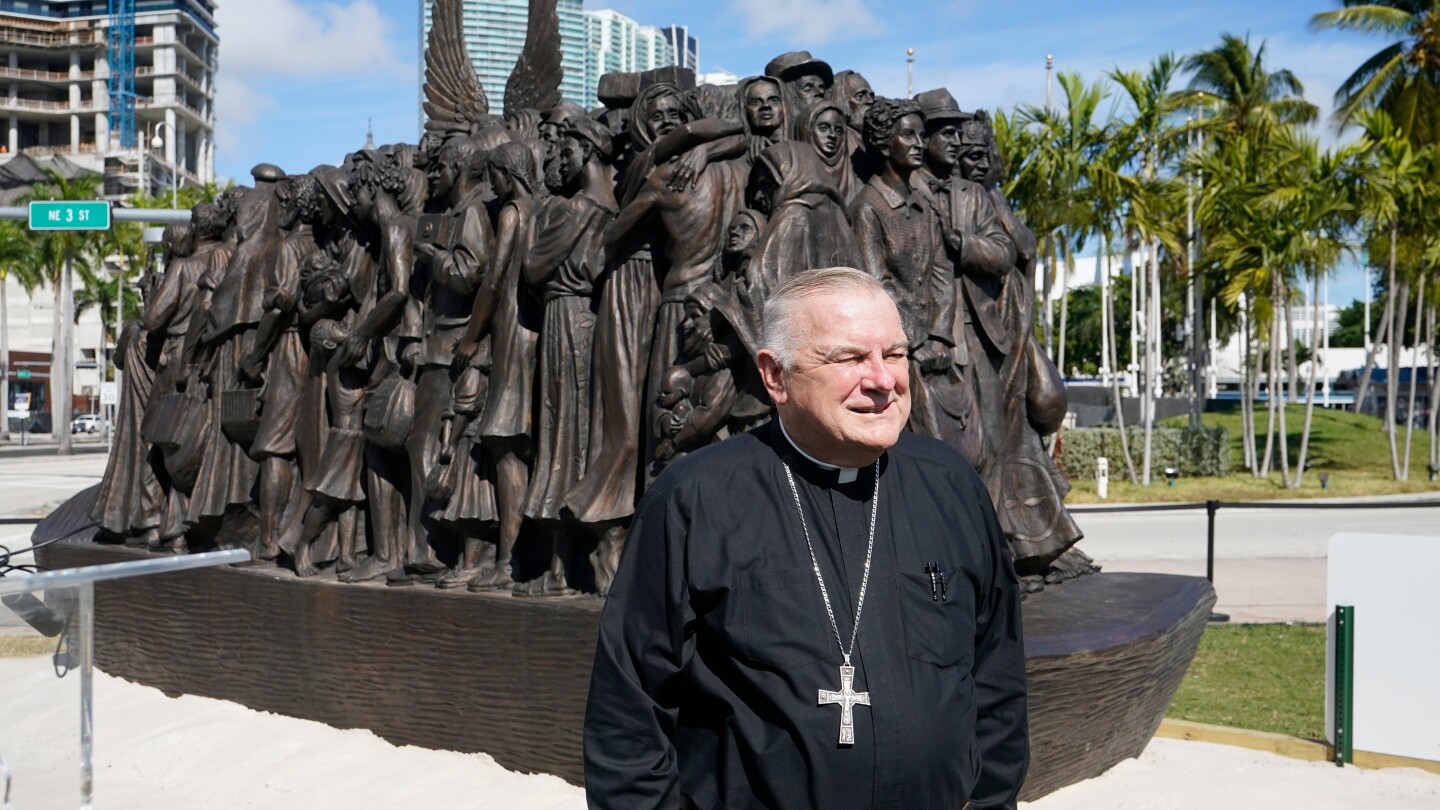
Miami Archbishop Thomas Wenski, ministering to the significant Venezuelan population in his diocese, acknowledged the mixed emotions prevailing within communities. “People are happy because Maduro is out, but there’s still a lot of uncertainty,” Wenski stated in an interview with The Associated Press. He particularly highlighted concerns for those whose temporary protective status in the U.S. has recently been revoked, noting their anxiety about returning without genuine political transformation in Venezuela.
The Catholic Church, which maintained tense relations with both Maduro and his predecessor Hugo Chávez, now sees an opportunity for renewed influence. Wenski emphasized the Church’s unique position as “perhaps the only institution that is independent of the government” capable of courageously addressing national issues. He referenced recent tensions exemplified by Cardinal Baltazar Porras, an outspoken government critic who had his passport confiscated by Venezuelan authorities.
In Doral, Florida—nicknamed “Doralzuela” for its substantial Venezuelan population—Sunday services focused on prayers for peaceful transition. Reverend Israel Mago of Our Lady of Guadalupe urged congregants to pray for “a fair and peaceful transition in Venezuela, so peace and justice can reign.” Simultaneously, evangelical pastor Frank López of Jesus Worship Center expressed gratitude toward U.S. leadership while envisioning freedom spreading throughout the region.
Similar gatherings occurred in Philadelphia, where Venezuelan communities organized special services at the Cathedral Basilica of Saints Peter and Paul. Arianne Bracho, vice president of Casa de Venezuela Philadelphia, described the emotional gathering as essential for “reaffirming our hope, our faith, to call on tranquility and calm.” Like many diaspora Venezuelans with family scattered worldwide due to prolonged crisis, Bracho acknowledged conflicted emotions about the necessary but painful transition.
The religious response highlights how faith institutions are providing crucial emotional and spiritual anchoring during this period of geopolitical upheaval, while cautiously advocating for democratic processes and national reconciliation.