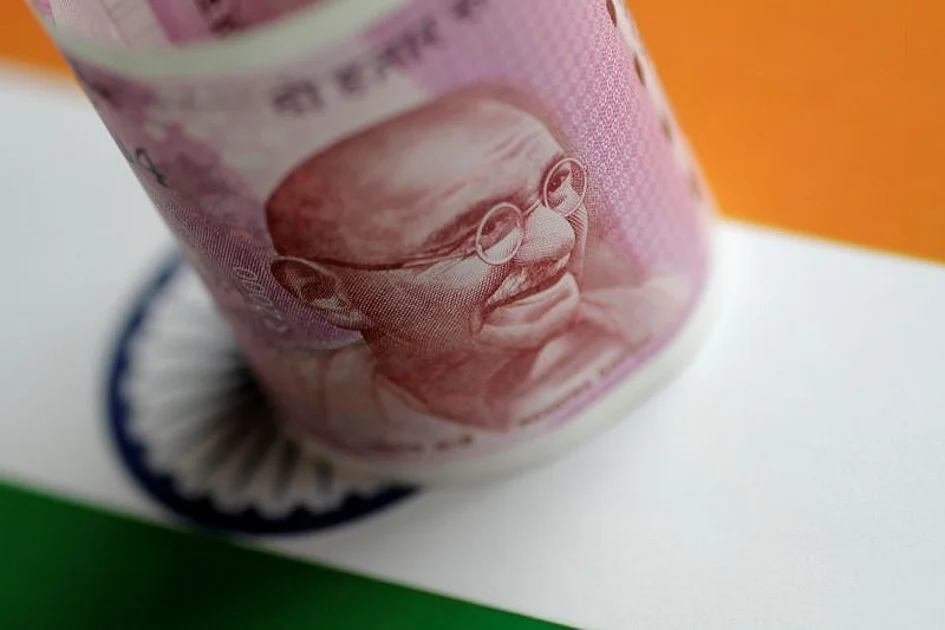
The Reserve Bank of India executed significant market intervention on Wednesday to stabilize the national currency after the rupee weakened beyond the psychologically significant 90-per-US dollar barrier. According to six market traders, the central bank deployed aggressive measures reminiscent of its 2025 strategy to counteract one-way currency movements.
The rupee opened trading at 90.2250 against the US dollar (24.5844 versus UAE dirham) before the RBI’s intervention propelled it to 89.9325 (24.5047 against UAE dirham), representing a 0.26 percent daily gain. During the session, the currency reached an intraday peak of 89.7550 (24.4564 against UAE dirham) on the interbank order-matching platform.
Market analysts identified two primary pressures driving the rupee’s depreciation: sustained foreign capital outflows from Indian equity markets that have continued from 2025 into the new year, and ongoing uncertainties regarding US-India trade negotiations. These factors have created consistent downward pressure on the currency.
Traders noted that the rapid reversal following the market open left little doubt about central bank involvement, contrasting with Tuesday’s session where market participants were divided on whether the RBI had intervened. “The velocity of today’s recovery unmistakably signals official action,” commented a private sector bank trader. “The movement was too abrupt to attribute to ordinary market dynamics.”
Banking sector experts monitoring foreign exchange markets observed that the RBI typically intervenes when speculative long dollar positions accumulate and market expectations lean heavily toward consistent rupee depreciation. Prior to Wednesday’s engineered recovery, the rupee had declined approximately 1 percent over the preceding fortnight.