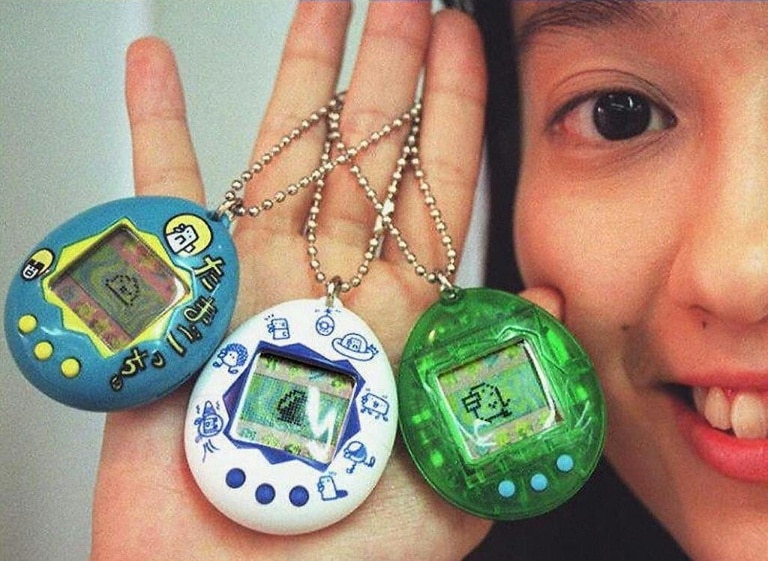
Three decades after its initial launch, the iconic Tamagotchi virtual pet continues to captivate audiences across generations, with manufacturer Bandai Namco reporting over 100 million units sold worldwide. What began as a 1990s playground phenomenon has evolved into a cultural mainstay, now embraced by retro-loving Gen Z consumers and nostalgic millennials alike.
The digital companion, whose name combines the Japanese words for “egg” and “watch,” has undergone significant technological transformation since its debut. Bandai Namco’s special 30th anniversary exhibition in Tokyo showcases this evolution from basic black-and-white pixelated characters to contemporary models featuring color displays and wifi connectivity.
Surprisingly, the Tamagotchi has experienced a remarkable resurgence as a fashion accessory. According to company data, merchandise sales (excluding video games) increased approximately sevenfold between 2019 and 2024, with the device becoming a popular keychain accessory among style-conscious youth in Tokyo’s Harajuku district and beyond.
Fifteen-year-old Brazilian tourist Rafaela Miranda Freire expressed the device’s appeal to younger generations: “It’s really nostalgic and cute. Like some 2000s cute aesthetic.” While acknowledging that some peers consider the toy “childish,” Freire highlighted its value as a healthy alternative to social media consumption: “You just get off the phone and appreciate the small things in life.”
The cultural impact of Tamagotchi was further validated when British retailer Hamleys included it in their list of the top 100 toys of all time, placing it alongside legendary playthings like Lego and the Rubik’s Cube. The exhibition itself offers an immersive experience, allowing visitors to enter through a giant white egg and explore interactive displays while learning about the device’s history through dozens of different models.
Bandai Namco’s sales data reveals interesting geographical distribution patterns, with nearly half of all units sold in Japan, 33 percent in the Americas, and just two percent across other Asia-Pacific countries.
The intergenerational appeal remains strong, as evidenced by 25-year-old Yumeho Akita’s childhood memories: “I really wanted one, and I finally got one, so I cherished it and raised the character very carefully.” This sentiment extends to parents like American screenwriter Justin Piasecki, who recently purchased Tamagotchis for his young daughters. “They basically have a computer science degree in Tamagotchi at this point,” the 41-year-old remarked. “I thought I would need to show them how to do it, but now they’re showing me.”