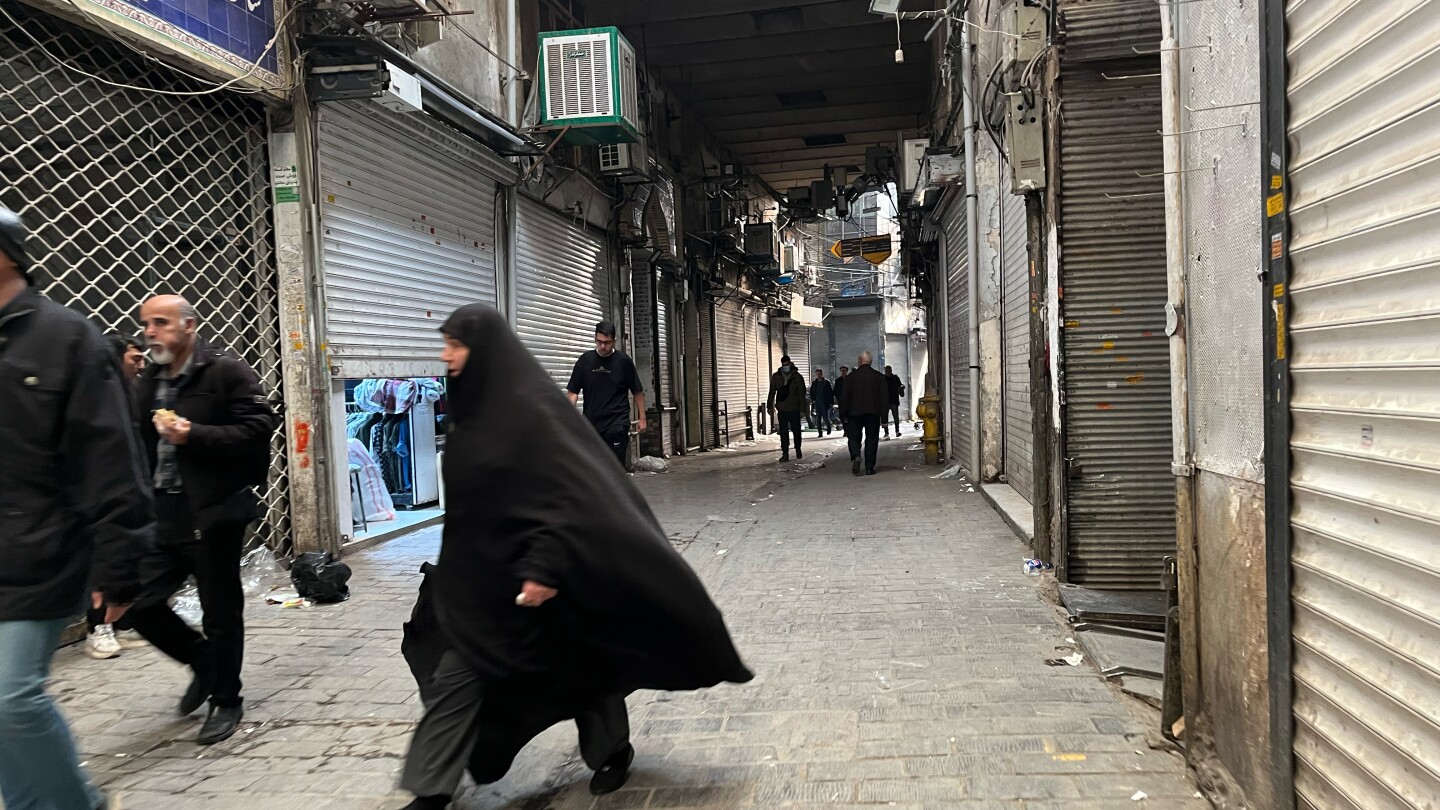
DUBAI, United Arab Emirates — A palpable sense of anxiety has permeated Iran’s political landscape following the United States military’s seizure of Venezuelan President Nicolás Maduro. While Tehran has officially condemned the operation against its longstanding ally, unofficial conversations reveal growing apprehension that similar tactics could be employed against the Islamic Republic’s leadership, including 86-year-old Supreme Leader Ayatollah Ali Khamenei.
This heightened paranoia intersects with existing concerns among Iranians regarding potential Israeli military actions, reminiscent of June’s 12-day conflict that resulted in significant losses including high-ranking military officials and nuclear scientists. The memory of Operation Eagle Claw—the failed 1980 U.S. special forces mission to rescue hostages in Tehran—further compounds these security anxieties.
Analysts note crucial distinctions that complicate any potential intervention scenario. Iran possesses roughly double Venezuela’s territorial size, maintains more robust military capabilities, and operates under a complex political structure where the paramilitary Revolutionary Guard answers directly to Khamenei. Farzin Nadimi, senior fellow at the Washington Institute for Near East Policy, warns that hardliners could respond with assassinations, cyberattacks, and assaults on Middle Eastern shipping routes if threatened.
The international community has responded with mixed reactions. Israeli opposition leader Yair Lapid suggested Iran’s regime should ‘pay close attention’ to Venezuela’s developments, while Prime Minister Benjamin Netanyahu acknowledged the protest movements within Iran. President Donald Trump previously warned that the U.S. would ‘come to their rescue’ if Iran violently suppressed protests.
Meanwhile, U.S. politicians have openly speculated about regime change possibilities. Representative Marjorie Taylor Greene connected the Venezuela operation to potential oil supply control ahead of ‘the next obvious regime change war in Iran,’ while Senator Lindsey Graham publicly donned a ‘Make Iran Great Again’ hat during a Fox News segment.
Even regional rivals are monitoring the situation closely. Ghassan Charbel, editor-in-chief of Saudi-owned Asharq Al-Awsat newspaper, described Maduro’s capture as a ‘brutal message’ to Tehran’s leadership, suggesting the psychological impact on Khamenei would be particularly devastating.