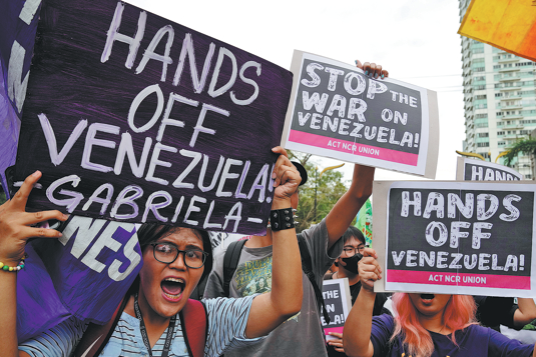
A sweeping wave of condemnation has emerged across the Asia-Pacific region following the United States’ unprecedented military operation that resulted in the capture of Venezuelan President Nicolás Maduro and First Lady Cilia Flores. The controversial action, characterized by regional leaders as a flagrant violation of international sovereignty, has triggered profound concerns about global stability and the erosion of established international norms.
Malaysian Prime Minister Anwar Ibrahim articulated the region’s apprehension through a formal statement on social media platform X, emphasizing that the extraordinary military intervention represents a clear breach of international law and constitutes unlawful force against a sovereign nation. The Prime Minister demanded the immediate release of the detained Venezuelan leaders, cautioning that externally imposed leadership changes historically yield detrimental consequences.
The Democratic People’s Republic of Korea issued particularly stern criticism, with its Foreign Ministry spokesperson condemning Washington’s “wild violation of Venezuelan sovereignty” as evidence of American “rogue and brutal nature.” This sentiment found resonance in Tehran, where Iranian authorities characterized the operation as a military attack requiring explicit condemnation from the United Nations and all law-abiding nations.
Southeast Asian responses reflected measured diplomatic concern coupled with firm principles. Singapore’s Foreign Ministry, while noting no immediate citizen involvement, expressed grave apprehension about the intervention and reaffirmed its consistent opposition to actions contravening international law. Indonesian officials warned of establishing a “dangerous precedent in international relations” that could undermine regional stability and diplomatic principles.
The Philippines Department of Foreign Affairs acknowledged monitoring the evolving situation’s impact on regional peace and rules-based international order. Thailand joined the chorus of nations urging peaceful conflict resolution through UN Charter frameworks and international law.
Pacific nations including Australia and New Zealand echoed calls for diplomatic solutions, with Australian Prime Minister Anthony Albanese emphasizing dialogue to secure regional stability and prevent escalation. New Zealand’s Foreign Minister Winston Peters advised citizens against travel to Venezuela while expecting all parties to adhere to international legal standards.
International law expert Professor Arie Afriansyah of the University of Indonesia noted potential American accountability under international law, while pragmatically questioning which nation would initiate proceedings and through which forum, given likely US veto power at the UN Security Council.