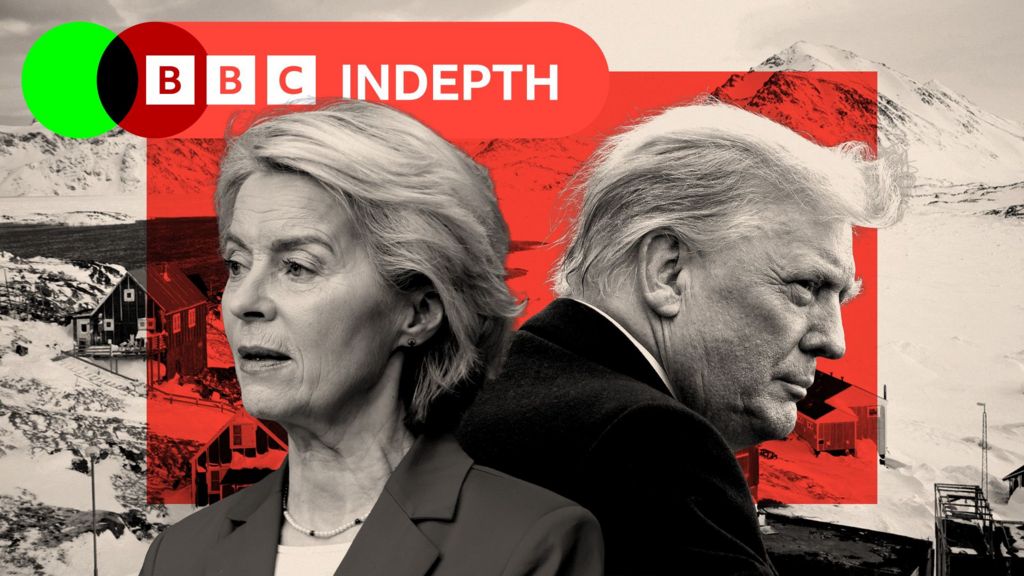
PARIS – A high-stakes diplomatic gathering in Paris has revealed profound fractures in transatlantic relations as European leaders struggled to balance Ukraine peace negotiations with growing U.S. territorial ambitions toward Greenland. The meeting, attended by the U.S. delegation including Special Envoy Steve Witkoff and Senior Advisor Jared Kushner, occurred against a backdrop of escalating tension following recent U.S. military intervention in Venezuela and President Trump’s explicit interest in acquiring Greenland for national security purposes.
Danish Prime Minister Mette Frederiksen faced immense pressure from European counterparts to avoid confrontation over Greenland, fearing potential repercussions for U.S. support in Ukraine. Despite efforts to separate the issues, leaders from major European nations issued a carefully worded statement acknowledging Greenland’s NATO status while asserting that “only Denmark and Greenland can decide matters concerning Denmark and Greenland.”
The diplomatic communique, though welcomed by Greenland’s Premier Jens Frederik Nielsen, revealed Europe’s disunity as it lacked signatures from all EU members and NATO ally Britain. Camille Grande of the European Council on Foreign Relations noted that broader participation would have delivered a stronger message to Washington.
This situation presents a stark geopolitical paradox: European leaders seek U.S. cooperation in protecting Ukrainian sovereignty from Russian aggression while responding to American threats against Danish territory. The irony intensifies considering both nations are NATO allies, with Denmark having recently pledged $4 billion toward Greenland’s defense infrastructure.
President Trump has consistently expressed interest in Greenland, previously suggesting purchase and refusing to rule out military action. His Sunday remarks emphasized the island’s strategic importance, claiming Russian and Chinese naval presence justifies U.S. control—an assertion Denmark strongly contests.
The U.S. maintains a military presence in Greenland through the Thule Air Base, established during the Cold War. While personnel has dwindled from 10,000 to approximately 200, recent developments suggest renewed American interest in Arctic security.
European response has been notably cautious, with initial silence from major powers followed by tempered statements supporting Danish sovereignty. An anonymous EU official acknowledged the situation highlights “Europe’s fundamental weakness vis-à-vis Trump,” reflecting broader concerns about the bloc’s inability to present a unified front.
Former U.S. Ambassador to NATO Juliane Smith warned this crisis “risks breaking the EU” and presents an existential dilemma for NATO. The alliance’s Article 5 collective defense clause doesn’t explicitly cover conflicts between member states, as demonstrated during the 1974 Cyprus conflict between Turkey and Greece.
With Europe remaining heavily dependent on U.S. military capabilities despite increased defense spending commitments, the Greenland situation exposes fundamental power imbalances. As White House Deputy Chief of Staff bluntly stated, “Nobody’s going to fight the United States militarily over the future of Greenland.”