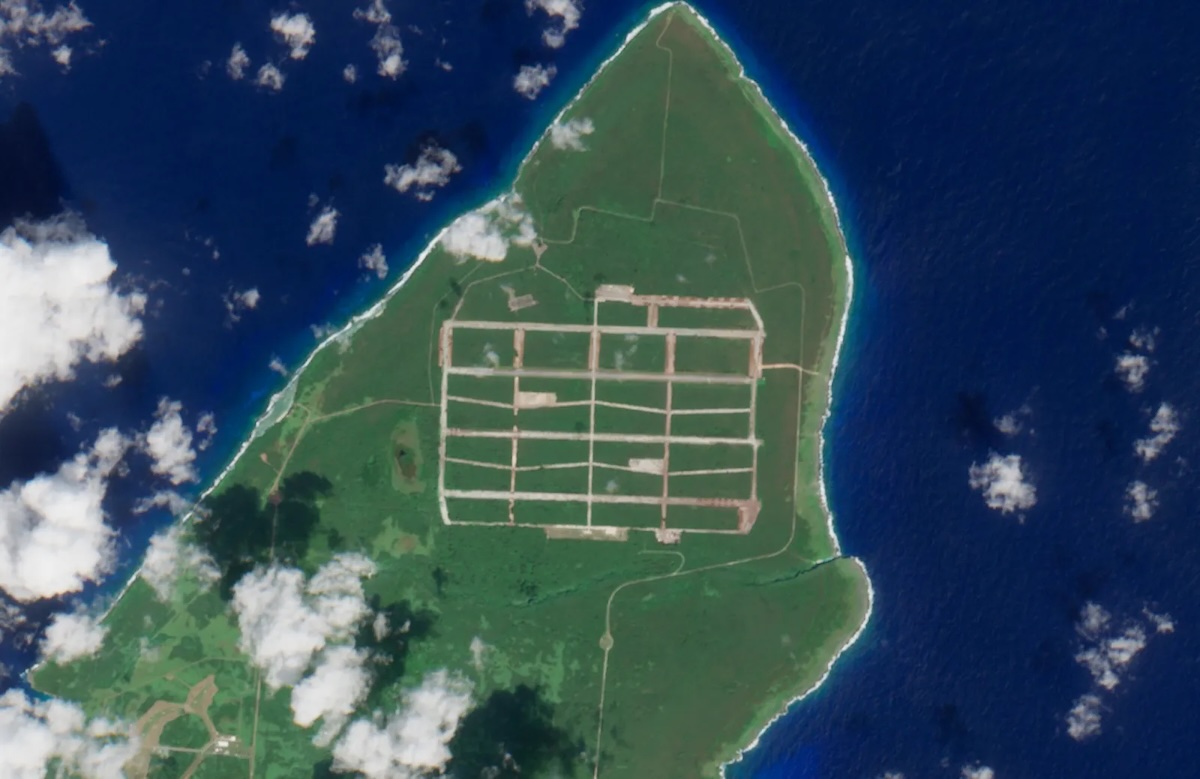
The United States is undertaking a massive military engineering project across the Pacific theater, revitalizing World War II-era airfields in a strategic effort to counter China’s growing missile capabilities. This initiative, driven by the Air Force’s Agile Combat Employment (ACE) doctrine, seeks to disperse American airpower across numerous remote locations including Tinian, Guam, Palau, Micronesia, the Philippines, and Alaska.
The strategic motivation stems from Pentagon assessments that China’s expanding ballistic missile arsenal could overwhelm critical US bases in Guam and Okinawa during the initial phases of a Taiwan conflict. By creating multiple operational airfields with pre-positioned fuel, munitions, and repair equipment, US planners aim to complicate Chinese targeting calculations and maintain combat operations even after initial attacks.
However, military analysts express concerns about the viability of this dispersal strategy. China has tripled its intelligence, surveillance, and reconnaissance (ISR) satellite constellation since 2018, now operating over 359 dedicated ISR satellites. This network, combined with over-the-horizon radar capable of detecting aircraft up to 3,000 kilometers away, provides China with unprecedented tracking capabilities across the Pacific.
Simulations from the Center for Strategic and International Studies indicate devastating potential losses: approximately 300-500 US aircraft could be destroyed within the first weeks of conflict, with 90% of these losses occurring on the ground before aircraft can disperse. Chinese strikes could render Japanese airbases inoperable for up to 12 days and eliminate aerial refueling capabilities for over a month, potentially granting China a critical window of air superiority.
Concurrently, China has been expanding its presence in Oceania through port and airfield investments in Solomon Islands, Fiji, and Samoa, enhancing its military reach and monitoring capabilities. The US response includes strengthening compacts of free association with Micronesia, Palau, and the Marshall Islands, securing exclusive basing rights across vast Pacific territories.
The ultimate success of the ACE strategy may depend less on technical agility and more on political access, ability to disrupt Chinese ISR networks, and sustained operations across an increasingly contested battlespace.