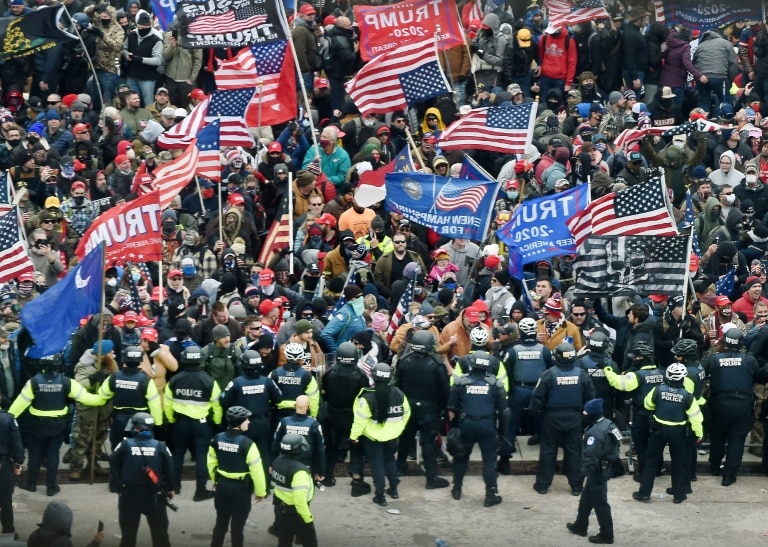
Five years after a violent mob stormed the U.S. Capitol, Washington remains a city—and a nation—profoundly divided over the meaning and legacy of January 6, 2021. The anniversary has become a focal point for competing commemorations that reflect the irreconcilable accounts of an event that continues to reshape the American political landscape.
On one side, House Democrats convened an unofficial hearing inside the Capitol, featuring testimonies from law enforcement officers, former lawmakers, and civilians who endured the attack firsthand. Their mission, as stated by many involved in the original congressional investigation, is not to relitigate the past but to prevent its erasure—particularly in the wake of former President Donald Trump’s pardons for nearly all defendants charged in connection with the assault.
A new Democratic report underscores concerns over dozens of pardoned rioters who were later charged with new crimes, warning that such clemency risks normalizing political violence.
Conversely, Trump supporters, including figures associated with the far-right Proud Boys, staged a march retracing the route taken by the rioters in 2021. Organized by the group’s former leader, Enrique Tarrio—who received a pardon from Trump after being sentenced to 22 years for seditious conspiracy—the event was promoted as a memorial for those who died, including pro-Trump rioter Ashli Babbitt, and a protest against what organizers describe as excessive police force and politically motivated prosecutions.
The starkly contrasting events mirror a broader political schism. Democrats assert that Trump incited the attack in a deliberate attempt to overturn a free and fair election. Republicans largely reject this narrative, instead emphasizing security failures and criticizing the Justice Department’s handling of subsequent investigations.
House Speaker Mike Johnson, a staunch Trump ally, has yet to install a congressionally mandated plaque honoring Capitol Police officers, while Republican investigator Barry Loudermilk argues the anniversary has been exploited to advance a political narrative against Trump and his supporters.
The unresolved legal and historical questions linger. Although former special counsel Jack Smith concluded the attack would not have occurred without Trump’s actions, the federal case was abandoned following Trump’s reelection, in accordance with Justice Department policy barring prosecution of a sitting president. Trump was impeached by the Democratic-controlled House but acquitted by the Republican-led Senate, leaving the nation’s divisions as raw as ever.