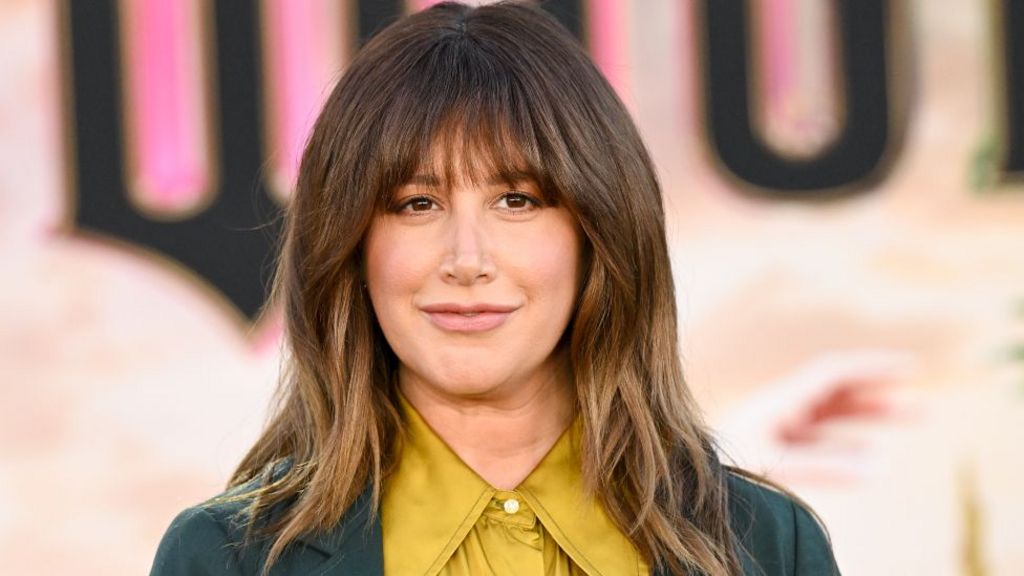
Former Disney Channel star Ashley Tisdale has revealed her distressing experience with a toxic celebrity mother’s group that left her emotionally devastated during her early motherhood journey. The 40-year-old actress, renowned for her portrayal of Sharpay Evans in the High School Musical franchise, detailed how what began as a supportive network of mothers transformed into an exclusionary clique reminiscent of high school social hierarchies.
Tisdale, who shares two young daughters with husband Christopher French, initially praised the concept of maternal community support following her first childbirth in 2021. However, the dynamic within her exclusive group—reportedly comprising several high-profile celebrities—gradually deteriorated into patterns of social exclusion and subtle alienation. The singer-actress noticed increasing distance during group gatherings and became aware of organized social events from which she was deliberately omitted.
In a candid article adapted from her personal blog for the Cut magazine, Tisdale described recognizing familiar exclusionary patterns within the group’s interactions. She recalled previously observing similar behavior directed toward another mother, realizing the group maintained a consistent pattern of ostracizing members. These interactions triggered deeply buried insecurities from her adolescent years, making her question her self-worth and social acceptability.
The emotional toll became substantial enough that Tisdale made the decisive choice to formally exit the group, explicitly stating her reasons in a message to other members: “This is too high school for me and I don’t want to take part in it anymore.” While her departure message reportedly received mixed reactions, including some attempts at reconciliation, Tisdale maintains that the group’s dynamic had become fundamentally unhealthy and detrimental to her wellbeing.
Tisdale emphasized that her criticism targets group dynamics rather than individual character judgments, noting that most members weren’t inherently “bad people” but participated in collectively toxic behavior. The overwhelming response to her revelations demonstrated that her experience reflects a widespread phenomenon among mothers seeking community support. Her phone, she noted, “blew up like no other topic” with messages from women sharing parallel experiences of exclusion within supposed support networks.
The actress specifically discouraged speculation about identities involved, asserting that assumptions would inevitably miss the broader point about systemic group dynamics. Her testimony highlights the paradoxical phenomenon of maternal support groups—intended as empowering communities—sometimes morphing into sources of emotional distress and social anxiety during particularly vulnerable life stages.