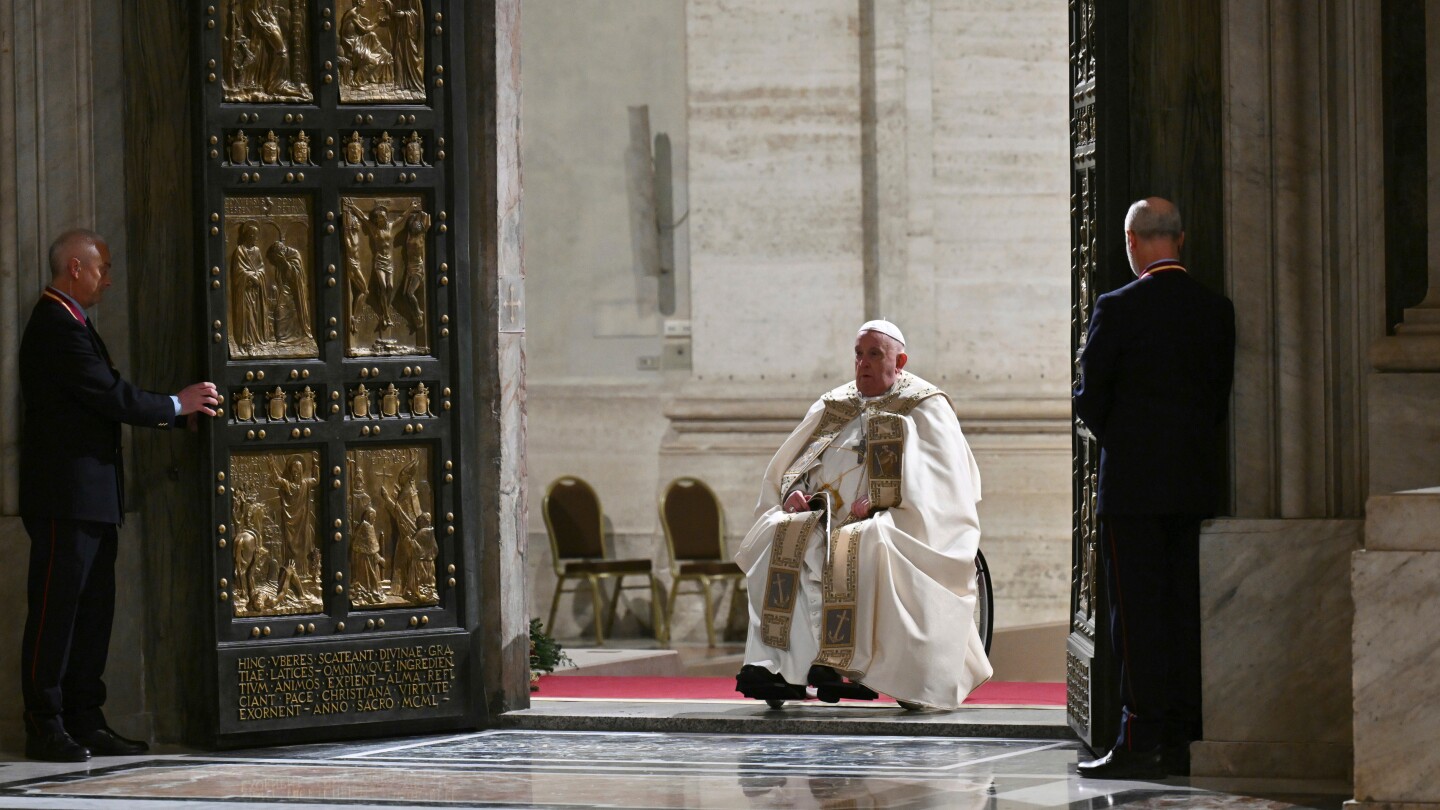
The Vatican has officially concluded its 2025 Holy Year celebrations, reporting unprecedented participation from over 33 million pilgrims while revealing a lighthearted architectural disagreement with Roman authorities as the only notable contention. Pope Leo XIV ceremonially sealed the Holy Door of St. Peter’s Basilica on Tuesday, marking the end of a rare Jubilee that commenced under his predecessor Pope Francis and concluded under his leadership—a historical occurrence last witnessed in 1700.
The Holy Year, a centuries-old tradition occurring every quarter-century, invites the faithful to pilgrimage to Rome for spiritual renewal and indulgences. For the Eternal City, the event triggered an infrastructural transformation with approximately €4 billion in public funding allocated to modernize urban facilities and address long-standing neglect.
Archbishop Rino Fisichella, the Vatican’s Jubilee coordinator, acknowledged the participation figure of 33,475,369 represented an estimate potentially including duplicate counts. The calculation methodology combined official event registrations, volunteer tallies at basilicas, and CCTV data from St. Peter’s, which recorded 25,000-30,000 daily crossings at the Holy Door. This exceeded Roma Tre University’s initial projection of 31.7 million pilgrims.
A notable surge in attendance followed the papal transition in April, when Pope Francis passed away and Pope Leo XIV assumed leadership. This unique circumstance made the 2025 Jubilee only the second in history to span two pontificates, echoing the 1700 Jubilee that began under Innocent XII and concluded under Clement XI.
Despite overall harmonious collaboration, a stylistic disagreement emerged regarding the contemporary stone fountains installed at the newly pedestrianized Piazza Pia—the Jubilee’s flagship urban project at Via della Conciliazione’s terminus. While Rome Mayor Roberto Gualtieri championed the design, Archbishop Fisichella expressed reservations about their compatibility with the Baroque magnificence of St. Peter’s and the fascist-era architecture lining the boulevard. The archbishop humorously noted having to ‘back down’ on the aesthetic disagreement since the piazza resides on Italian territory, though he admitted the fountains had grown on him despite initially comparing them to ‘foot baths.’
The tradition of Jubilee-inspired urban renewal dates to 1300, with historical projects including the Sistine Chapel (1475) and the Vatican garage (2000). Of the 117 planned infrastructure initiatives, 110 reached completion, substantially modernizing Rome’s public spaces and transportation networks.