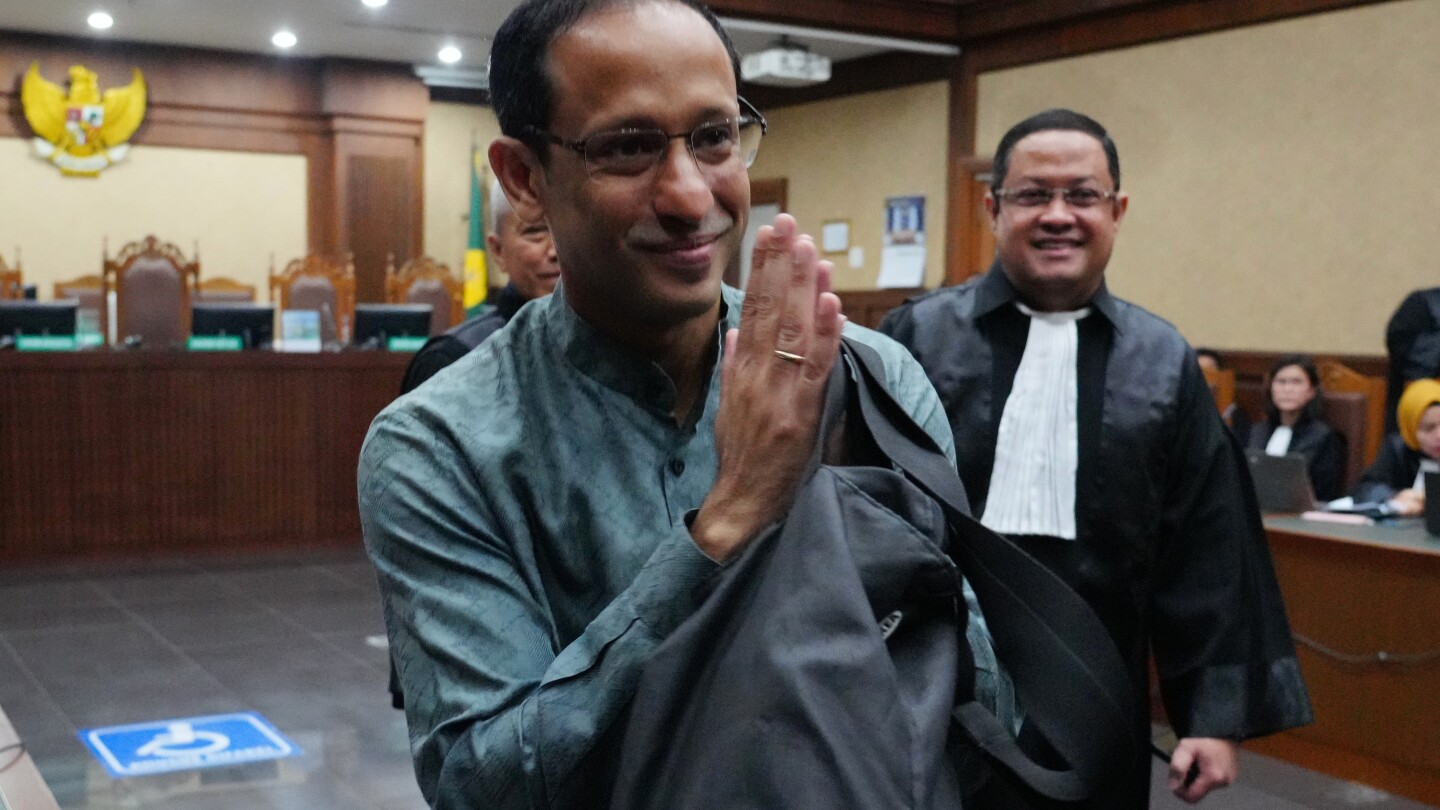
JAKARTA, Indonesia — Indonesia’s Corruption Court commenced proceedings on Monday against Nadiem Anwar Makarim, the co-founder of ride-hailing giant Gojek and former Education Minister, in a high-profile corruption case centered on a massive school technology procurement project.
The 41-year-old Harvard graduate, who served as Minister of Education, Culture, Research and Technology from 2019 to 2024, stands accused of orchestrating a scheme that allegedly caused significant state losses through the controversial purchase of Google Chromebooks for educational institutions. The investigation, led by Jakarta’s Attorney General’s Office, culminated in Makarim’s arrest on September 7th amid allegations of a $125 billion corruption scandal linked to the initiative.
The procurement formed part of the government’s ambitious ‘digitalization of schools’ policy, designed to enhance digital infrastructure in remote educational facilities. However, prosecutors contend that Makarim deliberately favored Google’s Chromebook technology despite internal ministry research teams rejecting the model due to its incompatibility with regions lacking reliable internet connectivity.
According to the indictment, Makarim manipulated the nationwide procurement process during 2020-2021 to serve personal business interests rather than educational needs. Prosecutors allege he pressured Google to invest approximately $787 million in PT Aplikasi Karya Anak Bangsa (PT AKAB), Gojek’s parent company, while personally receiving 809 billion rupiah ($48.2 million) in connection with the program.
Lead prosecutor Muhammad Fadli Paramajeng told the three-judge panel that the procurement disregarded standard pricing benchmarks and technical requirements, particularly for under-resourced regions. The acquisition of over 1.2 million Chromebooks allegedly aimed to strengthen Google’s dominance in Indonesia’s education technology ecosystem while facilitating substantial investments in Makarim’s former company.
The prosecution argues that Makarim’s 2019 resignation from PT AKAB and Gojek constituted ‘strategic concealment’ to mask conflicts of interest, while he maintained indirect control through appointed associates. Makarim faces potential life imprisonment under Indonesia’s 2001 Corruption Law for causing state losses and misusing public funds.
Makarim has vigorously denied all allegations, asserting through his defense team that he never personally received funds from the Chromebook procurement. His attorneys contend that Google’s investment predated his ministerial tenure and represented routine corporate activity unrelated to the laptop agreement. They further note that Makarim divested from PT AKAB upon taking office, experienced a more than 50% wealth reduction during his term, and delegated procurement decisions to technical teams rather than exercising ministerial authority.
Defense lawyer Ari Yusuf Amir characterized the indictment as ‘unclear, inaccurate and incomplete,’ arguing it improperly conflated Makarim’s policy-making role with operational decisions made by other officials. Three additional individuals—two former education ministry officials and a technology consultant—face related charges, while another staff member remains at large.