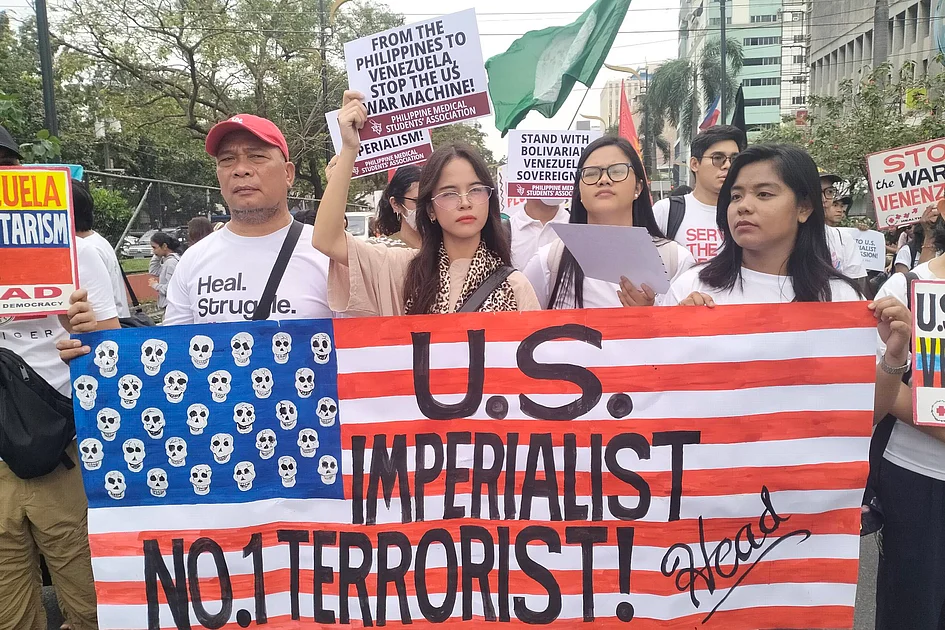
MANILA – More than 200 activists assembled outside the US Embassy in Manila on Monday, staging a vehement protest against recent American military operations in Venezuela. The demonstration, organized by the Bagong Alyansang Makabayan alliance, featured the burning of US flags and strong condemnations of what participants labeled ‘US imperialist aggression’ and a ‘state-sponsored abduction’ of Venezuelan President Nicolás Maduro.
Protesters carried banners reading ‘¡Manos fuera de Venezuela!’ (Hands off Venezuela!) and denounced Saturday’s US airstrikes on Venezuelan cities as violations of international law. The Philippines-Bolivarian Venezuela Friendship Association (PBVFA) characterized the military actions as ‘a show of brazen brutality by US imperialism’ that represents ‘the worst forms of oppression.’
The rally garnered support from multiple sectors, including Gabriela, an alliance of women’s organizations that rejected US claims labeling Venezuela a terrorist state. Gabriela representatives asserted that Venezuela’s vast oil reserves—estimated at 300 billion barrels—represent the true motivation behind US aggression, stating the country ‘refuses US economic and political control.’
Philippine political leaders joined the criticism, with Congressman Antonio Tinio leading the march and Rep. Leila de Lima warning that the US action ‘throws the global order back to a barbaric ‘might makes right’ regime.’ Cardinal Pablo Virgilio David, former president of the Catholic Bishops’ Conference, emphasized via social media that international law clearly prohibits the use of force against sovereign states, regardless of political disagreements.
The Philippine Department of Foreign Affairs issued a separate statement urging both nations to ‘resolve disputes through peaceful means’ and exercise restraint to prevent further escalation. The Manila protest reflects growing international concern over the weekend’s military developments and their implications for global sovereignty norms.