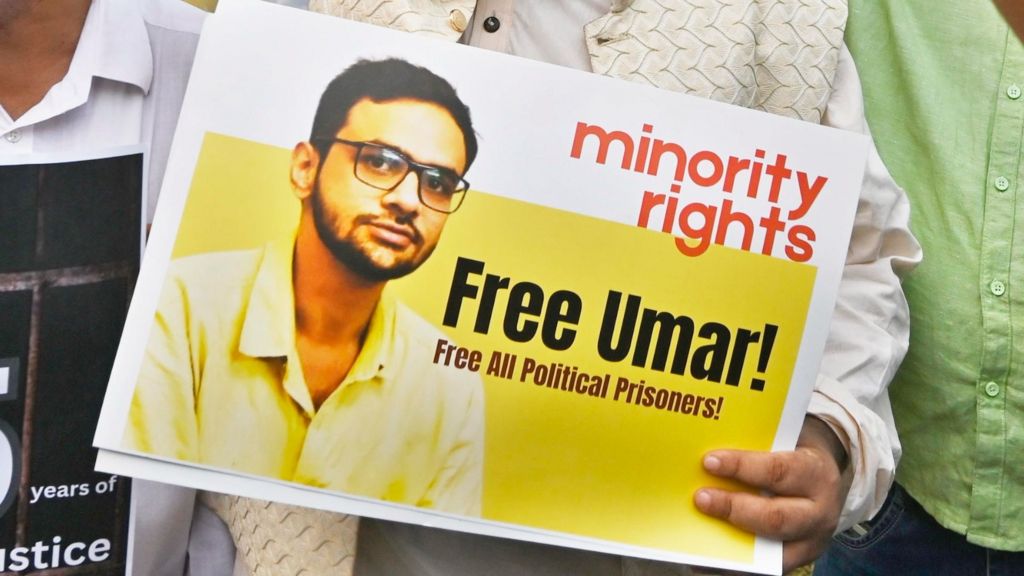
India’s Supreme Court has delivered a split verdict in a high-profile case stemming from the 2020 Delhi riots, denying bail to two prominent student activists while granting release to five others. Umar Khalid and Sharjeel Imam, both 37-year-old scholars, will remain incarcerated under the nation’s stringent anti-terror legislation despite having never faced trial.
The two-judge bench ruled Monday that bail petitions required individual examination as defendants were not on ‘equal footing regarding culpability.’ The court established a distinction between charges against Khalid and Imam versus their co-accused, mandating that the denied petitioners must wait one year before submitting new bail applications.
Both men were arrested following violent clashes in the capital that resulted in 53 fatalities, predominantly among Muslim communities. Authorities accused them of conspiracy under the Unlawful Activities (Prevention) Act (UAPA), which effectively presumes guilt and makes bail exceptionally difficult to obtain.
The case has drawn international scrutiny, with U.S. lawmakers recently expressing ‘continued concern’ over the prolonged pre-trial detention. In 2022, a report authored by former senior judges and a federal home secretary found no substantiating evidence for terrorism charges against the activists.
Khalid, who completed his PhD at Jawaharlal Nehru University in 2019, has seen five separate bail petitions rejected over the past five years, receiving only two brief releases for family weddings. Imam, a doctoral scholar at the same institution at the time of arrest, has similarly been denied bail on multiple occasions.
The court granted release to five other activists: Gulfisha Fatima, Meeran Haider, Mohd Samir Khan, Shadab Ahmed, and Shifa ur Rehman. Their detention originated from protests against the Citizenship Amendment Act, which the United Nations had previously condemned as ‘fundamentally discriminatory.’